In short
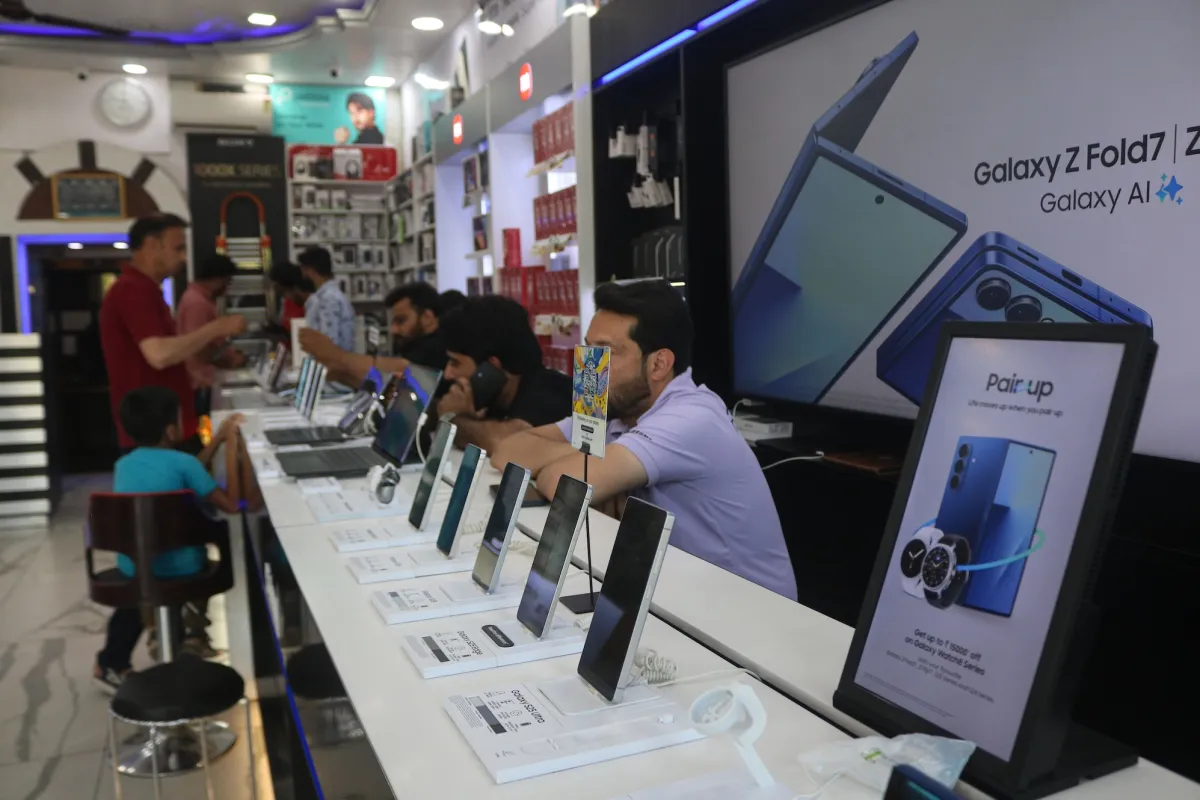
AI-related demand for memory chips is tightening supply and raising smartphone prices in India, especially in the budget segment. The result is falling shipments, longer upgrade cycles and strategic shifts by brands facing thinner margins.
- India’s smartphone shipments fell 10% year over year in Q2, the sharpest June-quarter drop in six years.
- AI demand is diverting memory-chip capacity toward high-margin data center products, lifting costs for phones.
- Budget phones in India are being hit hardest, with the sub-₹15,000 segment down 45%.
- Premium brands such as Samsung and Apple are more insulated because financing and higher margins help absorb price pressure.
- Analysts expect memory shortages and elevated phone prices to persist through at least the end of 2027.
India’s smartphone market is feeling the first major consumer ripple effect from the AI buildout: memory chip shortages are pushing up handset prices, slowing upgrades and driving one of the sharpest quarterly shipment declines in years. The pressure matters because India is the world’s second-largest smartphone market and a crucial test case for how AI-related component demand is reshaping everyday electronics.
The squeeze is being driven by a global reallocation of memory production toward high-bandwidth memory, the expensive chips used in AI servers and accelerators. As manufacturers chase higher-margin AI demand, less capacity is available for the RAM and storage parts that go into smartphones, laptops and other mass-market devices.
That shift is now showing up in the numbers. According to Counterpoint Research, smartphone shipments in India fell 10% year over year in the April-June quarter, the steepest June-quarter drop in six years. The decline was far sharper than in China, where shipments were down just 2% in the same period.
Why India is taking a harder hit than China
India is more exposed to price increases because its market is dominated by low-cost phones, where even a small rise in component costs can force manufacturers to lift retail prices or cut features. Roughly 60% of India’s smartphone market sits below ₹20,000, or about $210, according to Counterpoint.
That matters because budget models have the thinnest margins and the least room to absorb inflation in memory and storage costs. When those parts become more expensive, the burden quickly travels down the chain: manufacturers pay more, retailers pass on the increase, and shoppers either delay purchases or move to a different price band.
India has become one of the most closely watched consumer markets in the world for exactly this reason. With more than 1.4 billion people and over 700 million smartphone users, the country often serves as an early warning system for what happens when prices rise in markets where buyers are highly sensitive to affordability.
How AI demand is changing the memory market
AI infrastructure is consuming a growing share of global memory production. Samsung, SK Hynix and Micron have all been shifting capacity toward high-bandwidth memory, which is specifically designed for AI accelerators and commands much stronger margins than conventional memory used in consumer devices.
That creates a simple economic consequence: if factories devote more wafers to AI-centric products, fewer chips are left for the smartphones and laptops that account for far larger unit volumes. The result is tighter supply and higher prices for standard RAM and storage.
In other words, the AI boom is not just affecting data centers and cloud budgets. It is also changing the economics of the phone in a consumer’s pocket.
| Market indicator | India | China | What it signals |
|---|---|---|---|
| Q2 smartphone shipments | Down 10% year over year | Down 2% year over year | India is feeling the memory-cost shock more severely |
| Lowest-end segment performance | Sub-₹15,000 phones fell 45% | Not reported in source | Budget buyers are being hit hardest |
| Market structure | About 60% under ₹20,000 | More diversified pricing mix | India has less room to absorb higher costs |
| Replacement cycle | Rising toward 4 years | Not specified | Consumers are keeping phones longer |
What is happening to phone prices in India?
Phone prices in India are rising across a wide range of models, and the increases are already changing how consumers shop. Tarun Pathak, vice president of research at Counterpoint Research, told TechCrunch that prices have moved up by anywhere from 4% to 68%, depending on the handset.
That spread reflects how differently brands are responding. Some have raised prices directly. Others are trimming discounts, reducing storage options, or nudging buyers toward higher tiers where margins are more manageable. In practice, all of these strategies make the cheapest phones less accessible.
As a result, consumers are increasingly choosing one of three paths: buy a more expensive device, keep their current phone for longer, or search the secondhand market for a cheaper alternative.
How consumers are responding
The clearest sign of stress is a longer replacement cycle. Pathak said buyers are likely to stretch their upgrade window to about four years, up from roughly 3.5 years previously. That may sound modest, but in a market as large as India, even a small slowdown in replacement demand can translate into millions of deferred sales.
Higher-end buyers are proving less sensitive to these changes. Financing options have made premium devices easier to purchase in monthly installments, reducing the immediate pain of sticker shock. That has helped premium brands stay more resilient than lower-cost rivals.
“Consumers are unlikely to stop buying smartphones, but many are expected to postpone upgrades,” Tarun Pathak said, adding that premium brands such as Apple and Samsung are better protected from the slowdown.
Which smartphone brands are winning and losing?
Samsung emerged as the only major brand to post shipment growth in India in the second quarter, with volumes up 2% year over year, according to Counterpoint. Apple’s shipments fell 3%, though that decline was linked more to supply constraints and inventory shortages than to a collapse in demand.
The data show a market increasingly split by price tier. Premium and upper-midrange handsets are holding up better, while entry-level brands are losing traction as prices move beyond what many households are willing to pay.
Why budget-focused Chinese brands are under pressure
Chinese smartphone companies are more exposed than their premium rivals because many of them depend heavily on entry-level and midrange sales. As the cheapest segment weakens, their combined market share has fallen to its lowest level for a second consecutive calendar quarter since 2020, Counterpoint said.
The steepest decline was in the sub-₹15,000 category, where shipments dropped 45% from a year earlier. That is a brutal contraction in a segment that usually forms the foundation of India’s volume market.
- Budget phones are the first to feel memory inflation.
- Premium brands can use financing to soften the blow.
- Chinese brands are more exposed to entry-level demand weakness.
- Market share is shifting toward companies with stronger pricing power.
How OnePlus is reacting to the new economics
OnePlus has become an early example of how brands are adjusting to tighter margins. The company said this week that it would stop launching new products in Europe and North America, while continuing to operate in India after what it described as a careful review of its business priorities.
The move suggests that some companies are narrowing their focus to markets where they can still protect profitability, even if that means withdrawing from regions that are strategically important but financially less attractive.
Counterpoint data shared with TechCrunch shows why India remains a priority for OnePlus. In the first quarter, China accounted for 74% of OnePlus’ global shipments to distributors and retailers, up from 59% a year earlier, while India’s share fell to 19% from 30%. That pattern indicates the company is leaning harder into its strongest markets while reducing exposure elsewhere.
Tarun Pathak said the economics of running multiple sub-brands only work when each one has enough volume to justify the shared costs, and that threshold becomes harder to meet as margins tighten. He argued that profitability is now the deciding factor in where brands choose to operate.
Why profitability now shapes market strategy
Smartphone companies with broad product portfolios often rely on shared engineering, marketing and distribution structures across different brands. That model works well when the market is growing and margins are healthy. It becomes much harder to sustain when component costs rise and consumers resist price hikes.
When the cheapest models stop producing enough return, companies are forced to make difficult decisions about which regions, brands and product lines deserve investment. In that environment, retreating from less profitable markets can be a rational, if uncomfortable, choice.
For investors, that shift is important because it suggests the AI hardware cycle is not confined to the data-center business. It is altering consumer-device economics, which can affect revenue growth, inventory planning and regional expansion strategies across the smartphone industry.
What does this mean for Indian shoppers?
For shoppers, the immediate effect is straightforward: phones are getting more expensive, and the cheapest options are becoming less attractive to manufacturers. Buyers who would normally upgrade every three to four years may now wait longer, look for deals, or move to used devices.
Retailers and brands are already reacting by stocking up before further cost increases arrive. Kiranjeet Kaur, associate research director for mobile phones at IDC, said companies are building inventory ahead of the festive season to lock in lower costs before component prices rise again.
Kaur also said financing has become central to affordability in India, especially as the market shifts away from purely volume-led growth and toward value growth. That means total unit sales may weaken even as revenue holds up, because average selling prices are climbing.
Kaur said the Indian market is moving from a volume-driven model to one focused more on value, as rising component costs make low-end phones harder to sell profitably.
Why financing matters more now
As prices rise, monthly installment plans become a bigger part of the buying decision. That is especially true for midrange and premium phones, where financing can make a higher upfront cost feel manageable. For lower-income buyers, however, even financing may not fully offset the jump in prices.
This creates a two-speed market. Higher-income customers continue to trade up, while lower-income shoppers either delay purchases or accept fewer features for the same budget. Over time, that can widen the gap between premium and entry-level brands.
How long could the memory shortage last?
The pressure is unlikely to fade quickly. IDC expects memory shortages and elevated smartphone prices to remain in place until at least the end of 2027, although the pace of price increases may slow as consumers adjust to the new cost environment.
That timeline suggests the current disruption is not a short-lived supply hiccup. It is more likely the start of a longer rebalancing in which AI demand continues to crowd out some consumer electronics capacity.
Kaur also noted that a weaker Indian currency is adding another layer of strain, since imports become more expensive when the rupee falls. That currency effect compounds the problem for local manufacturers and global brands alike, both of which often pass costs down to the consumer.
“For Indian consumers, it is a double whammy,” Kaur said, pointing to the combination of a weaker currency and more expensive imported components.
What to watch next
The next phase of this story will likely be measured in pricing decisions, inventory levels and brand strategy rather than in chip shipments alone. If memory costs remain elevated, more companies may rationalize their product lines, lift device prices or concentrate on segments where margins are healthier.
Several developments will be especially important:
- Whether smartphone makers continue to raise prices across India’s low and mid tiers.
- Whether financing and festival-season promotions can sustain consumer demand.
- Whether more brands narrow geographic focus to protect profit margins.
- Whether AI memory demand keeps absorbing capacity through 2027 and beyond.
For now, India is offering one of the clearest real-world examples of how an AI infrastructure boom can flow into ordinary consumer markets. The effect is visible not in a server rack, but in the price of a smartphone.
The bigger picture for the AI supply chain
The memory-chip crunch underscores a broader truth about the AI economy: the benefits and disruptions are not confined to companies building models and data centers. AI is now competing with mainstream consumer electronics for the same physical components, and that competition is beginning to change product availability, pricing and sales patterns around the world.
India’s market is important because it is large, price-sensitive and highly visible. If AI-driven memory demand can slow handset shipments there, similar pressures could show up in other emerging markets with similar buying habits. The sector may be entering a phase in which the cost of training and deploying AI reaches far beyond cloud infrastructure and into household tech budgets.
That is why the latest shipment data matters. It is not just a warning for phone makers. It is a signal that the AI hardware boom is now shaping the consumer technology market in ways that ordinary users can feel directly.
Frequently asked questions
Why are smartphone prices rising in India?
Smartphone prices are rising in India because AI demand is tightening supply of RAM and storage chips, pushing up component costs. Manufacturers are passing those higher costs on to consumers, especially in the budget and entry-level segments where margins are already thin.
How is the AI boom affecting phone shipments?
The AI boom is affecting phone shipments by diverting memory-chip production toward high-bandwidth memory used in AI systems. That leaves fewer standard memory chips for smartphones, raises prices, and causes some buyers to delay upgrades, which has helped drag down shipments.
Which smartphone segment is being hit the hardest in India?
The sub-₹15,000 segment is being hit the hardest in India. Counterpoint said shipments in that bracket fell 45% year over year, showing that the lowest-priced phones are most vulnerable when component costs rise and consumers become more price sensitive.
How long could the memory shortage last?
The memory shortage could last until at least the end of 2027, according to IDC. Analysts expect prices to stay elevated for a prolonged period, although the speed of further increases may slow as consumers and brands adapt to the new cost structure.
Why is India more affected than China?
India is more affected than China because a much larger share of its smartphone market sits below ₹20,000, where higher memory costs have the biggest impact. That makes India more vulnerable to price increases, delayed upgrades and weakness in the budget segment.