In short
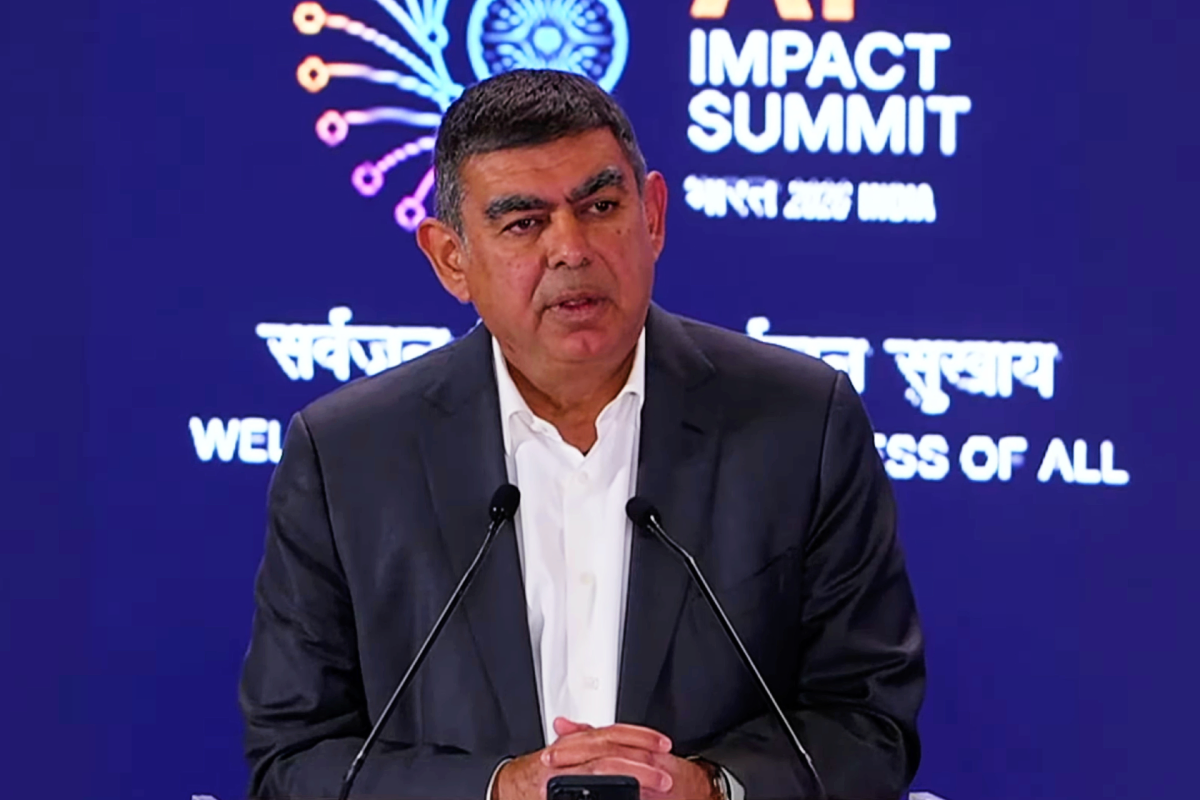
Former Infosys CEO Vishal Sikka has launched Hang Ten Systems, a new AI services startup backed by a $32 million seed round led by Mayfield. The company wants to automate more of enterprise software development and operations, directly challenging the economics of traditional IT services.
- Hang Ten Systems raised a $32 million seed round led by Mayfield, with Aramco Ventures joining strategically.
- The startup says it will use AI agents and reusable automation to continuously build and operate enterprise software.
- Vishal Sikka is betting AI can change the economics of IT services, not just speed up existing work.
- Early customers include Siemens Gamesa Renewable Energy and Fresenius, according to the company.
- The launch comes as Infosys and peers weigh whether AI will disrupt or expand the services market.
Vishal Sikka spent years inside the machinery of modern enterprise software, first helping shape large-scale business systems at SAP and later leading Infosys, one of India’s biggest IT services companies. Now, he is returning to the same terrain with a different thesis: artificial intelligence may not just help IT services firms work faster, but could fundamentally change what the industry does and how it makes money.
Sikka’s new venture, Hang Ten Systems, has emerged with a $32 million seed round and an ambitious pitch. The Bay Area startup says it wants to help large organizations continuously build, update and run software using AI-driven development tools, reusable automation and domain expertise. In practical terms, it is aiming at a core layer of work that has long been handled by human consultants, engineers and support teams at global services providers.
The company’s launch arrives at a tense moment for the IT services sector. Traditional firms are racing to position themselves as AI-era partners rather than AI casualties, while investors and analysts are still trying to determine whether generative AI will expand demand for services or compress the labor-heavy economics that have defined the industry for decades.
Hang Ten is stepping directly into that debate with a financing package led by Mayfield, which also included strategic backing from Aramco Ventures and participation from angel investors. The startup has already landed early customer relationships, according to the company and investors, giving it a head start in a market that is likely to be closely watched by both enterprise buyers and incumbents.
A new bet on the future of enterprise software
At the heart of Hang Ten’s pitch is a simple but potentially disruptive idea: software delivery for enterprises can be made more continuous, more automated and less dependent on linear staffing growth. Rather than assembling large project teams for custom development, integration and maintenance work, the company says it is building an AI-native services model that can handle much of that effort through software agents and specialized automation.
That is a direct challenge to the operating logic of traditional IT services. For decades, firms such as Infosys, Tata Consultancy Services and their global peers have scaled through headcount. More work typically meant more people. More people meant more revenue. Hang Ten argues that AI changes that equation by allowing leverage to increase as the system learns from each project and reuses capabilities across accounts.
Mayfield framed the opportunity in those terms, arguing that old-style services businesses grow one employee at a time, while Hang Ten is designed to compound its efficiency project by project.
Mayfield said the startup’s model is intended to scale differently from conventional services firms, with leverage that increases as the company delivers more work rather than simply adding more staff.
That pitch is resonating with a class of enterprises that are eager to modernize software operations without sacrificing control or domain knowledge. The startup says it is already working with customers including Siemens Gamesa Renewable Energy and Fresenius on AI-native project delivery.
Why Vishal Sikka matters to this market
Sikka is not a typical founder entering the AI services space. His résumé spans some of the most important enterprise technology platforms of the last three decades. He spent about 12 years at SAP, where he held senior leadership roles in enterprise software, before later becoming CEO of Infosys. He also served on Oracle’s board, giving him a broad view of how software is bought, built and maintained inside large companies.
That background matters because Hang Ten is not pitching a generic AI tool. It is selling a new model for how enterprise software work gets done. In an industry where trust, delivery discipline and integration know-how are often as important as code generation itself, Sikka’s long career inside enterprise technology may help the company open doors.
After leaving Infosys in 2017, Sikka founded VianAI, another enterprise AI venture that came out of stealth in 2019 with $50 million in seed funding and later raised a $140 million round led by SoftBank Vision Fund 2 in 2021. VianAI focused on analytics and decision-support tools designed to help businesses use AI in management and operations.
Hang Ten is a different business, according to Mayfield’s Navin Chaddha, because it targets a separate market and a different type of enterprise need. Instead of focusing primarily on analytics or decision intelligence, Hang Ten describes itself as an AI services company centered on agentic code generation, reusable AI skills and deep sector expertise.
In a blog post announcing the venture, Sikka said the startup is helping large enterprises “hang ten on the biggest wave of our lifetimes,” a reference to the surfing term for riding a wave with style and control. The metaphor captures the company’s broader message: the next era of enterprise software will not simply be automated, but redesigned.
What Hang Ten says it does
The company’s description is intentionally broad, but the core idea is clear. Hang Ten says it helps enterprises continuously build, adapt and operate software systems using AI-native methods. That means the startup is not just generating code snippets. It is trying to participate in the full lifecycle of enterprise software delivery, from development and modification to ongoing operations.
Several concepts sit behind that pitch:
- Agentic code generation — using AI agents that can carry out software tasks with limited human intervention.
- Reusable AI skills — creating patterns and workflows that can be applied across projects and customers.
- Domain expertise — embedding knowledge of industries and enterprise processes into the service model.
- Forward-deployed engineering — placing technical talent close to the customer to adapt systems in real time.
That combination is meant to differentiate Hang Ten from both pure software vendors and traditional consulting-heavy service firms. The promise is not just faster coding, but a more responsive delivery model that blends software, automation and human judgment.
The company is also building around a familiar enterprise truth: customers often do not want a black-box AI product when their core systems are at stake. They want a partner that can translate AI capabilities into practical business outcomes, while still understanding security, compliance, integrations and operational complexity.
Seed funding signals investor conviction
Hang Ten’s $32 million seed round is unusually large for an early-stage company, underscoring how much investor attention AI infrastructure and enterprise automation continue to attract. Mayfield led the round, with strategic participation from Aramco Ventures and support from angel investors.
The presence of Aramco Ventures is notable because strategic capital often signals a desire not only for financial upside but for direct access to emerging technologies that can be tested in large, complex organizations. For an enterprise AI services startup, that kind of investor can bring both credibility and real-world deployment opportunities.
Mayfield’s backing also reflects a broader belief in the market that AI can create new categories of services companies, rather than simply improving existing ones. The fund is betting that Hang Ten can capture demand from enterprises that want help operationalizing AI at scale, especially in workflows where software delivery and domain-specific customization are critical.
According to Chaddha, the company had only been operating for about a month when it was already in contact with customers. That detail suggests the startup may be launching into a market with unusually immediate demand, or at least unusually high interest in AI-first service models from large buyers.
Early customers and the enterprise use case
Hang Ten says it is already working with Siemens Gamesa Renewable Energy and Fresenius. Those names are meaningful because they represent large, complex global businesses with operational environments where software quality, reliability and customization matter enormously.
Energy and healthcare-related enterprises are not typical fast-moving software startups. They often rely on intricate legacy systems, multiple layers of compliance and long-standing vendor relationships. That makes them ideal proving grounds for an AI services company that promises to modernize software delivery without forcing organizations into a risky rip-and-replace strategy.
For companies like these, the appeal of an AI-native services model could be straightforward:
- Reduce time spent on repetitive software maintenance and enhancement work.
- Improve the speed of integration across internal systems and third-party platforms.
- Capture institutional knowledge in reusable AI workflows.
- Potentially lower costs while increasing delivery responsiveness.
But the risks are equally obvious. Enterprises will expect accuracy, traceability and accountability, particularly if AI agents are taking on work that once required large teams of consultants and developers. The burden on Hang Ten will be to prove that its model can be trusted in environments where errors can carry real financial, operational or regulatory consequences.
The bigger fight inside IT services
Hang Ten does not exist in a vacuum. It is arriving as the global IT services sector confronts a strategic crossroads. The industry has already spent years moving from basic outsourcing toward digital transformation work, cloud migration and managed services. AI now threatens to accelerate that change.
Some analysts believe the disruption could be severe. Earlier this year, Jefferies suggested IT services may be one of the first industries to feel material pressure from AI because so much of its work is process-driven, repeatable and tied to labor deployment.
At the same time, industry leaders are pushing back on the idea that AI will only subtract value. Infosys chairman Nandan Nilekani has argued that artificial intelligence could actually enlarge the market by creating more demand for transformation, implementation and ongoing support.
Infosys has been making its own case to investors, saying this month that an “AI-first services” opportunity could be worth between $300 billion and $400 billion by 2030. That estimate suggests the company sees not a shrinking pie, but a redefined one, with new categories of work emerging around AI adoption, model deployment and enterprise reinvention.
The tension between those views is now one of the most important questions in enterprise technology. Is AI a productivity layer that lets services firms do more with fewer people, or is it a structural shift that changes the economics of service delivery altogether? Hang Ten’s existence is an argument for the second answer.
How traditional players are responding
Large services companies are not standing still. Infosys and its peers have been pursuing partnerships with leading AI model developers such as Anthropic and OpenAI, seeking to attach themselves to the new wave rather than be swept aside by it.
That strategy has a logic of its own. Established firms already have global delivery networks, trusted client relationships and deep domain expertise. If AI makes some tasks more efficient, those firms may be able to preserve their position by bundling automation with advisory work, compliance support and systems integration.
However, those same incumbents face structural pressure. If a startup like Hang Ten can automate enough of the delivery process, it may be able to offer a service model that is cheaper, faster and more software-like than traditional consulting. That could force large firms either to adopt similar techniques or to compete more aggressively on higher-value strategic work.
For customers, that competition could be beneficial. More providers, more automation and more flexible delivery models could lead to better pricing and faster outcomes. But it could also make it harder to judge quality, because not every AI-assisted service will be equally reliable.
Who is behind the startup
Hang Ten’s early team includes several executives who have worked with Sikka across multiple chapters of his career, according to their LinkedIn profiles. That continuity matters in a startup attempting to blend enterprise engineering, design and customer delivery.
The company’s co-founders include:
- Navin Budhiraja, chief technology officer
- Sanjay Rajagopalan, chief design officer
- Tao Liu, senior vice president of forward deployed engineering
The team’s background across SAP, Infosys and VianAI suggests the startup is drawing from a familiar playbook: enterprise software leadership combined with AI experimentation and customer-facing delivery experience. That mix may help Hang Ten avoid some of the early missteps that younger AI startups can make when they underestimate enterprise complexity.
The company says it is hiring across delivery, engineering, sales and leadership, and it plans to expand across several global locations to meet demand. That global footprint could be important if Hang Ten wants to compete with established IT services firms that have long used distributed delivery as a competitive advantage.
Why the market is paying attention now
The timing of Hang Ten’s launch is not accidental. AI adoption in enterprise software is moving quickly, but many companies still struggle to turn pilot projects into durable operating models. That gap creates a market opportunity for firms that can combine AI capability with practical deployment expertise.
At the same time, many enterprises are under pressure to do more with less. Budget scrutiny, modernization backlogs and an ongoing need to support legacy systems make a compelling case for tools that can automate parts of software work without requiring a full rebuild.
That’s where Hang Ten’s proposition becomes especially interesting. It is not just selling AI. It is selling a workflow model for enterprises that need software maintenance, adaptation and support on a continuous basis. If it works, it could represent a new category between consulting, systems integration and AI software.
If it fails, it will likely be because the hardest parts of enterprise work are not the ones that can be automated most easily. Real-world systems are messy, interconnected and politically sensitive inside organizations. AI can generate code, but it must still be embedded in human decision-making, testing and accountability structures.
Timeline of Sikka’s enterprise AI journey
| Year | Milestone | Significance |
|---|---|---|
| 2000s-2010s | Leadership roles at SAP | Built deep experience in enterprise software and large-scale business systems |
| 2014-2017 | CEO of Infosys | Led one of the world’s biggest IT services firms through a major phase of transformation |
| 2017 | Leaves Infosys | Transitions from large-company leadership to startup building |
| 2019 | VianAI emerges from stealth | Launches enterprise AI venture focused on analytics and decision support |
| 2021 | VianAI raises $140 million | Signals strong investor interest in enterprise AI applications |
| 2026 | Hang Ten Systems launches with $32 million seed round | Targets AI-driven enterprise software delivery and services |
What to watch next
Hang Ten’s next phase will likely depend on whether it can show measurable gains in delivery speed, software quality and enterprise efficiency. The company may also need to explain how its AI-native model differs in practice from the AI offerings now being added by traditional services firms and software vendors.
Important questions remain:
- Can Hang Ten deliver repeatable results across industries, not just in selected pilot accounts?
- How much of the work can be automated without sacrificing trust or control?
- Will customers see the company as a true transformation partner or as another consultancy with AI branding?
- Can the business scale globally while preserving quality and domain depth?
Those questions are especially important because enterprise software buyers tend to be cautious. They will want evidence, not just vision. If Hang Ten can produce that evidence, it may become a bellwether for a new kind of services company built around AI as the core delivery engine rather than as an add-on.
For now, the startup’s launch adds a notable twist to the broader story of enterprise AI. The conversation is no longer just about which models are best or which copilots save the most time. It is about whether AI can remake the services industry itself — and whether the people who once ran that industry can be the ones to reinvent it.
That is the bet Vishal Sikka is making with Hang Ten Systems. The company is too early to judge, but the scale of its ambition is already clear: to turn AI from a productivity tool into the foundation of a new enterprise services model.
Why this startup matters beyond one funding round
Hang Ten may still be in its earliest days, but its significance stretches beyond the startup itself. The company sits at the intersection of three major shifts in enterprise technology: AI adoption, services automation and the rethinking of software delivery economics.
If AI can reliably handle a meaningful share of customization, integration and maintenance work, then the services industry may look very different over the next decade. New companies could emerge that are leaner, faster and more software-centric than traditional providers. Established firms, meanwhile, will be pushed to retool faster than they may have expected.
That is why Hang Ten’s launch is worth watching closely. It is not just another enterprise AI startup. It is a direct experiment in whether one of technology’s most durable business models can be rebuilt around machine intelligence.