In short
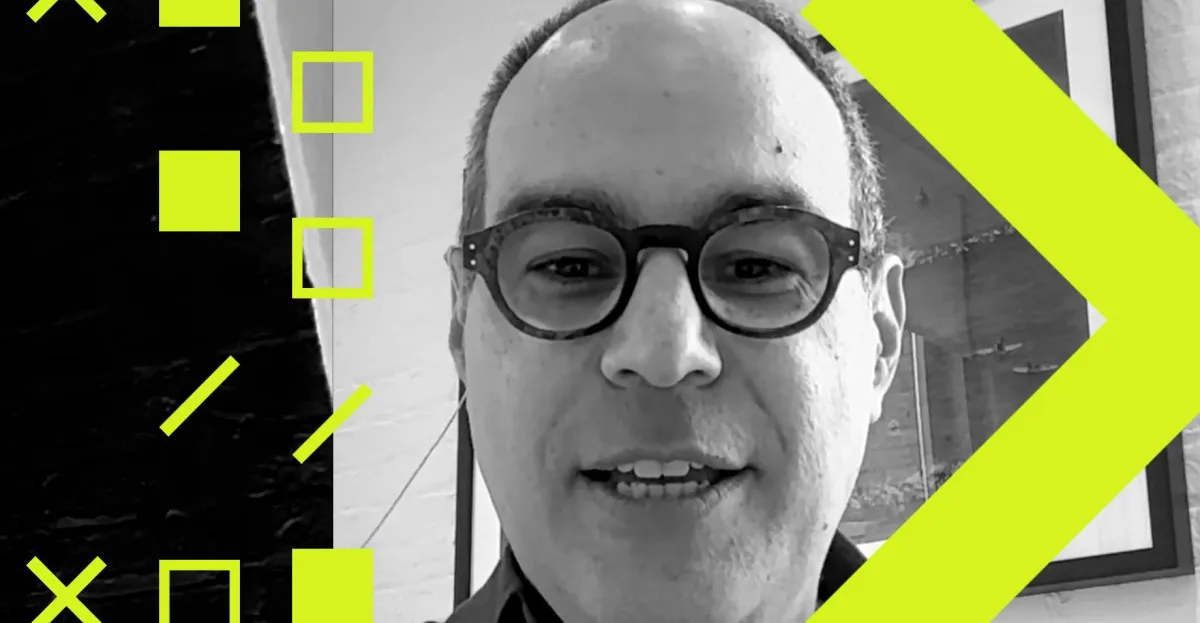
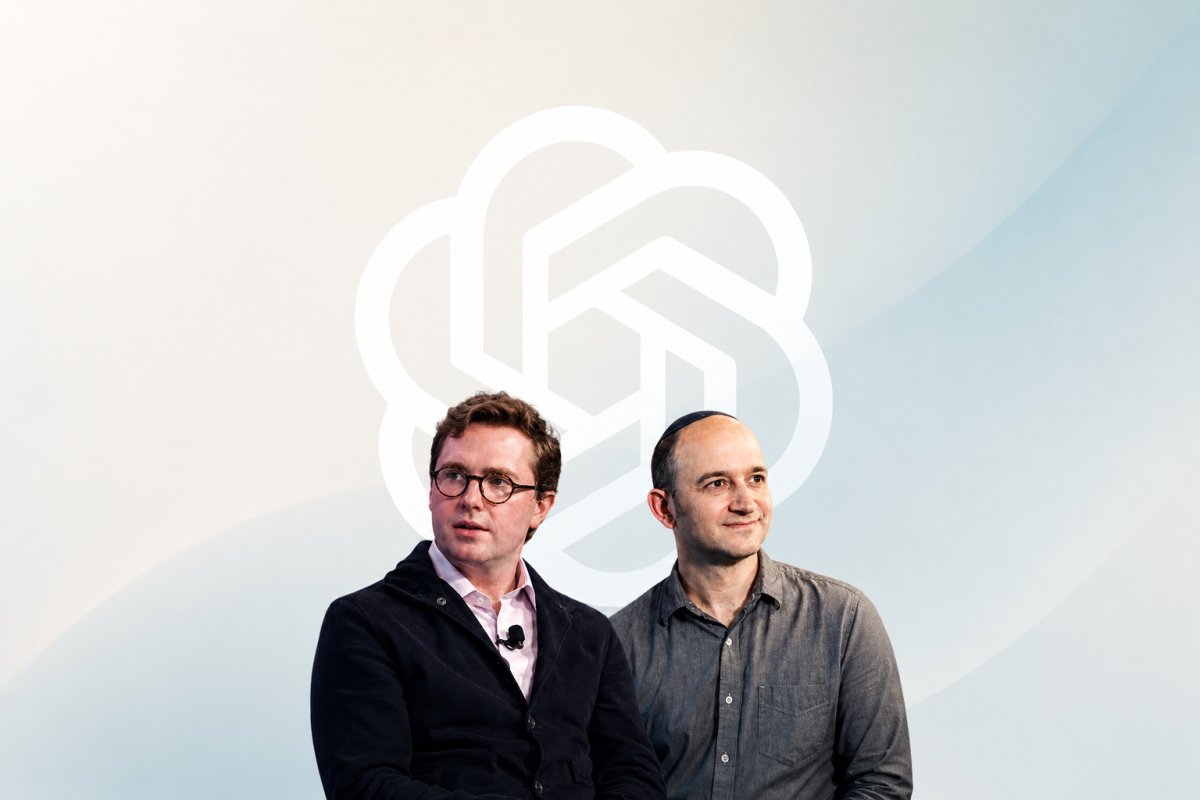
OpenAI is hiring Google DeepMind veteran Noam Shazeer and former White House AI policy official Dean Ball as it prepares for an IPO. The moves highlight the company’s focus on frontier AI talent and governance.
- OpenAI is adding major technical and policy talent ahead of a potential public debut.
- Noam Shazeer, a key figure behind the Transformer architecture, is leaving Google for OpenAI.
- Dean Ball will lead a new Strategic Futures team focused on AI risk and governance.
- The hires reflect rising competition and regulatory pressure across the top AI labs.
OpenAI is tightening its bench with two hires that say as much about the company’s ambitions as they do about the state of the artificial intelligence industry. The ChatGPT maker is bringing in Google DeepMind veteran Noam Shazeer and former White House AI policy official Dean Ball, a pairing that blends technical prestige with policy expertise as OpenAI moves closer to a public-market debut.
The appointments come at a moment when the largest AI labs are competing on models, talent, government access, and influence over how the next era of AI will be governed. For OpenAI, the hires suggest a strategy built not only on shipping more powerful products, but also on preparing for the scrutiny, regulation, and strategic complexity that tend to accompany a possible initial public offering.
Why these hires matter now
In normal times, bringing on a leading researcher and a policy specialist would be noteworthy but routine. In today’s AI market, it is a signal. OpenAI is operating in an environment where technical edge and political fluency increasingly travel together. The company’s leadership knows that a future shaped by frontier AI will likely be decided not just in product launches, but in Washington, in international trade policy, in boardrooms, and in the courts.
Shazeer’s addition gives OpenAI a heavyweight with deep roots in the architecture that underpins modern generative AI. Ball’s arrival gives the company someone who has recently worked close to the machinery of federal AI policymaking. Together, the hires reflect a broader industry trend: the leading labs are no longer hiring only for model quality, they are hiring for influence, governance, and resilience.
Noam Shazeer returns to a familiar battlefield
Noam Shazeer is one of the most recognizable names in the modern AI talent market. He is widely credited as a foundational figure in transformer-based systems, the technology family that powers today’s most capable large language models. His name is inseparable from the 2017 research paper that introduced the Transformer architecture, a breakthrough that changed how AI systems process language and, ultimately, how the entire sector evolved.
Shazeer’s path has repeatedly crossed with Google. He spent years at the company, left to co-found Character AI, then returned in a multibillion-dollar deal that gave Google access to the startup’s technology. He later served as a co-lead on Gemini, Google’s flagship AI effort, before now departing again for OpenAI. The move underscores how small the circle of elite AI researchers remains at the very top of the industry.
A career defined by pivotal moments
Shazeer is not simply another senior engineer moving between firms. His work has helped shape the current AI era from multiple angles: research, product, and startup leadership. His experience inside both a major platform company and a consumer-facing AI startup gives him unusual perspective on how models are built, scaled, and commercialized.
For OpenAI, that background is valuable for a company that has moved from research lab to product juggernaut in only a few years. The firm now faces a different set of demands than it did in its earlier days. It must recruit talent at the highest level while also keeping pace with rivals that are rapidly improving their own systems.
Another sign of talent churn among the top labs
Shazeer’s departure also fits a wider pattern of movement among the dominant AI organizations, including OpenAI, Google, Anthropic, Meta, and others. The industry’s most important breakthroughs often depend on a relatively small pool of researchers, and the companies that win those people can gain meaningful strategic advantages.
That churn has become one of the defining features of the AI race. Teams form, split, reunite, and reassemble across competing labs, often carrying with them knowledge about scaling, architecture, alignment, and product design. The result is a market where competition is fierce but talent is tightly interlinked.
Ball’s role points to OpenAI’s policy ambitions
While Shazeer strengthens OpenAI’s technical muscle, Dean Ball brings something else: a deep familiarity with government AI policy. Ball briefly worked in the White House last year, where he helped shape America’s AI Action Plan before returning to the Foundation for American Innovation, a techno-libertarian think tank where he served as a senior fellow.
Ball said he will join OpenAI on July 6 and lead a new group called Strategic Futures. Reporting to Chief Strategy Officer Jason Kwon, the team is expected to focus on frontier AI policy and the broader strategic questions surrounding advanced systems.
Ball described the new unit as a compact, highly autonomous team that will examine catastrophic risk, recursive self-improvement, labor-market effects, and the relationship between frontier AI developers, governments, and society.
He also emphasized that the team will not only handle outward-facing policy work. According to Ball, it will also deal with internal governance — the decision-making systems that shape how a company controls, tests, deploys, and limits its most advanced models.
Internal governance becomes a competitive issue
That emphasis matters because the AI industry is increasingly realizing that governance is not just a regulatory burden. It is becoming part of competitive strategy. Companies that can demonstrate robust internal controls may be better positioned with regulators, enterprise customers, and investors, especially as the sector moves toward more mature financial markets.
Ball’s view is that major AI labs may need to take the lead on governance because the stakes are so high and the systems they build are changing so quickly. In his telling, the future of AI will depend as much on internal decision structures as on external laws.
That is a notable framing for OpenAI at a time when the company is likely thinking beyond research and toward the obligations of a public company. Greater scrutiny from shareholders, regulators, and the public would only intensify the need for clear governance processes.
The broader race among AI giants
The moves at OpenAI should be read against the backdrop of a rapidly shifting field. Google has been working to defend and extend its lead in model development and product integration. Anthropic has positioned itself around safety and enterprise trust. Meta continues to invest heavily in open and closed model development. OpenAI, meanwhile, remains one of the most visible names in the sector and one of the most closely watched.
What makes this period especially volatile is that the boundary between technical progress and geopolitical concern has blurred. Frontier models are now relevant to national competitiveness, labor market disruption, misinformation risks, cybersecurity, and trade restrictions. That means companies are no longer just competing on who builds the best chatbot or coding tool. They are competing on who can navigate the policy terrain around those systems.
Talent, policy, and market timing
These hires also arrive as the company prepares for the more disciplined environment of public markets. Public investors often want to know not only whether a company can grow, but whether it can manage risk. For an AI lab, risk now includes model misuse, export restrictions, regulatory bottlenecks, safety failures, and the possibility of strategic surprises from rivals or governments.
In that setting, a researcher with a record as strong as Shazeer’s and a policy specialist with government experience like Ball’s become more than symbolic additions. They help tell a story about readiness.
How the OpenAI appointments compare with recent industry moves
Recent months have shown how much AI competition now depends on both technical talent and regulatory positioning. OpenAI’s latest hires fit neatly into that pattern. The company appears to be staffing up for a phase in which advanced model development, public policy, and corporate governance are intertwined.
The following table summarizes the two additions and why they stand out.
| Executive | Background | New role at OpenAI | Why it matters |
|---|---|---|---|
| Noam Shazeer | Google DeepMind veteran; co-founder of Character AI; co-author of the Transformer paper | Technical leadership role, details not fully disclosed | Brings elite research credibility and deep model-building experience |
| Dean Ball | Former White House AI policy official; senior fellow at Foundation for American Innovation | Leader of Strategic Futures, starting July 6 | Adds policy expertise focused on frontier AI, risk, and governance |
What Shazeer brings to OpenAI technically
Shazeer’s presence is especially significant because the transformer architecture is still the backbone of most major generative AI systems. Although the field has continued evolving, the research behind transformers remains one of the most important breakthroughs in the history of artificial intelligence.
That gives OpenAI access to someone with rare institutional memory. He understands how frontier systems have been built, where they have broken down, and how leading labs think about model development at scale. In a field where incremental gains can translate into huge product advantages, that matters.
From startup founder to lab veteran
His stint at Character AI also adds an entrepreneurial dimension. Character AI has been among the more visible consumer AI products to emerge in the current wave, showing that Shazeer has experience outside traditional research environments. That matters for OpenAI, which operates at the intersection of research and mass-market products.
Companies at this level often want people who can move fluently between prototype ideas, infrastructure realities, and product strategy. Shazeer’s career suggests exactly that mix.
What Ball signals about OpenAI’s policy posture
Ball’s new unit, Strategic Futures, suggests OpenAI wants to formalize how it thinks about risks that extend beyond the immediate product cycle. His list of priorities is revealing. Catastrophic risk points to existential and societal concerns around advanced AI. Recursive self-improvement refers to the possibility that systems could help improve themselves, a concept that has long fascinated and alarmed AI researchers. Labor market impact speaks directly to the economic consequences of increasingly capable automation.
The inclusion of the relationship between frontier labs, governments, and society suggests the team will not operate in a narrow legal or public-relations lane. It is intended to be strategic, cross-cutting, and possibly influential in shaping how OpenAI interprets its role in the broader ecosystem.
Ball argued that AI labs may have to make key governance decisions internally, because the pace of technological change can outstrip the speed of outside rules.
That is a consequential idea. It implies a future where the private sector is not merely waiting for regulation but actively designing the norms and processes by which advanced AI is controlled.
Regulatory pressure is rising around the sector
OpenAI’s hiring push comes at a moment when the regulatory landscape for AI is unsettled and politically charged. Governments in the United States and abroad are trying to determine how to control advanced systems without stifling innovation. Export controls, national security reviews, model access restrictions, and safety obligations are now part of the business environment.
The story becomes even more pointed when set beside recent developments affecting rivals. Anthropic, which has positioned itself as a safety-conscious competitor, has recently faced pressure from the U.S. government, illustrating how quickly political and regulatory decisions can alter product availability and market momentum.
For a company preparing for IPO-level scrutiny, being seen as operationally and politically prepared can be a serious advantage. Investors are likely to ask whether the company can sustain growth while avoiding regulatory shocks. Hiring someone with Ball’s background helps OpenAI answer that question in the affirmative.
Government access is becoming a strategic asset
As AI becomes more central to national policy, access to policymakers and fluency in government process may matter almost as much as model quality. Labs that can communicate effectively with regulators, anticipate legal changes, and present themselves as responsible stewards may have an edge in winning contracts, shaping rules, or simply avoiding disruption.
That does not mean policy expertise replaces research talent. Instead, it becomes a parallel form of capability. OpenAI’s latest hires reflect that reality.
A timeline of the moves behind the headlines
The current round of personnel changes can be understood more clearly through a short timeline.
| Date | Event | Significance |
|---|---|---|
| 2017 | Shazeer co-authors “Attention Is All You Need” | Introduces the Transformer architecture that underpins modern generative AI |
| 2023 | Google rehires Shazeer in a multibillion-dollar deal tied to Character AI | Shows the premium on elite AI talent and startup IP |
| 2025 | Ball works in the White House on AI policy, then returns to policy research | Builds his credentials in frontier AI governance |
| June 2026 | Shazeer announces he is leaving Google; Ball announces he is joining OpenAI | Marks a major staffing shift for a company nearing IPO |
| July 6, 2026 | Ball is scheduled to start at OpenAI | Launch of the new Strategic Futures team |
What it could mean for OpenAI’s IPO narrative
For any company headed to public markets, narrative matters. OpenAI will want to present itself as a leader not only in model performance, but in institutional maturity. That means showing it can attract top technical talent, manage policy complexity, and think several moves ahead.
Shazeer and Ball help tell that story in different ways. Shazeer reinforces the idea that OpenAI remains one of the places where the best AI minds want to work. Ball reinforces the idea that the company understands the stakes of the market it has helped create.
Public investors may interpret those hires as evidence that OpenAI is broadening its leadership toolkit before facing the discipline of the market. In the AI sector, where volatility is the norm and expectations are enormous, that preparation could prove important.
The risk factors are no longer theoretical
The company’s expansion into policy and governance also suggests an acknowledgment that AI risk is not abstract. It includes government action, labor disruption, model misuse, and reputational shocks. It also includes the possibility that the next regulatory move could affect revenue, deployment, or partnerships.
Strategic Futures sounds like an attempt to build a standing capability for those scenarios rather than handling them ad hoc. For a company of OpenAI’s scale, that may be less optional than it seems.
The bottom line
OpenAI’s latest hires are about more than filling seats. They reveal where the company thinks the AI competition is heading: toward a world where top-tier research, public policy, and internal governance are all inseparable from product development and market strategy.
Bringing in Noam Shazeer strengthens the technical core. Bringing in Dean Ball strengthens the company’s policy brain. Together, the hires show OpenAI preparing for a future in which the biggest questions around AI will not just be about what the models can do, but about who gets to decide how they are used.
As the company edges toward a public debut, that may be the most important message of all.
Key facts at a glance
- Noam Shazeer is one of the best-known researchers behind the Transformer architecture.
- Shazeer previously worked at Google, co-founded Character AI, and later returned to Google in a major acquisition-driven deal.
- Dean Ball is set to join OpenAI on July 6 to lead a new Strategic Futures team.
- Ball’s team will focus on frontier AI policy, catastrophic risk, labor effects, and governance.
- The hires reflect OpenAI’s broader push to strengthen both technical and policy leadership ahead of an IPO.
OpenAI did not immediately provide additional details when asked for comment.