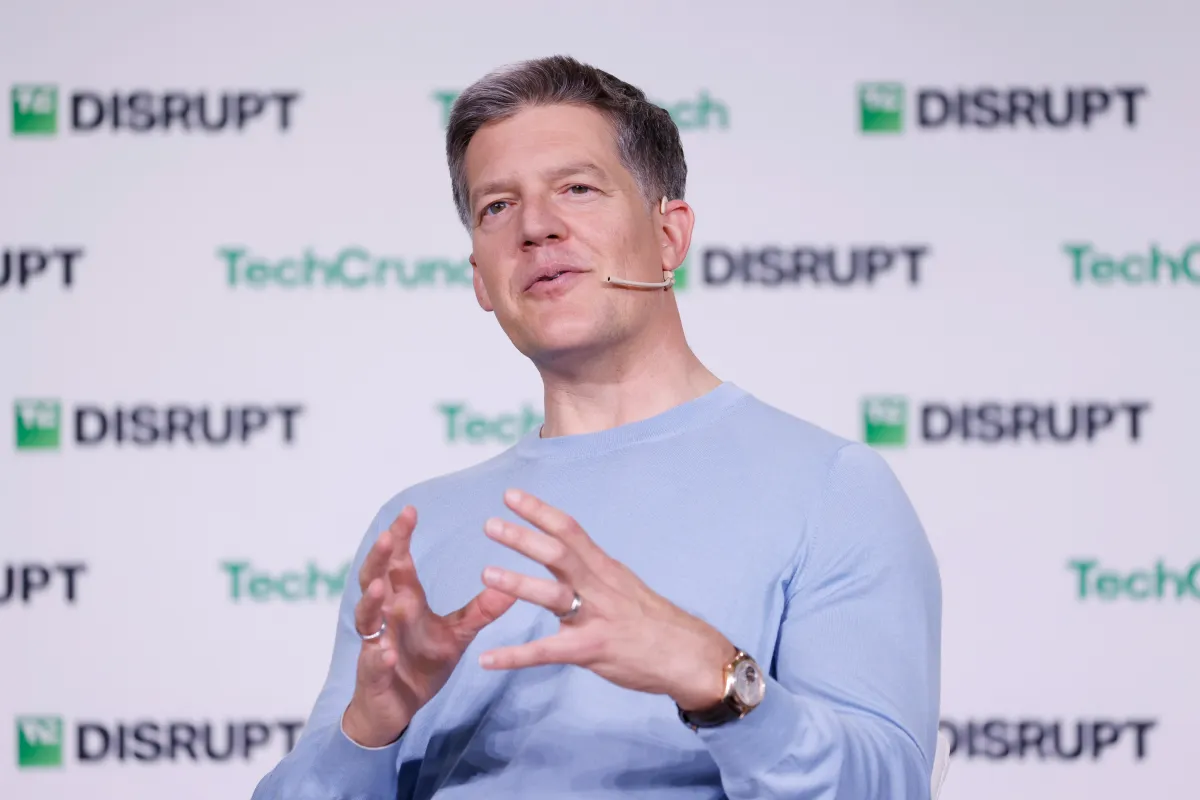
SpaceX has added one of Silicon Valley’s most seasoned dealmakers to its board, appointing former Sequoia Capital managing partner Roelof Botha just days after the company completed what is being described as the largest initial public offering in history. The move gives Elon Musk’s rocket and satellite company another high-profile director with deep experience in public markets, governance and audit oversight at a moment when SpaceX is under intense scrutiny as a newly public company.
The appointment was disclosed in a filing with the U.S. Securities and Exchange Commission on Wednesday. SpaceX said Botha was selected to fill an existing vacancy and will remain in the role until the next annual shareholder meeting. He will also sit on the board’s audit committee, a post that places him directly in one of the company’s most important governance functions.
While the filing gave little additional detail, the addition is notable because it broadens a board already populated by close Musk allies, longtime investors and senior executives. It also comes at a pivotal point for SpaceX, which has just crossed a major financial milestone and is now operating with the obligations and expectations that come with public-company status.
A board move with immediate implications
Board appointments at a company like SpaceX can say as much about strategy and control as they do about management structure. Bringing in Botha signals an emphasis on investor credibility, financial discipline and public-market expertise. It also suggests that SpaceX wants to reinforce the oversight architecture around a business that now faces the challenges of scaling across rockets, satellites, defense contracts and global internet services while answering to a wider shareholder base.
SpaceX framed Botha as a director who brings substantial experience in public-company governance and audit work. That matters because the audit committee is typically responsible for financial reporting, controls, risk management and relations with outside auditors. For a company with complex revenue streams, heavy capital requirements and rapid expansion, those responsibilities are far from ceremonial.
Botha did not immediately respond to requests for comment.
Who Roelof Botha is and why SpaceX wants him
Botha is widely known in venture capital circles for helping steer Sequoia Capital through years of growth and market upheaval. He stepped down from leading the storied firm late last year, ending a tenure that made him one of the most recognizable investors in technology. Before that, he built a reputation for working closely with founders while also maintaining a sharp focus on capital allocation and board governance.
In its filing, SpaceX emphasized that Botha has served on the boards and audit committees of multiple public companies. That background is especially relevant now that SpaceX is no longer an ultra-private, closely held outlier. A company with public shares must maintain tighter reporting standards, broader investor communication and stronger internal controls than it did when its shareholder universe was largely limited to early backers and employees.
Botha’s appointment also reflects a broader pattern in Silicon Valley: as elite private companies mature into public-market giants, boards often seek directors who can bridge the cultures of venture-backed growth and public-company accountability.
A brief overlap with Elon Musk
Botha’s connection to Elon Musk goes back more than two decades. The two briefly crossed paths at PayPal in 2000, according to Botha’s professional history. He joined the payments company in March of that year, while Musk was ousted as chief executive later that year. That overlap gives Botha a historical link to the Musk ecosystem, even if the relationship does not appear to have been central in the public record until now.
It is not unusual for Musk-associated companies to feature directors with longstanding personal or professional ties to the founder. SpaceX’s board has historically been shaped by a mix of loyalists, investors and executives who are familiar with Musk’s leadership style and the intense pace of the business. Botha fits that mold, but with a new layer of public-company polish.
What changes on the SpaceX board
With Botha’s arrival, SpaceX’s board grows to nine members. That expansion does not simply change the number of seats; it also adds another voice to oversight decisions that can influence everything from capital strategy to risk oversight and governance structure.
The current board now includes:
- Elon Musk, who serves as chairman
- Ira Ehrenpreis
- Antonio Gracias
- Steve Jurvetson
- Luke Nosek
- Gwynne Shotwell, SpaceX’s president and chief operating officer
- Donald Harrison, a Google executive
- Randy Glein, a venture capitalist
- Roelof Botha
This composition highlights SpaceX’s unusual blend of company leadership, Musk confidants, venture capital veterans and at least one senior executive from another major technology company. The board’s makeup suggests a governance model designed to support long-term strategic ambition while retaining enough financial and operational expertise to manage a massive, capital-intensive enterprise.
Even in the best circumstances, balancing those priorities can be complicated. In SpaceX’s case, the stakes are higher because its business touches aerospace engineering, launch services, satellite infrastructure, government contracting and consumer internet access, all of which carry distinct regulatory, financial and operational pressures.
Why the audit committee matters now
Botha’s spot on the audit committee is one of the most important elements of the appointment. Audit committees are often viewed as the backbone of board-level financial oversight. They monitor accounting practices, internal controls, disclosure quality and interactions with auditors, while also serving as a key check on management.
For a company newly propelled into the public spotlight, that function becomes especially critical. Public investors want confidence that revenue is being recognized properly, liabilities are understood, risks are disclosed and the company’s internal systems can support rapid growth without sacrificing accuracy or accountability.
SpaceX is not a conventional public company. Its operations are spread across launch vehicles, human spaceflight, Starlink broadband, government partnerships and advanced engineering programs. Each line of business brings different financial assumptions and risk profiles. A director who understands both startup-scale ambition and public-company discipline is an asset under those conditions.
Audit oversight in a company like SpaceX
In practice, the audit committee will likely be concerned with issues such as:
- Financial reporting controls across multiple business units
- Revenue recognition in long-cycle contracts and subscription services
- Risk management tied to launches, satellites and defense work
- Compliance with public-company disclosure requirements
- Coordination with external auditors and internal finance teams
That list is especially relevant as SpaceX expands its scale and visibility. The company’s recent IPO likely brought not only an influx of capital but also a sharper spotlight from analysts, regulators and shareholders.
How the appointment fits SpaceX’s transition to public markets
SpaceX’s public debut has changed the context around every governance decision it makes. A private company can move quickly with limited disclosure. A public one must answer to broader ownership, tighter rules and a more demanding cadence of reporting. Adding a director with both investor credentials and board-room experience is a logical step in that transition.
Public markets tend to reward companies that signal preparedness. New directors are often viewed as part of that signal, especially when the appointee is known for operating at the highest levels of venture capital and corporate governance. Botha’s inclusion may help reassure investors that SpaceX intends to pair its famously aggressive execution culture with stronger oversight.
At the same time, the appointment may also be read as a way to maintain continuity. SpaceX’s board has long been influenced by people who know Musk and the company’s operating style well. Botha adds governance expertise without fundamentally altering the board’s broader orientation around Musk’s strategic control.
Timeline: how this appointment unfolded
| Date | Event | Why it matters |
|---|---|---|
| March 2000 | Roelof Botha joins PayPal | Establishes an early professional overlap with Elon Musk |
| Late 2025 | Botha steps down from leading Sequoia Capital | Opens the door for a new chapter in public-company governance |
| Earlier this month | SpaceX completes a record-setting IPO | Transforms the company into a public-market entity |
| Wednesday, June 17, 2026 | SpaceX announces Botha’s board appointment in an SEC filing | Adds public-company and audit expertise to the board |
Why this could matter beyond corporate governance
SpaceX’s board changes will be watched closely not only by investors but also by competitors, suppliers, regulators and government partners. The company is one of the most strategically important in the U.S. technology and aerospace sectors. Its launch capabilities are central to satellite deployment, national security missions and commercial access to orbit. Its Starlink network also carries geopolitical significance as internet access, communications resilience and rural connectivity become more contested.
That means board composition is more than an internal housekeeping issue. When a company becomes this influential, each governance decision can shape how outsiders assess its reliability, maturity and long-term trajectory.
Botha’s presence could help SpaceX project a more established public-company image, especially to institutional investors that value experienced oversight. At the same time, the appointment reinforces the idea that Musk’s orbit remains highly selective: the people brought into his companies tend to be highly accomplished, strategically aligned and deeply trusted.
SpaceX said Botha brings “extensive public company experience” and a strong audit committee background, underscoring why the company views him as a fit for the board at this stage of its evolution.
The broader Musk network remains intact
One of the most striking aspects of SpaceX’s board is how many members have deep ties to Musk or his business network. That includes investors who have backed him through multiple ventures and executives who have worked closely with him across different companies. Botha’s appointment does not break that pattern; if anything, it strengthens it by bringing in someone with both personal history and institutional credibility.
The board now includes veterans of the Musk ecosystem alongside figures with major corporate and venture backgrounds. That blend can be powerful in a company that still operates more like a frontier engineering project than a standard industrial conglomerate. But it also means the board must navigate the tension between speed and oversight, boldness and accountability.
As SpaceX becomes more visible to public investors, those tensions will become harder to ignore. The company’s ability to balance founder control with governance rigor may become one of the defining stories of its new public era.
What to watch next
Because this is a developing story, several questions remain open. Investors and analysts will want to see how Botha contributes in practice, whether additional board changes follow and how SpaceX structures reporting around its newly public profile.
Key areas to monitor include:
- Whether SpaceX makes further additions to strengthen audit and compliance oversight
- How the company communicates with shareholders in the months after its IPO
- Whether board committees are restructured to reflect public-company demands
- How Musk and the board balance operational urgency with governance discipline
For now, the message is clear: SpaceX is filling out its board with people who can help manage the complexity of a company that has crossed from startup mythology into public-market scrutiny. Roelof Botha’s arrival is one of the strongest signals yet that the company intends to bring heavyweight governance talent into the room as it enters this new phase.
In practical terms, that may help SpaceX reassure investors that the company is preparing for life after its record-setting debut. In symbolic terms, it shows that even one of the world’s most ambitious technology companies still needs seasoned hands when the paperwork, oversight and accountability start to catch up with the rocket science.