In short
Airlines, researchers and tech firms are using crowdsourced flight data and AI to improve turbulence prediction and avoidance. The work is gaining momentum as climate change, new computing power and fresh NSF funding make the problem more solvable, though not perfectly.
- WIRED says airlines and researchers are using crowdsourced flight data and AI to improve turbulence prediction.
- The FAA recorded more than 200 serious U.S. turbulence injuries from 2009 to 2023.
- The NSF awarded $30 million to nine universities for a new turbulence center called Tempest.
- SkyPath says its app has more than 40,000 devices and can warn pilots 10 to 15 minutes ahead of turbulence.
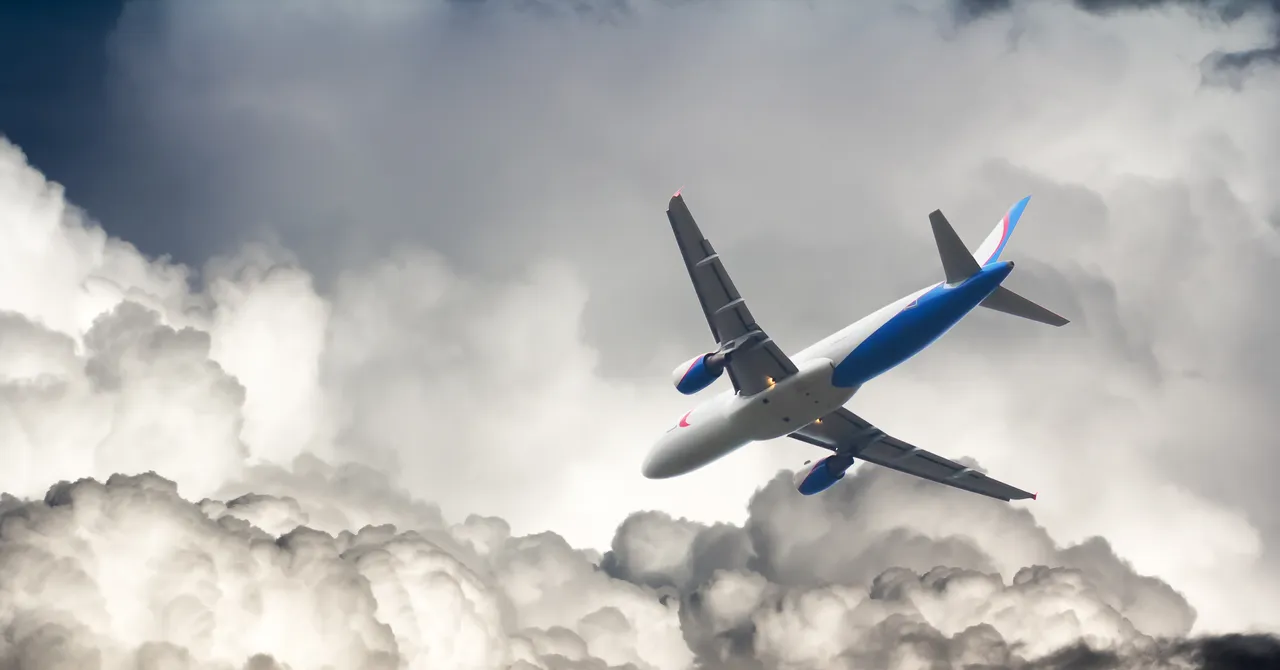
Airlines, researchers and tech firms are increasingly using crowdsourced flight data and artificial intelligence to improve turbulence prediction and avoidance, as the long-standing problem becomes more urgent for passenger safety and airline operations. The push comes at a moment when aviation has far more data to work with, cheaper onboard computing and a worsening atmosphere that is making some turbulence harder to avoid.
Why turbulence is suddenly a bigger tech problem
Turbulence has resisted clean solutions for generations because it remains an unsolved classical-physics problem. Even with better forecasting tools, the chaotic motion of air masses can be hard to pin down before an aircraft flies into it.
That challenge matters because the stakes are not theoretical. The Federal Aviation Administration has recorded more than 200 people seriously injured in turbulence incidents in the United States from 2009 through 2023, according to WIRED. And climate change is making some of the hardest-to-predict conditions worse, particularly around the jet stream and in clear-air turbulence that can appear without visible warning.
The aviation industry also has new technical advantages that did not exist at the scale they do now. Aircraft engines generate enormous streams of data — about 20 terabytes per hour of commercial flight, according to the International Air Transport Association — while onboard computing has become cheap enough to process more information in near real time.
How airlines and researchers are using flight data
One of the biggest shifts is that researchers have shown turbulence can be detected without new hardware on the aircraft. WIRED reports that existing federally required broadcasts of position, altitude and speed can help identify unexpected turbulence, turning data aircraft already send into a usable forecasting signal.
That lowers the barrier to adoption. Instead of waiting for airlines to install specialized sensors across fleets, scientists can work with data that is already available in normal operations. The result is a more practical path to near-term safety gains, especially when paired with machine learning models that can look for patterns too subtle for conventional methods to catch quickly.
The goal is not perfect prediction. Researchers and industry figures say turbulence forecasting may improve substantially without ever becoming flawless, because the atmosphere does not behave like a simple mechanical system. Still, even imperfect warnings can help crews adjust altitude, reduce exposure and prepare passengers and cabin crew before rough air hits.
Why it matters
This is not just an academic exercise. Better turbulence prediction can affect flight safety, airline schedules, crew injuries and passenger experience. A warning that arrives even 10 or 15 minutes earlier can change how a cockpit responds and whether a cabin is prepared for sudden motion.
It also matters commercially. Airlines face costs when turbulence forces diversions, creates maintenance issues or injures crew and passengers. A system that helps pilots avoid the roughest air could reduce those risks while making flights feel less disruptive for travelers.
For researchers, the aviation effort is part of a larger scientific race to make machine learning useful in places where classical physics remains stubbornly difficult. The same ideas are being tested beyond aircraft, including in fusion plasma and cosmic gas clouds.
What SkyPath is trying to do
One of the clearest examples of this new approach is SkyPath, which uses iPad accelerometer data combined with weather forecasts to predict turbulence. According to WIRED, the company says more than 40,000 devices have the app and that several major airlines, including American, use it.
SkyPath says its system can warn pilots 10 to 15 minutes before turbulence. That kind of lead time is modest, but in aviation it can still be useful. It may give crews enough time to secure the cabin, advise passengers and alter flight path if conditions allow.
“It’s like any crowdsourced software,”
That comparison from Eric, a pilot and SkyPath user, captures the basic idea behind the model: more users and more flight data can make the system more useful over time. As with other crowd-based tools, the value comes from scale, repetition and constant updates from many flights rather than from a single instrument or a one-off forecast.
Background: how turbulence became a frontier for AI
The scientific roots of turbulence research go back centuries. WIRED notes that Leonardo da Vinci studied swirling fluid motion in the early 1500s, a reminder that the problem has outlived many generations of mathematicians and physicists. Even now, the underlying equations that describe fluid motion, including the Navier-Stokes problem, are central to the field.
That is why the recent surge of attention around AI matters. Machine learning is increasingly being used in weather and aviation forecasting, where the task is not to replace physics but to add pattern-recognition tools to a system that already has a dense observational record.
In the past two years, research projects using flight data for turbulence prediction have moved into field use, suggesting the work is no longer confined to laboratory studies and conference papers. The shift has been helped by the fact that modern aircraft and airline systems already generate and transmit a great deal of information during ordinary operations.
By the numbers
| Measure | What WIRED reports | Why it matters |
|---|---|---|
| 20 terabytes per hour | Data generated by an aircraft engine during commercial flight, per IATA | Shows the scale of information now available for analysis |
| More than 200 | People seriously injured in U.S. turbulence incidents from 2009 to 2023, according to FAA data | Illustrates the safety impact of severe turbulence |
| $30 million | NSF award announced for a new turbulence research center | Signals major federal investment in the problem |
| Nine universities | Institutions receiving the NSF turbulence-center funding | Shows the work is being spread across multiple research teams |
| More than 40,000 | Devices with SkyPath installed, according to the company | Indicates the size of the crowdsourced data network |
| 10 to 15 minutes | Advance turbulence warning SkyPath says it can provide | Represents the practical window airlines can use to respond |
What the federal research push adds
In September, the National Science Foundation announced a $30 million award to nine universities for a new turbulence research center called Tempest. The center will study turbulence not only in air but also in fusion plasma and cosmic gas clouds, broadening the scientific payoff beyond aviation alone.
That broader scope matters because turbulence is one of those problems that keeps appearing across scientific disciplines. Progress in one area can feed another, especially when researchers are developing better computational tools and new ways to interpret data.
Michael Murillo, a professor of theoretical and computational physics at Michigan State University and head of Tempest, has framed the challenge in stark terms. “It’s the hardest remaining problem in classical physics, and it’s one we need to fly through,” he said.
Murillo has also said, in the context of Tempest’s wider mission, that “Turbulence is the reason we don’t have fusion energy yet,” underscoring how the same underlying physics complicates both aviation and energy research.
Larry Cornman, a physicist at the National Science Foundation’s National Center for Atmospheric Research, argued the timing is favorable for practical progress. “The time is now to work on these things because we can do them.”
How AI fits into a problem physics has not solved
The appeal of AI is not that it magically solves turbulence. Rather, it can help forecast or classify patterns in data-rich systems where traditional methods struggle to turn raw measurements into timely decisions.
WIRED also points to OpenAI’s fall announcement on solving the Navier-Stokes problem as evidence that AI is increasingly being viewed as relevant to turbulence research. Whatever the ultimate scientific meaning of that announcement, it reflects a broader belief among researchers and technologists that better models may emerge from combining physics, computation and data-driven tools.
That does not remove uncertainty. Machine learning can improve forecasts, but turbulence remains messy, nonlinear and deeply dependent on conditions that may change quickly. The best near-term outcome may be not perfect prediction but faster detection, better warnings and fewer surprises in the air.
What happens next
The key question is not whether turbulence can be eliminated — it cannot — but how much better forecasts can become in practice. The next phase will show whether airlines are willing to share data broadly across carriers, whether researchers can improve accuracy enough to matter operationally and how quickly these systems reduce injuries and disruptions.
Tempest will be a major project to watch, especially because it links aviation turbulence to fusion and astrophysics research. If the center produces better models or methods, the impact could spread beyond airlines.
For now, the most immediate test is at the level of daily flight operations. If crowdsourced systems like SkyPath continue to scale and if airlines trust the warnings enough to act on them, passengers may start to see turbulence become less of an unpredictable jolt and more of a managed risk.
What to watch in the months ahead
- Whether SkyPath and similar tools expand to more airlines and flight routes.
- Whether the Tempest center produces new turbulence models with practical aviation use.
- Whether researchers can prove that existing aircraft broadcasts are enough to spot turbulence reliably.
- How climate-driven changes in the jet stream affect the frequency of clear-air turbulence.
- Whether airlines begin sharing more flight data across carriers to improve model quality.
For an industry built on precision, turbulence remains one of aviation’s least cooperative hazards. The new strategy is not to conquer it outright, but to see it earlier, measure it faster and reduce the damage it can do.
Frequently asked questions
How are airlines using AI to predict turbulence?
Airlines are combining crowdsourced flight data, weather forecasts and machine learning to spot patterns that can signal rough air earlier. WIRED reports that researchers have also shown existing required broadcasts of position, altitude and speed can help detect unexpected turbulence without new onboard hardware.
Why is turbulence so hard to forecast?
Turbulence is hard to forecast because it remains an unsolved classical-physics problem and can appear in chaotic, rapidly changing air conditions. Clear-air turbulence is especially difficult because it may occur without visible warning, even when the sky looks calm.
What is SkyPath and how does it work?
SkyPath is a turbulence-prediction tool that uses iPad accelerometer data plus weather forecasts. According to WIRED, the company says more than 40,000 devices have the app and that it can warn pilots 10 to 15 minutes before turbulence.
What is the Tempest turbulence center?
Tempest is a new turbulence research center funded by a $30 million National Science Foundation award to nine universities. It will study turbulence in air, fusion plasma and cosmic gas clouds, linking aviation research with broader physics problems.