In short
Meta’s Muse Charm AI pendant is reportedly headed for a December launch, but reports disagree on whether it will cost $300 or still lacks an announced price. The device is being positioned as a dedicated way to talk to Meta’s Muse AI without opening a phone app.
- Meta is targeting a December shipping window for Muse Charm.
- Reported pricing conflicts: The Verge says $300; Free Press Journal says no price has been announced.
- The device is meant for direct voice and touch access to Meta’s Muse AI agent.
- The Verge reported a possible free 12-month Verizon 5G data plan.
- Meta frames the product as part of a broader agentic-AI hardware push.
Meta’s Muse Charm AI pendant is expected to ship in December, though reported pricing is still split: The Verge says the device will cost $300, while the Free Press Journal says Meta has not announced any price. The conflicting reports matter because the Charm is meant to be Meta’s latest step toward turning AI agents into a stand-alone hardware category, not just a feature inside an app.
What Meta is building
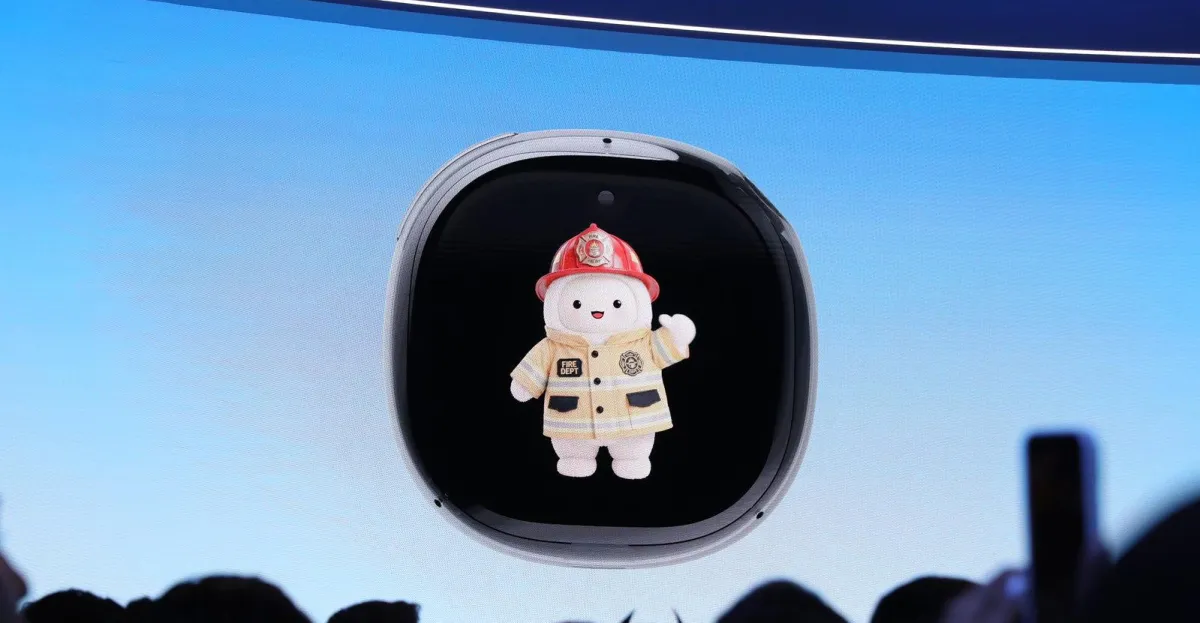
Muse Charm is a small pendant- or keychain-style device designed for chatting with Meta’s Muse AI agent. According to The Verge, Meta says the charm lets users talk to Muse without unlocking a phone or opening an app. That positioning puts the device in a crowded but still unsettled corner of consumer tech: a dedicated interface for AI, worn or carried rather than opened on a screen.
Free Press Journal adds that the device includes a fingerprint sensor and a small display, and supports both voice and touch interaction. That combination suggests Meta is trying to make the hardware feel immediate and personal, while still offering a backup way to confirm identity and handle quick commands.
The pitch is simple: if the assistant is the point, the shortest route to it may be a piece of hardware people keep within reach.
How is Muse Charm supposed to work?
According to Meta’s framing, the answer is that it should reduce friction. The device is intended to let users speak to Muse directly rather than digging through a phone interface. Free Press Journal quoted Zuckerberg as saying it is “by far the fastest way to talk to your Muse,” a line that captures the company’s effort to make the hardware sound less like an accessory and more like a new primary doorway into its AI system.
The Verge reported that Zuckerberg also described the product as something that should “packed the whole Muse experience,” language that reinforces Meta’s broader aim: the pendant is not just a notification gadget or a novelty, but an attempt to wrap the assistant into a compact, everyday form factor.
What is known about price and launch timing?
The clearest common thread across the reports is timing. Both The Verge and Free Press Journal say Meta is targeting a December launch or shipping window, with the company aiming for the holiday season. The exact date inside that month remains unclear.
Price is less settled. The Verge, citing The Information, reported a $300 price tag. Free Press Journal, by contrast, said Meta has not announced any price. Until Meta says otherwise, the retail number should be treated as reported but unconfirmed.
There is also a possible wireless-services angle. The Verge said The Information reported that the device will include a free 12-month Verizon 5G data plan. If accurate, that would make the Charm more than a standalone device: it would be a connected product with a built-in service bundle designed to lower the barrier to trying it.
By the numbers
| Detail | Reported or stated value | What it means |
|---|---|---|
| Reported price | $300 | The Verge, via The Information, says this is the expected retail price |
| Launch window | December | Meta is targeting a holiday-season shipping schedule |
| Bundled data plan | 12 months | The device reportedly includes a free Verizon 5G plan |
| Smartwatch timing | 2027 | The Information says Meta’s related smartwatch launch has slipped |
Why it matters
Muse Charm is important because it shows Meta trying to move AI out of the software layer and into a dedicated piece of consumer hardware. That matters for users, because hardware can change when and how people interact with an assistant. It matters for the market, because it hints at a new category: AI devices that are meant to be used constantly, not just opened when needed. And it matters for Meta, because a successful launch could help the company define a product area where rivals are still experimenting with format, pricing and purpose.
The reports also suggest Meta is testing whether people will pay for convenience even when the underlying AI may be available elsewhere on a phone or computer. If a $300 pendant becomes a serious product, that would be an early sign that consumers are willing to buy a dedicated object for agentic AI, especially if the device feels quicker than pulling out a handset.
There is another strategic layer here: the Charm appears to fit into a wider hardware push around Meta’s AI ambitions. The company has been building AI assistant features across apps, glasses and other devices, and Meta says the pendant is a preview of its agentic-AI hardware push. In other words, this is not an isolated gadget; it is being presented as part of a broader product family.
Background: how Meta got here
Meta’s AI hardware push has been building for some time across apps, smart glasses and other devices, according to the background provided in the fact sheet. The company has repeatedly tried to make AI feel embedded in its ecosystem rather than tacked on as a separate tool, and Muse Charm looks like another attempt to bring that strategy into physical form.
Connect is Meta’s annual stage for these kinds of announcements, and Digit said Meta unveiled Muse Charm at Connect 2026 on September 24, 2026. The Verge separately reported that Zuckerberg had already said earlier this year that the device would ship in time for the holidays. Put together, the timeline suggests a product that has been in public view for months but is still missing some key commercial details.
The smartwatch angle also helps explain the bigger picture. The Verge reported that Meta is developing a smartwatch, but that its launch has slipped to 2027, according to The Information. That delay leaves Muse Charm to carry more of the burden of proving that Meta can sell an AI-focused device outside the glasses category.
What the launch timeline looks like
Here is the sequence as reported across the outlets named in the fact sheet:
- Earlier this year, Zuckerberg first revealed Muse Charm and said it would ship in time for the holidays.
- Digit said Meta unveiled Muse Charm at Connect 2026 on September 24, 2026.
- On November 19, 2026, The Verge reported the rumored $300 price and December shipping target.
That progression matters because it shows the product moving from announcement language into commercialization language. Meta is no longer just teasing a concept; it is being described as close to shipping, even if some basics remain unresolved.
Where the reports agree — and where they don’t
The reporting is broadly consistent on the device’s purpose and timing, but there are still important gaps. The Verge and Free Press Journal both describe a December launch target. Both also frame the product as a compact, wearable or carryable interface for Muse. But the price is where the biggest contradiction appears.
The Verge, via The Information, says the price is $300. Free Press Journal says Meta has not announced any price. That is not necessarily a direct conflict in substance; it may simply reflect the difference between a reported internal or supply-chain price point and an official company announcement. Still, readers should treat the number as reported, not confirmed.
There is also uncertainty about geography. Meta has not confirmed global availability or launch markets, according to Free Press Journal, and no India rollout timeline has been shared. That means the device may arrive first in a limited set of regions, even if the company’s long-term plan is broader.
What could make or break the product?
Several unresolved details will determine whether Muse Charm feels like a useful AI companion or a niche experiment. The most obvious is price. At $300, the device would need to justify itself against phones, earbuds and other connected gadgets that already handle voice prompts and notifications. If the company doesn’t confirm the number, it may be because the final commercial decision is still in flux.
Another question is input. Free Press Journal says the device has a fingerprint sensor and a small display, and supports voice and touch. But the fact sheet leaves open whether it will launch with camera-based input or only voice and touch. That matters because the more ways the device can sense context, the more ambitious Meta’s AI hardware pitch becomes.
Battery life, connectivity and service bundling will also matter. A free 12-month Verizon 5G plan, if confirmed at launch, would lower friction for early adopters. It would also make the Charm feel less like a standalone object and more like a connected service platform.
What happens next
The next milestone is the December shipping window. Until Meta gives a firmer date, the market will be watching for whether the company narrows the launch to a particular week or keeps the release vague into the holiday season.
Also worth watching are three announcements that could reshape expectations:
- confirmation of the final retail price;
- clarification on whether the Verizon bundle ships with the device;
- details on where Muse Charm will be sold first.
Any one of those could change how the device is received. A lower-than-expected price might make the Charm easier to test as an impulse holiday purchase. A limited regional rollout would signal caution. And confirmation of the service bundle could show Meta is serious about subsidizing adoption in the same way phone makers and carriers do.
The smartwatch delay to 2027 also leaves room for Meta to use Muse Charm as a bridge product. If the pendant lands well, it could help prove demand for AI-specific hardware before the company’s broader wearables lineup catches up.
What readers should watch for
For consumers, the key question is not whether Meta can build another AI feature. It is whether the company can persuade people to carry a separate object just to talk to an assistant more quickly. That is a higher bar.
For the industry, the more important question is whether agentic AI becomes a hardware category in its own right. Meta appears to be betting yes, and Muse Charm is the clearest signal yet that the company wants to compete on physical design, not only software reach.
For now, the pendant sits in a familiar tech limbo: announced enough to be real, detailed enough to be intriguing, but not yet fully priced, dated or geographically confirmed. December should answer at least some of those questions.
“We’re charmed by the interest in our AI devices, and we’ll have more to share soon.”
That line from Meta spokesperson Tyler Yee, reported by The Verge, may be the most revealing statement in the story. It confirms interest without confirming the details that matter most. In the AI hardware race, that can be enough to keep attention high until the company is ready to put a product in people’s hands.
Frequently asked questions
What is Meta’s Muse Charm?
Meta’s Muse Charm is a small pendant- or keychain-style device built for chatting with Meta’s Muse AI agent. According to the reporting, it is designed to let users talk to the assistant without opening a phone app or unlocking a device.
How much will Muse Charm cost?
The reported price is $300, but that figure is not officially confirmed. The Verge cited The Information for the number, while Free Press Journal said Meta has not announced any price, so the final retail figure remains uncertain.
When will Muse Charm launch?
Meta is targeting December shipping for Muse Charm, according to both The Verge and Free Press Journal. The reports point to a holiday-season release, but they do not specify an exact launch date inside that month.
Will Muse Charm be available worldwide?
That is not yet clear. Free Press Journal said Meta has not confirmed global availability or launch markets, and it also noted that no India rollout timeline has been shared.
Does Muse Charm come with cellular service?
The Verge reported that The Information says the device will include a free 12-month Verizon 5G data plan. That has not been officially confirmed by Meta, so it should be treated as a reported detail rather than a final product specification.