Updated November 17, 2026 5:54 pm
In short
Spotify has opened its Artist Profile Protection tool to all artists, and says the launch comes as deepfake song removals have surged to more than 260,000 across digital platforms.
- Spotify opened Artist Profile Protection to all artists after an eight-month beta.
- The tool lets artists get alerts, remove mismatched releases and, if they choose, require manual approval before songs appear on their profiles.
- Spotify says it is the first streaming service with a fix for content mismatch.
- The rollout comes as AI-generated fake songs and metadata errors are creating more catalog confusion on music platforms.
Update — November 17, 2026 5:54 pm
Spotify says the rollout is now live for all artists, not just the smaller beta group it had been testing with for the past eight months.
The company also gave a sharper warning about the scale of the deepfake problem, citing Billboard’s report that Sony Music recently asked for the removal of more than 260,000 deepfake songs from digital platforms, almost twice the number the label had disclosed in March.
Spotify’s marketing and policy chief Sam Duboff also said the tool is meant to keep spammy or incorrect releases off artists’ pages altogether, and reiterated the company’s claim that it is the first and only streaming service with a fix for content mismatch.
Spotify has rolled out Artist Profile Protection to all artists, a new control meant to keep wrong, fake or impersonated releases from appearing under the wrong name on the platform. The feature matters because it gives musicians a direct way to detect and remove misattributed music as AI-generated tracks and metadata errors keep swelling the problem of identity confusion in streaming.
What Spotify launched
Spotify said Artist Profile Protection is now available to every artist on the service after an eight-month beta with a smaller group of users. The tool is built to help artists control what music appears on their profile and to respond when a release lands there by mistake or through abuse.
The company says the system is designed to deal with three common sources of confusion: impersonation, bad metadata and artists who share the same name. That makes the launch more than a simple moderation update. It is an identity-management feature for a platform where a wrong upload can follow a musician into search results, artist pages and fan discovery.
Spotify framed the move as a first for streaming services, saying it is the first platform with a fix for content mismatch. The company also said thousands of artists helped refine the beta before the public rollout.
How Artist Profile Protection works
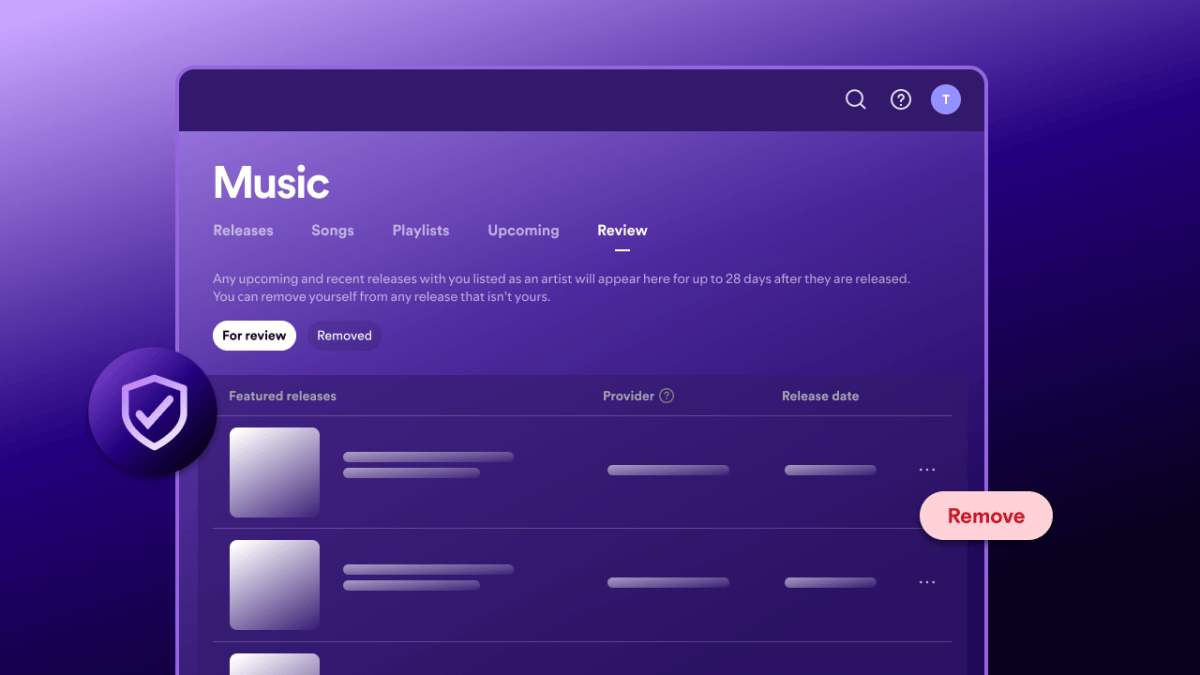
The tool gives artists two main layers of control. First, they can receive alerts when new music is submitted under their name. Second, they can disassociate releases that are not theirs so those tracks stop appearing on their profile.
Spotify says the default behavior is designed to be low-friction: releases can go live unless an artist steps in. For musicians who want tighter control, there is an optional stricter setting that requires manual approval or rejection before a release shows up on the profile page.
That distinction matters. A default-open system can reduce delays for legitimate releases, while the stricter mode gives artists a stronger gate when identity confusion is a bigger concern. The feature sits inside Spotify for Artists, the company’s artist-facing dashboard for managing profile and release settings.
| Feature | What it does | Who it helps |
|---|---|---|
| Alerts | Notifies artists when new music is submitted under their name | Artists watching for impersonation or mistakes |
| Disassociation | Removes releases that are not theirs from the artist profile | Artists dealing with wrong uploads or shared names |
| Default release flow | Lets music go live unless the artist intervenes | Most artists seeking minimal friction |
| Manual approval mode | Requires approval or rejection before profile display | Artists who want tighter control |
Why it matters
The rollout arrives as music platforms wrestle with a surge in AI-generated slop and increasingly convincing fake tracks. For artists, the problem is not only offensive or confusing; it can also distort catalog data, muddy audience trust and pull attention away from legitimate releases.
Identity errors on streaming services can have practical consequences. A song posted under the wrong artist page can show up in a fan’s library, in algorithmic recommendations or in search results, creating the impression that a musician released something they never made. Once that happens, the cleanup can be time-consuming, especially if the error involves a name collision or a deliberate impersonation.
Spotify’s new controls also speak to a broader shift in platform responsibility. Streaming services have long relied on labels, distributors and metadata systems to keep catalogs clean. By adding a profile-level protection layer, Spotify is making artist identity management feel like a core product feature rather than an after-the-fact support request.
There is also a competitive signal here. Spotify says it is the first streaming service to offer a fix for content mismatch, a claim that, if matched by real-world use, could push other platforms to tighten their own controls. The launch effectively sets a benchmark for how music services handle the flood of low-quality, synthetic or fraudulent uploads.
Background: how streaming got here
Streaming platforms have always had to deal with metadata problems. Songs can end up attached to the wrong profile because of simple data-entry mistakes, duplicate names or bad handoffs between distributors and platforms. Those issues were inconvenient before AI entered the picture, but the rise of machine-generated music has made them more visible and more difficult to ignore.
Fake tracks are now a recurring issue for the music business. The fact sheet points to a recent example reported by Billboard: Sony Music sought the removal of more than 260,000 deepfake songs from digital platforms. That figure offers a sense of scale. This is no longer about a few isolated upload errors; it is an industrial problem that can overwhelm moderation systems and support teams.
Spotify’s response follows an eight-month beta with select artists, suggesting the company spent time testing how the feature would work in real use. Spotify also said thousands of artists helped refine the system, which indicates the company used the beta not just to debug the tool, but to calibrate how much control artists actually want.
The product sits inside Spotify for Artists, which already serves as the company’s main channel for artist profile management. That placement matters because it puts identity protection alongside other release and profile tools artists already use, rather than burying it in a separate reporting process.
How this could change the artist-platform relationship
Artist Profile Protection could change the way musicians think about platform administration. Instead of waiting for a takedown after a bad release appears, artists now have a more active role in deciding what should live on their profile in the first place.
That shift has at least three implications.
- Cleaner catalogs: less chance that a bogus or mislabeled track remains visible under an artist’s name.
- Faster response: alerts and disassociation tools may shorten the time between upload and correction.
- Better trust: fans are less likely to see a profile polluted by unrelated or synthetic releases.
For major artists, this may become an important safeguard against impersonation. For emerging artists, especially those with common names, it may help reduce confusion before it spreads. And for the platform, fewer mismatches should mean fewer support escalations and fewer public complaints about broken attribution.
The bigger question is how often artists will choose the stricter manual-approval mode. A default-open system may suit most users, but the real test will be whether the stronger setting becomes common enough to make a visible dent in bad uploads.
Spotify’s quoted case for the tool
Spotify Global Head of Marketing and Policy Sam Duboff said the company sees the issue as one artists should never have to manage on their own. “Artists should never have to find someone else’s music under their name,” Duboff said.
Duboff also said the rollout is broad from day one. “Starting today, every artist on Spotify can use Artist Profile Protection,” he said.
He added that the company views the feature as a direct answer to a wider industry problem. “We’re the first and only streaming service with a solution to the industry-wide problem of content mismatch,” Duboff said.
By the numbers
Spotify’s announcement is built around a few concrete markers that show both the scale of the problem and the runway the company says it needed before launch.
| Metric | Figure | What it refers to |
|---|---|---|
| Beta length | 8 months | Testing period before public rollout |
| Deepfake removals sought | 260,000+ songs | Billboard-reported Sony Music request to remove fake tracks from digital platforms |
| Artist input | Thousands of artists | Participants who helped refine the beta |
What happens next
The immediate question is adoption. Spotify has launched the feature for all artists, but it is not yet clear how many will use the stricter manual-approval setting. That will be one of the clearest signs of whether the tool is a niche safeguard or a standard part of release management.
Another question is whether competitors will follow. Spotify says it is first to offer a content-mismatch solution, but the pressures driving the move are not unique to one platform. Any service hosting large music catalogs faces similar problems with impersonation, mislabeled tracks and synthetic uploads.
Effectiveness is the next test. The company can announce a feature, but the real measure will be whether artists see fewer unauthorized or misattributed releases on their pages, and whether labels file fewer urgent takedown requests after launch.
There is also a broader policy question hanging over the rollout: how platforms should draw the line between open distribution and identity control. Spotify’s default setting preserves speed, while the manual option adds oversight. If artists embrace the stricter model, it may shape future industry expectations for how much gatekeeping is appropriate when synthetic music and metadata abuse are part of the same problem.
Timeline
The rollout has been building over several months, and the sequence shows how the company moved from limited testing to a broad launch while the wider problem of deepfake music kept growing.
| When | What happened |
|---|---|
| Eight months before 2026-11-17 | Spotify began beta testing Artist Profile Protection with select artists |
| Last month before 2026-11-17 | Billboard reported Sony Music sought removal of more than 260,000 deepfake songs |
| 2026-11-17 | Spotify rolled out Artist Profile Protection to all artists |
Bottom line
Spotify’s new Artist Profile Protection is a practical response to a problem that has become both more common and more damaging: music appearing under the wrong name. By letting artists get alerts, remove mismatched releases and optionally require approval before music appears on their profiles, Spotify is trying to turn artist identity control into a platform feature, not a cleanup chore.
Whether it works will depend on adoption and enforcement. But the launch is a clear signal that streaming services can no longer treat fake, misattributed or AI-generated releases as a peripheral nuisance. For artists, the right name on the right profile is becoming a basic expectation of platform trust.
Frequently asked questions
What is Spotify’s Artist Profile Protection?
Spotify’s Artist Profile Protection is a new tool for artists to control what music appears under their name on the platform. It sends alerts for new submissions, lets artists remove releases that are not theirs, and offers a stricter approval setting for added control.
Why did Spotify launch this feature now?
Spotify launched it now because streaming services are dealing with more impersonation, bad metadata and AI-generated fake tracks. The company says the feature is meant to reduce content mismatch and help artists keep wrong releases off their profiles.
How does the stricter setting work?
The stricter setting requires artists to manually approve or reject a release before it appears on their profile. That gives musicians more control when they want to prevent mismatched uploads from going live automatically.
Is Spotify the only streaming service with this kind of protection?
Spotify says it is the first streaming service with a solution for content mismatch. The company is positioning the rollout as a unique fix, although other platforms may face similar pressure to build comparable tools.
How big is the fake-song problem?
The fact sheet points to a major example from Billboard, which reported that Sony Music sought removal of more than 260,000 deepfake songs from digital platforms. That figure suggests the problem is large enough to strain catalog and moderation systems.