In short
Nvidia’s board has removed Jensen Huang as CEO after a scandal involving alleged espionage and affairs, naming CFO Colette Kress interim CEO. The upheaval also raises new questions about Nvidia’s China strategy and its standing with U.S. officials.
- Nvidia’s board removed Jensen Huang as CEO, president and director effective immediately.
- CFO Colette Kress has been named interim CEO while the board searches for a permanent replacement.
- The scandal includes allegations involving an alleged Chinese spy and a second affair with a direct report.
- TechCrunch says the controversy may deepen scrutiny of Nvidia’s China business in Washington.
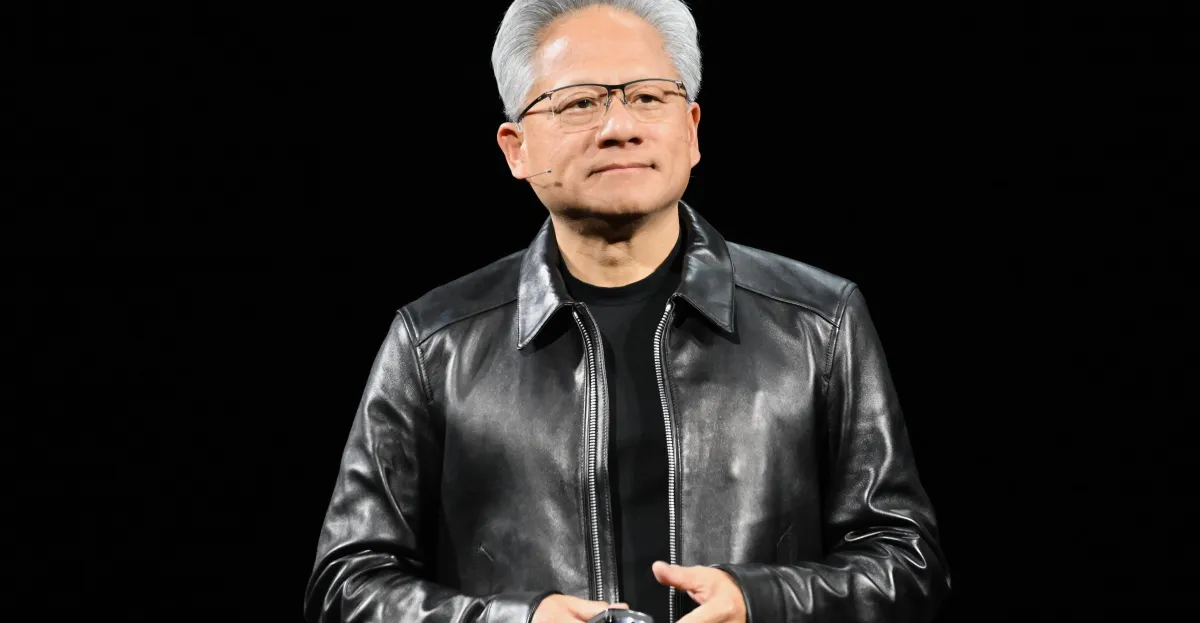
Nvidia’s board has removed Jensen Huang as chief executive immediately, naming chief financial officer Colette Kress as interim CEO after a scandal involving allegations of espionage, undisclosed relationships and growing political scrutiny over the company’s China business. The decision, reported by The Verge and TechCrunch, marks an abrupt break with the founder who has led Nvidia since 1993.
What happened?
According to The Verge, Nvidia’s board accepted Huang’s resignation as CEO, president and director, effective immediately, after a late Wednesday board meeting and a Thursday press release. Kress, who joined Nvidia in 2013, was named interim chief executive while the company begins a search for a permanent replacement.
The board also named Harvey C. Jones as the first board chair in the company’s history, signaling a broader governance reset at a moment when the chipmaker is under unusual pressure from both Wall Street and Washington.
The trigger was a set of allegations involving Huang. The Verge reported that he was accused of having an affair with Alice Huang, described as an alleged Chinese spy and Megaspeed executive, and of a second affair with another Nvidia executive who reported directly to him. The New York Times identified that second executive as Kimberly Powell, according to The Verge.
Huang admitted being unfaithful and apologized to his family and shareholders in a memo to employees, The Verge reported. TechCrunch said the apology came Sunday, after the allegations had already begun circulating more widely.
Why it matters
This is not just a personal scandal at a powerful company. Nvidia sits at the center of the global AI boom, supplying the accelerator chips used to train and run major models. A leadership shock at the top of such a company can quickly spill into customer confidence, investor sentiment and policy scrutiny.
The timing also matters because Nvidia’s China sales are already politically sensitive. TechCrunch reported that U.S. intelligence officials reportedly believe Alice Huang was recruited by Chinese intelligence, and that Huang’s lobbying on China policy is now facing fresh scrutiny. If that scrutiny hardens, the company could find it harder to defend its business in a market that remains commercially important even as export controls tighten.
For readers, the biggest implication is that corporate governance, geopolitical risk and personal conduct are colliding in one of the most strategically important companies in the world. A boardroom response that would be dramatic at almost any firm becomes even more consequential at Nvidia because of the company’s role in AI infrastructure and U.S.-China tech policy.
How did Nvidia get here?
Huang founded Nvidia in 1993 and has led it for 33 years, becoming the public face of the company as it grew from a graphics-chip specialist into the dominant supplier of AI accelerators. That long tenure made the board’s action especially unusual and helped explain why the announcement landed as a shock rather than a routine transition.
Colette Kress is not an outsider parachuted in from another industry. She has been at Nvidia since 2013 and has long been one of the company’s most visible executives. By elevating the finance chief to interim CEO, the board chose continuity over a clean break while it searches for a permanent leader from either inside or outside the company, according to The Verge.
TechCrunch added another layer to the story by tying the controversy to Nvidia’s China policy debates. Huang had argued for continued U.S. chip sales to China and opposed tighter export controls, the outlet reported. It also said his lobbying on China predated the reported meeting with Alice Huang at an Nvidia event in early 2024.
That chronology matters because it suggests the board is not responding only to a personal scandal. It is also trying to contain the wider consequences of an episode that could complicate the company’s relationship with regulators, lawmakers and intelligence agencies.
By the numbers
| Metric | Figure | What it refers to |
|---|---|---|
| Huang’s tenure | 33 years | Length of time he led Nvidia since founding |
| Kress joined Nvidia | 2013 | Year the interim CEO came aboard |
| China-headquartered customer revenue | $7.9 billion | Revenue in the three months ended July 26, 2026 |
| Share of total revenue from China-headquartered customers | 8% | Quarterly share reported by TechCrunch |
| Nvidia investment portfolio value | $99 billion | Figure cited by The Verge |
| Reported held-up H200 chips | 600,000 | Reuters-reported units awaiting mainland shipment in Hong Kong |
What the reports say, and where they differ
The two outlets line up on the broad arc of the story but emphasize different pieces of it. The Verge focused on the board action, the immediate leadership change and the scandal’s personal details. TechCrunch concentrated more heavily on the policy fallout, especially the implications for Nvidia’s China business and Washington’s view of the company.
They also differ on timing. The Verge said the scandal emerged after a late Wednesday board meeting and a Thursday press release. TechCrunch said Huang’s apology to employees came Sunday. Together, those reports suggest the board moved quickly once the allegations and internal fallout became impossible to ignore.
Both accounts point to a company trying to control a fast-moving crisis while preserving the appearance of operational stability. That is why Kress’s appointment is important: it keeps the finance chief at the helm while the board evaluates both internal and external candidates for the permanent job.
Background: the China question hanging over Nvidia
Nvidia has been pulled between two realities for years. On one side is its central role in global AI computing, which makes its chips indispensable to major companies and researchers. On the other is the growing friction between the U.S. and China over advanced semiconductors, with export controls shaping what can be sold where and under what conditions.
TechCrunch reported that Huang had repeatedly met with Trump administration officials last year to discuss China chip policy. The same report said Huang publicly argued in May 2026 that separate U.S. and China AI ecosystems were “not wise.” That position reflected a familiar business argument: that splitting the world’s AI infrastructure into rival camps could slow development and reduce commercial opportunity.
But the political environment has shifted. U.S. export controls have limited advanced chip sales to China, while Beijing has pushed domestic alternatives. Those pressures already made Nvidia’s China strategy contentious. The scandal now gives critics a new lens through which to examine the company’s access, influence and judgment.
TechCrunch also noted that Congress is seeking answers over the allegations. That raises the stakes further. Even if the board’s internal investigation finds no evidence of wrongdoing beyond the admitted personal conduct, the political damage could linger if lawmakers decide the affair raises national-security concerns.
Key context points
- Nvidia dominates AI accelerator chips and supplies systems used for model training and deployment.
- U.S. export controls have restricted advanced chip sales to China.
- Beijing has encouraged domestic chip alternatives in response.
- Corporate boards can remove CEOs immediately and install interim leadership during a search.
What did the board do after the allegations surfaced?
The board moved from concern to action in a matter of days. The Verge reported that Nvidia’s board accepted Huang’s resignation effective immediately, while independent directors, working with outside counsel, are investigating the allegations, according to TechCrunch.
That separation matters. The board is not simply replacing a CEO; it is also trying to establish a process that looks credible to investors, regulators and employees. Bringing in outside counsel is a standard way to signal that the review is independent, not just a damage-control exercise run from inside the executive suite.
Harvey C. Jones’s elevation as the company’s first board chair also suggests Nvidia wants a clearer governance structure during the transition. The move may help distance the board from the founder-centric model that has defined the company for decades.
Why now could be the worst possible moment
The controversy arrives when Nvidia is already operating under intense scrutiny because of its China exposure. TechCrunch cited a recent quarter in which Nvidia generated $7.9 billion from China-headquartered customers, equal to 8% of total revenue. Those are not trivial numbers; they show why China remains strategically important even as regulators tighten the screws.
The same report said Reuters had found 600,000 H200 chips were being held in Hong Kong awaiting shipment to the mainland. If that sort of inventory is still in motion, every public question about Nvidia’s political access or compliance posture becomes more consequential.
For investors, the worry is not only whether sales will be constrained. It is also whether the company’s reputation in Washington could change. If lawmakers and officials start seeing Nvidia’s China advocacy through the lens of a personal scandal, the company may face a colder reception just as it needs policy clarity most.
The Verge also cited Nvidia’s $99 billion investment portfolio, a reminder that the company’s reach extends well beyond chip sales. Any instability at the top can ripple through partnerships, capital allocation and the broader ecosystem around the firm.
What happens next?
The immediate next step is the search for a permanent CEO. The Verge said the board is considering both internal and external candidates, which leaves open the possibility that Nvidia could either promote from within or bring in an outsider with no prior ties to the company’s founder era.
At the same time, the independent investigation continues. The open questions are serious:
- Whether Nvidia’s investigation finds any transfer of sensitive information
- Who ultimately becomes permanent CEO
- Whether regulators or lawmakers broaden the scrutiny
- How the allegations affect Nvidia’s China sales strategy
- Whether Huang’s standing with U.S. officials and investors changes permanently
The political angle may move faster than the corporate one. TechCrunch said Congress is already seeking answers, and the reported intelligence concerns around Alice Huang could invite more attention from national-security circles. Even if no further misconduct is proven, the narrative around Nvidia’s China lobbying may prove hard to reverse.
There is also the question of Huang himself. The fact sheet indicates he admitted being unfaithful and apologized to family and shareholders, but the board has moved beyond a private apology. For a founder who has been synonymous with Nvidia for 33 years, the next phase may be defined less by his public contrition than by how successfully the company can separate its future from his past.
The broader takeaway
Nvidia’s crisis shows how quickly a personal scandal can become a corporate and geopolitical problem when it lands at the center of AI infrastructure. The company’s board has tried to isolate the damage by removing Huang, naming a seasoned interim successor and starting a formal search. Whether that is enough will depend on what the investigation uncovers, how Washington reacts and whether customers see continuity in the business despite the upheaval at the top.
For now, Nvidia has traded the certainty of a long-serving founder for the uncertainty of a public reckoning. In a sector built on speed, scale and trust, that is a costly place to be.
“NVIDIA’s strength has always come from its people”
— Colette Kress, Nvidia CFO and interim CEO
“Our focus remains on serving our customers, partners, developers and shareholders.”
— Colette Kress, Nvidia CFO and interim CEO
Frequently asked questions
Why did Nvidia remove Jensen Huang as CEO?
Nvidia removed Jensen Huang after a scandal involving allegations of espionage, an alleged affair with a person described as a Chinese spy, and a second affair with a direct report. The board accepted his resignation effective immediately and named Colette Kress interim CEO.
Who is replacing Jensen Huang at Nvidia?
Colette Kress is serving as interim CEO. She joined Nvidia in 2013 and had been the company’s chief financial officer before the board elevated her during the leadership shake-up.
How could the scandal affect Nvidia’s China business?
The scandal could intensify scrutiny of Nvidia’s China strategy because TechCrunch says Huang’s lobbying on China policy is now under fresh review. That matters because Nvidia still generated $7.9 billion from China-headquartered customers in the quarter ended July 26.
Is Nvidia investigating the allegations?
Yes. TechCrunch reported that Nvidia’s independent directors, with outside counsel, are investigating the allegations. That review could shape whether the company faces further internal changes, regulatory attention or legal fallout.