In short
France has summoned TikTok, eBay and other platforms to emergency meetings after riots and looting spread online. Officials want faster moderation of protest content and tighter controls on the resale of stolen goods.
- France called emergency meetings with social platforms and marketplaces over unrest, livestreams and stolen goods.
- Authorities say more than 1,500 shops were looted or damaged and over 2,400 people were arrested.
- TikTok added a warning label to protest-related searches as officials accused platforms of amplifying unrest.
- Marketplace operators agreed to monitor listings, share reports with investigators and act quickly on suspicious ads.
France has summoned major online platforms, including TikTok and eBay, to emergency talks after days of unrest sparked a wave of rioting, looting and a rapid spread of protest footage online. The government says the meetings are intended to stop social platforms from amplifying violence and to block the resale of goods stolen during the disturbances.
The action comes as authorities struggle to contain some of the most serious civil disorder France has seen in years. Officials are now relying not only on police operations, but also on platform moderation, marketplace controls and rapid reporting systems to limit the spread of harmful content and disrupted commerce.
Why France moved so quickly on social platforms
France’s digital affairs minister, Anne Le Hananff, brought representatives from social media firms into an emergency meeting on Tuesday after officials said some platforms were being used to fuel unrest. According to French broadcaster BFM, the government used the meeting to remind companies that they are expected to moderate content aggressively, including livestreams, when that material could encourage violence or help people ignore a curfew.
The concern is not limited to messaging or calls to protest. Officials also want to curb the circulation of edited or synthetic visuals that can intensify panic, stir anger or make it harder for the public to verify what is happening in real time.
French officials said the platforms were reminded that they have a responsibility to remove or limit content that could promote violence, break curfew rules or spread misinformation during an active public-order crisis.
The government’s approach reflects a broader shift in Europe, where online services are increasingly expected to help manage real-world harm, especially during fast-moving emergencies. In this case, the pressure is twofold: prevent the online escalation of protests and stop the digital resale of goods taken during the unrest.
What triggered the emergency meetings?
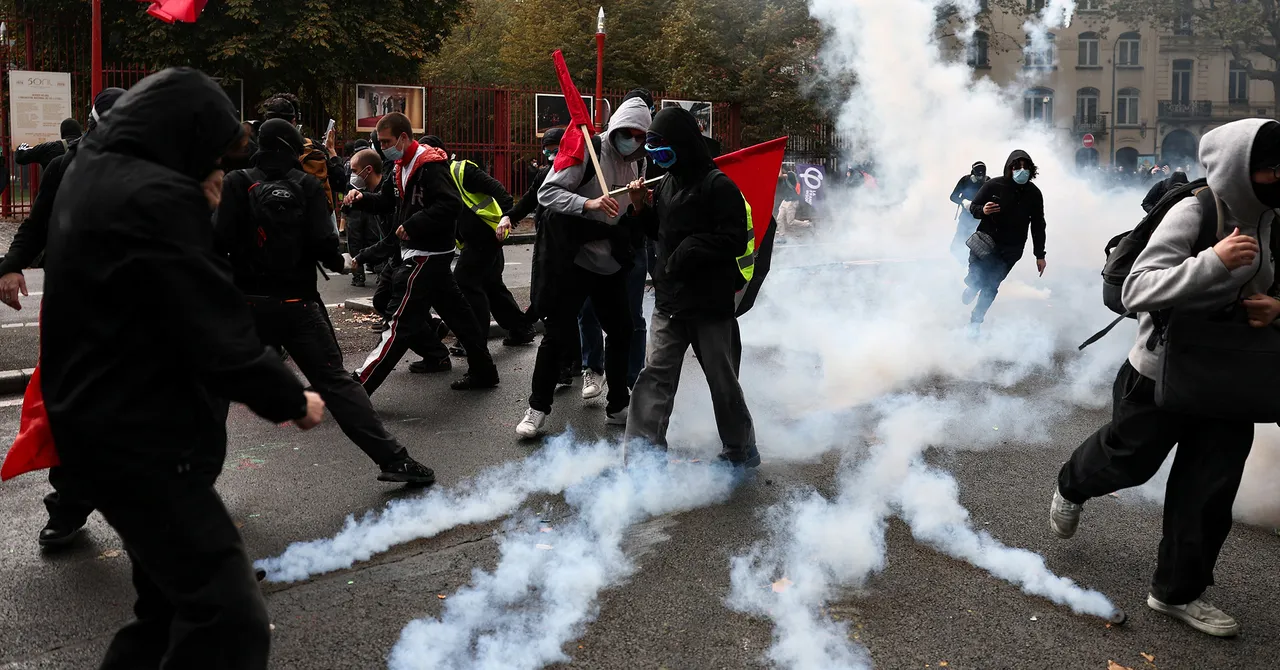
The immediate trigger was a weekend of escalating disorder that followed peaceful demonstrations over the cost of living and pressure on public services, including schools. Those protests broadened into looting and rioting across multiple cities, with more than 1,500 shops and businesses reportedly affected.
Police have acknowledged the scale of the challenge. Interior Minister Laurent Nuñez said officers “lost control” in some areas before deploying tear gas, water cannon and batons to push back crowds. Authorities have since announced more than 2,400 arrests.
That level of disruption has made social platforms a major focus for officials. Videos of unrest can spread quickly, while marketplaces can become a channel for stolen items to be turned into cash. In the government’s view, the two problems are linked: the online visibility of protest activity can encourage further disorder, and the online resale of looted goods can create an after-market for crime.
How the crackdown on stolen goods is supposed to work
The second set of talks focused on online reselling platforms. Serge Papin, France’s minister for small and medium-sized enterprises, said on X that a formal agreement had been signed with major platforms to target the resale of looted merchandise.
According to reporting in Le Monde, the meeting included Vinted, eBay, Amazon, LeBonCoin, Meta and TikTok. The companies agreed to forward reports to investigators, monitor advertisements for goods stolen specifically during the protests, and provide the government with updates on the measures they are taking. The first report is due within 48 hours, Papin said.
The idea is to shorten the time between a stolen item appearing online and its removal from sale. That requires a mix of automated detection, user reporting and manual review, especially because many stolen items are ordinary consumer goods that can be hard to identify without context or serial numbers.
Which platforms were involved?
French officials drew in both social media services and marketplace operators because the problem spans two different parts of the online economy. One group helps distribute content; the other helps distribute goods.
- TikTok — central to concerns about protest videos, livestreams and viral content.
- eBay — singled out as a resale channel for stolen goods.
- Amazon — present at the resale meeting according to press reporting.
- Vinted — part of the marketplace coalition and a major second-hand platform in Europe.
- LeBonCoin — a key French classifieds marketplace.
- Meta — included in the resale discussions, likely because of marketplace and platform enforcement issues.
What WIRED found on TikTok
A WIRED review of TikTok found that the search term “blocus,” which means blockade in French, surfaced videos that appeared to have been altered or generated by AI. Among the examples was a viral image showing a protester dressed in a Pink Panther costume.
The same search term was also being used to promote a so-called “Act II” of the protests set for October 24, suggesting that online conversation was not only documenting events but also helping shape expectations for what might happen next.
In response, TikTok attached an “evolving situation” warning to the search results. The label told users that the situation was developing quickly and that available information could be unverified, incomplete or inaccurate. It also urged users to be cautious and report material that might violate the company’s rules.
That response shows how platforms are increasingly leaning on warning labels when they cannot immediately verify all content. But labels are not the same as removal. During fast-moving unrest, governments often want quicker intervention, particularly when content may encourage attendance at demonstrations, show tactics, or amplify false claims.
Why are marketplaces under pressure too?
Marketplaces are under pressure because protests create an immediate opportunity for thieves to convert stolen property into cash. Electronics, clothing, tools, beauty products and household items can all be listed quickly if a seller is willing to risk detection.
French law already gives authorities a strong legal basis to pursue that conduct. Under penal rules cited by officials, anyone who conceals, holds or transfers goods they know were obtained through crime can face up to five years in prison and a fine of €375,000.
That legal threat matters because online resale can create a layer of distance between the original theft and the eventual buyer. A stolen item may look like any other used product, especially if a seller posts generic photos, alters descriptions or moves the transaction off-platform after first contact.
| Issue | Government concern | Platform response described in reporting |
|---|---|---|
| Protest content | Livestreams and viral videos may spread violent material or encourage curfew-breaking | Warnings, moderation and removal when content violates rules |
| Stolen goods | Looted merchandise may be resold quickly online | Reports to investigators, ad monitoring and seller suspensions |
| Verification | Fast-moving events make it hard to confirm what is real | Human review, user reports and technical detection tools |
| Law enforcement | Authorities need faster leads and evidence | Platforms agreed to share reports and send updates |
How are marketplaces responding?
The French Alliance of Marketplaces, a nonprofit representing online retailers such as Back Market, eBay, Etsy, LeBonCoin, ManoMano and Vinted, said members are combining user reports, human oversight and technical tools to identify suspicious listings.
According to eBay, fake listings are removed once identified and the company can take further action against the accounts involved, including permanent suspension. eBay added that the speed of action depends on the nature of the report and the verification process required.
That explanation reflects a common challenge for marketplace operators: they must balance speed against accuracy. Remove too little, and stolen goods remain visible. Remove too quickly, and legitimate sellers can be unfairly penalized. In a crisis like this, both risks become politically sensitive.
What tools do platforms use?
Platforms rely on a blend of moderation methods, but none is perfect. The main tools include:
- User reports from buyers, sellers and law enforcement.
- Human moderation to review suspicious ads and videos.
- Automated detection to flag stolen-item patterns, copied images or repeated violations.
- Account sanctions such as listing removal, temporary restrictions or permanent bans.
- Evidence sharing with investigators when criminal activity is suspected.
In practice, these tools work best when the platforms know exactly what to look for. During widespread looting, however, the categories of stolen goods can be broad, the listings can multiply rapidly, and bad actors can move from one account to another.
What does this mean for platform accountability in Europe?
France’s response fits a broader European pattern of tighter scrutiny on digital platforms during moments of social strain. Governments increasingly expect large services to police content that might contribute to public disorder, whether that means misleading videos, inflammatory livestreams or the resale of stolen property.
The present case also highlights a practical reality: online platforms are no longer just mirrors of public events. They can amplify them, organize them and, in some cases, profit from the commerce around them. That is why officials are pressing both social media firms and marketplaces at the same time.
For social platforms, the issue is speed and virality. For marketplaces, it is trust and traceability. For police, it is evidence and enforcement. The same unrest can therefore produce three separate regulatory headaches, each requiring a different response.
Why the timing matters
The timing is significant because the unrest is still active. Authorities are not responding after the fact; they are trying to slow the spread of violence and looting while events are unfolding.
That urgency helps explain why France is leaning on public pressure and formal agreements rather than waiting for long legal proceedings. Officials want platforms to act within hours, not weeks, especially as the risk of stolen-goods listings rises in the immediate aftermath of looting.
It also explains why the first compliance report is due so quickly. A 48-hour timeline suggests the government wants measurable progress almost immediately, rather than vague promises of future improvements.
How the protests escalated into a digital problem
The unrest began as public demonstrations over high living costs and services under strain, but those complaints were soon overshadowed by criminal activity. Once rioting began, the digital environment changed the pace of events. Videos, rumors and resale listings started to move faster than official statements and police responses.
That pattern is now familiar across many countries: a local protest can become a nationwide media event within minutes, and a looting wave can turn into an online marketplace problem by the end of the same day. Authorities are therefore treating platform governance as part of public safety, not just content policy.
What makes France’s response notable is that it is trying to solve two related problems at once. One is information disorder. The other is property crime. Both are being amplified by the same digital ecosystem.
| Timeline | Event | Significance |
|---|---|---|
| Weekend | Peaceful protests over living costs and public services turn into rioting and looting | More than 1,500 businesses are hit |
| Monday | Minister Serge Papin confirms a meeting on resale platforms and says an agreement is signed | Companies commit to reporting and monitoring stolen goods |
| Tuesday | Digital affairs minister Anne Le Hananff convenes social media firms | Government presses for tighter moderation of protest content |
| Within 48 hours | Platforms are expected to deliver an initial report | Signals immediate oversight and follow-up |
| October 24 | “Act II” of the protests is being promoted online | Shows the continuing role of social media in mobilization |
What comes next for the platforms?
The next phase will be judged by what platforms actually remove, flag or report in the coming days. The government will be watching for evidence that protest-related videos are being moderated, stolen-goods listings are disappearing and suspicious sellers are being tracked more effectively.
The unanswered question is whether voluntary action will be enough. Governments often prefer cooperation because it is faster than regulation, but severe unrest can quickly turn cooperation into confrontation if officials believe platforms are not moving decisively enough.
For now, France is betting that a combination of public pressure, legal risk and direct engagement will produce immediate changes. The test will be whether those changes reduce the online visibility of violence and make it harder for looted goods to circulate before police can recover them.
As the unrest continues, the episode is likely to remain a case study in how modern public disorder is policed not only in the streets, but also across feeds, search boxes and resale listings.
Frequently asked questions
Why did France summon TikTok and eBay?
France summoned TikTok, eBay and other platforms to emergency meetings because authorities believe online services are helping spread protest content and are being used to resell goods looted during violent unrest. Officials want faster moderation and better cooperation with investigators.
What did the French government ask platforms to do?
The French government asked platforms to moderate violent or illegal content, watch livestreams more closely, flag or remove suspicious resale ads, and share reports with investigators. Officials also want companies to explain what actions they are taking within 48 hours.
What happened on TikTok during the protests?
TikTok search results for the French term “blocus” showed potentially altered or AI-generated material, including a viral protest image. The platform then added an “evolving situation” warning telling users that information may be unverified, incomplete or inaccurate.
Are stolen goods illegal to buy or sell in France?
Yes. French penal law can punish people who knowingly hold, conceal or transfer property obtained through crime with up to five years in prison and a €375,000 fine. That law is central to the government’s push against online resale of looted items.