In short
A Philadelphia woman was arrested after refusing to move out of the way of an Uber delivery robot. The case has sharpened debate over automation, labor displacement and how cities should regulate autonomous machines in public spaces.
- Carolyn Marvin was arrested in Philadelphia after blocking an Uber delivery robot and refusing police orders to move.
- She said she was protesting because she believes delivery robots are taking human jobs.
- The incident has become a flashpoint in the wider debate over automation, labor and public space.
- Philadelphia has already seen backlash to delivery robots, including a separate incident earlier this year.
- Cities may need clearer rules for sidewalk robots as autonomous systems become more common.
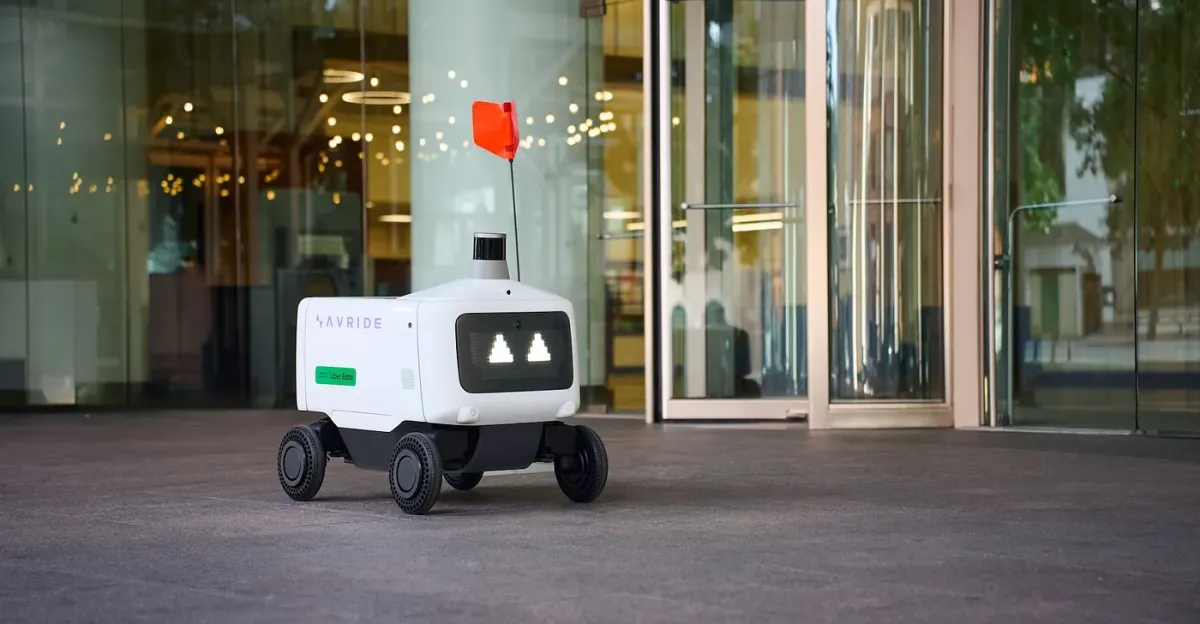
A Philadelphia woman was arrested after police say she refused to move out of the path of an Uber delivery robot, turning a street protest over automation and jobs into a disorderly conduct case. The incident, which was captured on video, has intensified attention on how sidewalk robots are changing city streets and fueling anxiety about work for human delivery drivers.
According to local reporting and eyewitness video, Carolyn Marvin said she has been deliberately standing in front of delivery robots in protest because she believes they threaten human jobs. Her arrest in downtown Philadelphia adds a new flashpoint to a broader national argument over autonomous systems, public space and the future of low-wage work.
What happened in downtown Philadelphia?
Marvin was taken into custody after she allegedly blocked the path of an Uber delivery robot and ignored police instructions to move aside. Officers responded to the scene, told her to clear the route, and arrested her when she declined to comply.
The encounter was recorded on video and quickly spread online, drawing attention not only because of the arrest itself but because the object of the protest was an autonomous delivery machine rather than a person. That detail gave the confrontation a symbolic edge: a human being was arrested for confronting a robot that many residents now see as part of the city’s everyday landscape.
Why was she protesting the robot?
She said the protest was about protecting workers. In comments to Philadelphia’s ABC13, Marvin said she believes delivery robots are taking jobs away from human delivery workers, and that she has been stopping them whenever she sees them by standing in their way.
Marvin said she has been protesting the robots because, in her view, they are replacing human delivery work and should not be allowed to move freely through the neighborhood.
Her statement reflects a growing concern among labor advocates and some residents that automation is expanding into visible, everyday tasks before governments and companies have fully addressed the social consequences. Delivery robots may be small and slow, but they sit at the center of a much larger debate about who benefits when cities adopt new technology.
Why the arrest matters beyond one sidewalk confrontation
The arrest is important because it shows how quickly the debate over artificial intelligence and robotics can spill out of boardrooms and into city streets. Delivery robots are often marketed as convenient, efficient tools that reduce costs for companies and speed up orders for consumers. But for workers in delivery, logistics and related service jobs, they can represent a future of shrinking opportunities.
That tension is not unique to Philadelphia. Across the U.S., autonomous systems — including robotaxis, warehouse automation, delivery bots and software agents — are increasingly viewed through two competing lenses: innovation on one side and labor displacement on the other. Marvin’s arrest turned that abstract conflict into a highly visible public scene.
For city officials, the case also raises a practical issue: how to handle protests directed at autonomous machines that operate in shared public spaces. If a person blocks a robot, is that civil disobedience, vandalism, trespass or something else entirely? In this case, police treated the refusal to move as a disorderly conduct matter.
| Key detail | What happened |
|---|---|
| Person involved | Carolyn Marvin |
| Location | Downtown Philadelphia / Center City |
| Trigger | She blocked an Uber delivery robot and would not move |
| Police response | Officers asked her to move, then arrested her |
| Charge | Disorderly conduct |
| Broader issue | Automation, labor displacement and public use of sidewalks |
How delivery robots became part of the city landscape
Delivery robots are no longer a novelty in some neighborhoods. In downtown Philadelphia, they have become a familiar sight, moving meals and small packages along sidewalks while pedestrians step aside. Their presence reflects a wider push by tech companies to automate short-distance delivery in dense urban areas where walking routes are short and order volume can be high.
Supporters argue that these machines can help reduce delivery times, cut operating costs and improve efficiency. They also tend to present the robots as low-speed, sidewalk-friendly devices designed to avoid the risks associated with cars and scooters. In practice, though, their adoption has raised questions about pedestrian safety, local oversight and job impact.
Critics say the robots can clutter sidewalks, confuse pedestrians and normalize the replacement of workers in roles that have historically provided flexible income to people with limited formal credentials. That concern is especially acute in cities where delivery work is a major part of the gig economy.
What happened earlier this year?
Marvin’s arrest was not the first incident involving the machines in Philadelphia. Earlier this year, one delivery robot was knocked over in Center City, signaling that frustration had already begun to build. The repeated incidents suggest that public resistance is not limited to a single confrontation but may be part of a broader backlash as more autonomous devices enter shared urban spaces.
When a new technology becomes visible enough to provoke direct action, it usually means the debate has moved beyond theory. In this case, delivery robots have become concrete symbols of a future some residents are unwilling to accept without pushback.
How should cities respond to robot protests?
City leaders will likely need to decide whether sidewalk robots should be treated like any other delivery vehicle or whether their autonomous nature requires special rules. That means addressing not just police response but permitting, route restrictions, liability and labor concerns.
Philadelphia is far from the only city facing these questions. Around the country, local governments have been forced to deal with the consequences of rapid automation in public spaces before lawmakers have settled on a standard framework. When rules lag behind technology, disputes tend to move to the street level, where police and residents are left to improvise.
There are at least three policy questions cities must confront:
- Whether sidewalk robots should be allowed to operate in all pedestrian areas.
- How companies should be held responsible if the machines interfere with foot traffic or safety.
- How to weigh efficiency gains against the possibility of job loss for human workers.
The Philadelphia arrest illustrates that these are not merely technical questions. They are political, economic and social choices that affect how people experience the streets around them.
Who is Carolyn Marvin and what does her protest represent?
Marvin appears to be acting as a private citizen engaged in protest rather than as part of an organized campaign, at least based on the available reporting. But her actions fit into a much wider pattern of public unease over artificial intelligence and automation.
Her protest is especially notable because it does not target a distant policy or a corporate executive. It targets the machine itself, which makes the abstract consequences of automation immediate and visible. That can be powerful as a form of activism, but it also increases the chance of confrontation with police and the law.
Her case may resonate with people who worry that technological change is happening faster than communities can absorb it. It may also alienate those who see blocking a robot as disruptive or pointless. Either way, it has helped put a human face on an argument that often plays out in press releases and earnings calls.
Why this dispute could grow as AI expands into physical spaces
The Philadelphia incident is part of a larger trend in which artificial intelligence is no longer confined to screens. AI is increasingly embedded in tools that move through the real world: delivery robots, warehouse systems, autonomous vehicles and service bots. As these systems become more common, questions about labor displacement will move from theoretical forecasts to daily encounters.
That shift matters because people are more likely to react strongly when technology is visible, persistent and tied to their livelihoods. A chatbot replacing a customer service task may be frustrating, but a sidewalk robot replacing a nearby delivery worker is something a neighborhood can see and confront directly.
Labor concerns are likely to intensify if companies continue to roll out automation in sectors that depend on flexible, lower-wage jobs. Delivery work, in particular, sits at the intersection of gig labor, urban logistics and consumer convenience. That makes it an early battleground for the economics of AI.
At the same time, companies are unlikely to retreat simply because of public discomfort. The business case for automation remains strong, especially when firms can reduce labor costs and gain more predictable service times. That means the conflict seen in Philadelphia could become more common, not less, as more cities accept autonomous devices into daily life.
Timeline of the Philadelphia robot protest
The events in Philadelphia unfolded over a short period, but the larger context has been building for months.
| Timeframe | Event | Significance |
|---|---|---|
| Earlier this year | A delivery robot was reportedly kicked over in Center City | Suggested growing frustration with sidewalk automation |
| Recent weeks | Delivery robots remained a common sight downtown | Showed how quickly the technology had become normalized |
| Day of the arrest | Marvin blocked an Uber delivery robot and refused to move | Created a direct confrontation between protest and law enforcement |
| After the incident | Video circulated widely and attracted media attention | Turned a local arrest into a broader public debate |
What the case says about labor, protest and technology
This arrest underscores a basic reality of the AI era: the public will not experience automation only as software updates or investor narratives. People will encounter it as jobs lost, routes changed, customer service replaced, or machines sharing the same sidewalks they use every day.
Marvin’s protest may have been small in scale, but it captured several of the biggest themes in technology policy today: the speed of deployment, the uneven distribution of benefits, and the lack of consensus on how to manage social disruption. The disorderly conduct charge may resolve one incident, but it will not settle the larger argument.
If anything, the episode suggests that as autonomous systems become more visible, more people are likely to test the limits of how they should be allowed to operate. Some will see that as resistance to innovation. Others will see it as a necessary defense of workers and public space.
Either way, Philadelphia’s robot confrontation is a sign that the debate over AI is leaving the screen and entering the street.
What happens next?
For now, the immediate legal consequences for Marvin will depend on how the disorderly conduct case proceeds. But the broader story is already bigger than one arrest. The city, the company and the public now have a live example of how quickly questions about automation can become questions of policing and civic order.
As delivery robots continue to spread, similar confrontations may become more common unless cities, companies and communities set clearer rules around where these machines belong and how workers affected by them will be supported. The Philadelphia arrest is a warning that the social cost of automation cannot be measured only in efficiency gains and balance sheets.
Frequently asked questions
Why was Carolyn Marvin arrested in Philadelphia?
She was arrested for disorderly conduct after police say she blocked an Uber delivery robot’s path and refused to move when officers told her to step aside. The arrest turned a protest over automation and jobs into a law enforcement matter.
What was Carolyn Marvin protesting?
She was protesting delivery robots because she believes they are replacing human delivery workers. Marvin told local reporters that she has been standing in front of the machines whenever she sees them to stop them from moving forward.
Are delivery robots common in Philadelphia?
Yes. Delivery robots have become a familiar sight in downtown Philadelphia, especially in Center City and nearby areas. Their growing presence has also sparked criticism, including at least one earlier incident in which a robot was kicked over.
Why do delivery robots cause controversy?
They are controversial because they raise concerns about job loss, sidewalk safety and how autonomous machines should be regulated in public spaces. Supporters see efficiency gains, while critics worry they displace workers and create new risks for pedestrians.