World Humanoid Robot Games 2025: A Glimpse Into Our Robotic Future
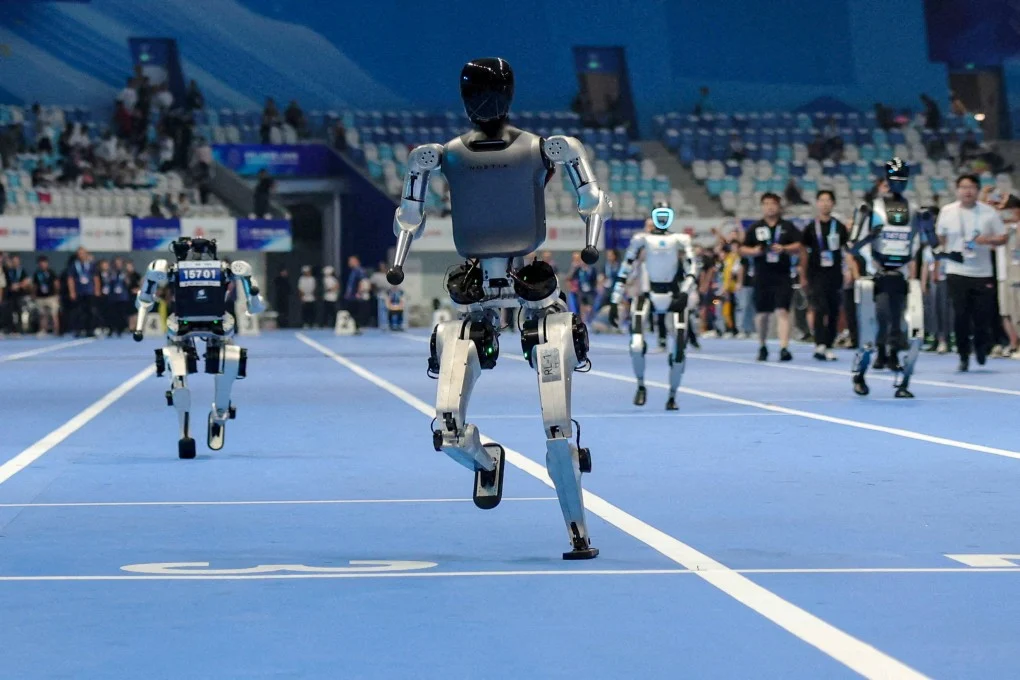
Beijing just played host to one of the most ambitious and visually striking robotics showcases in history—the 2025 World Humanoid Robot Games. Over three electrifying days (August 15–17), the National Speed Skating Oval—once a venue for Olympic excellence—was transformed into a dynamic arena where over 500 humanoid robots from 280 teams across 16 countries strutted, sprinted, and stumbled in a spectacle that blended sportsmanship, technical challenge, and futuristic ambition.
The event marks the world’s first large-scale competitive display of humanoid robotics and serves not just as a testing ground for intelligent machines, but also as a visual statement of China’s intensifying commitment to AI and robotics leadership.
Opening Ceremony: From Hip-Hop to Humanoid Haute Couture
The opening act set the tone for what would be an unforgettable display of robotic potential and unpredictability. Robots grooved to hip-hop, performed martial arts sequences, and wowed crowds by playing instruments—everything from drums to electric guitars.
Perhaps the most surreal highlight was the humanoid fashion show, where robots confidently walked the runway alongside human models. Wearing 3D-printed outfits and handcrafted attire, some robotic participants even attempted catwalk poses—although not all ended gracefully, with a few humorous tumbles capturing the crowd’s attention. While charmingly imperfect, the scene symbolized something profound: the aspiration to blend technology and human cultural expression.
Sporting Events: Athletic Hopes Meet Mechanical Reality
Races, Football, and Kickboxing
Events such as sprinting, hurdles, and the 1,500-meter race revealed the physical limitations and mechanical constraints of today’s humanoid platforms. The winning time in the 1,500-meter event—just over 6 minutes and 30 seconds—was a far cry from elite human athletes, yet represented a significant engineering milestone.
In robot football matches, balance and strategy were still major hurdles. Teams of humanoids often toppled over one another in clumsy scrambles for the ball, producing scenes more comedic than competitive. Kickboxing bouts, too, were marked more by awkward lunges and stiff jabs than actual sparring skill—but again, they pointed toward eventual improvements in limb coordination and reactive agility.
These physical events weren’t just for entertainment. They provided crucial data on locomotion, impact response, and object interaction under unpredictable conditions—key metrics for designing robots fit for real-world environments.
Functional Tasks: Simulating Real-Life Service Scenarios
Beyond sports, the Games explored more grounded use cases, asking robots to perform tasks that mirror domestic and commercial responsibilities.
Cleaning and Maintenance
One notable event had humanoids tasked with cleaning a mock hotel room. Only a handful succeeded within a reasonable timeframe—some took over 15 minutes to clear trash and dust. However, UniX AI’s robot, equipped with refined environmental perception algorithms and adaptive motor functions, earned gold by completing the task efficiently and autonomously.
Logistics and Healthcare Simulation
Robots also competed in delivering suitcases, sorting medication, and assisting in warehouse-like material handling. These simulations were less glamorous but far more telling. Most robots moved slowly, misidentified objects, or required multiple attempts to complete basic sorting tasks. Still, each failure was a lesson—a building block for advancing embodied AI to handle nuanced, real-life work environments.
Technical Stumbles and Triumphs
Throughout the Games, technical glitches were frequent, but every stumble was treated as a step forward. One robot infamously knocked over its own operator during a demo but regained its posture and bowed—earning unexpected applause from a delighted audience.
Such moments, though unintentional, are part of the iterative process in refining robotics. Organizers emphasized that these “failures” are crucial data points in the ongoing development of sensor integration, real-time object recognition, and motor control.
The awkward, often humorous shortcomings of these machines did not diminish the event—they humanized it. They made clear that while general-purpose humanoid robots remain a work-in-progress, the effort to close the gap between simulation and reality is well underway.
A Strategic Stage for China’s Tech Ambitions
China is not merely showcasing its technological prowess; it is laying down the foundation of a global innovation pipeline. Backed by a trillion-yuan investment fund for AI and robotics startups, Beijing aims to become the nucleus of next-gen humanoid development.
This event serves as both a proof of concept and a public engagement initiative, helping to normalize the idea of robotic integration in everyday life. By inviting schools and universities to observe the games, China is also nurturing the next generation of roboticists and engineers—embedding the nation’s AI strategy within its educational and industrial ecosystem.
As the Chinese government seeks to expand domestic robotics production and reduce reliance on foreign technology, events like these are carefully designed to accelerate AI localization, talent acquisition, and public acceptance of intelligent machines.
Takeaway: From Showmanship to Significance
The 2025 World Humanoid Robot Games might have been punctuated by pratfalls and programming quirks, but they achieved something much greater—they publicly documented the current state of humanoid robotics in all its complexity, and ignited a wider conversation about where these machines are headed next.
Behind the pageantry was a deeper story: of trial and error, of ambition and adaptation, and of a future where machines not only assist us—but one day, might dance, work, and walk alongside us.