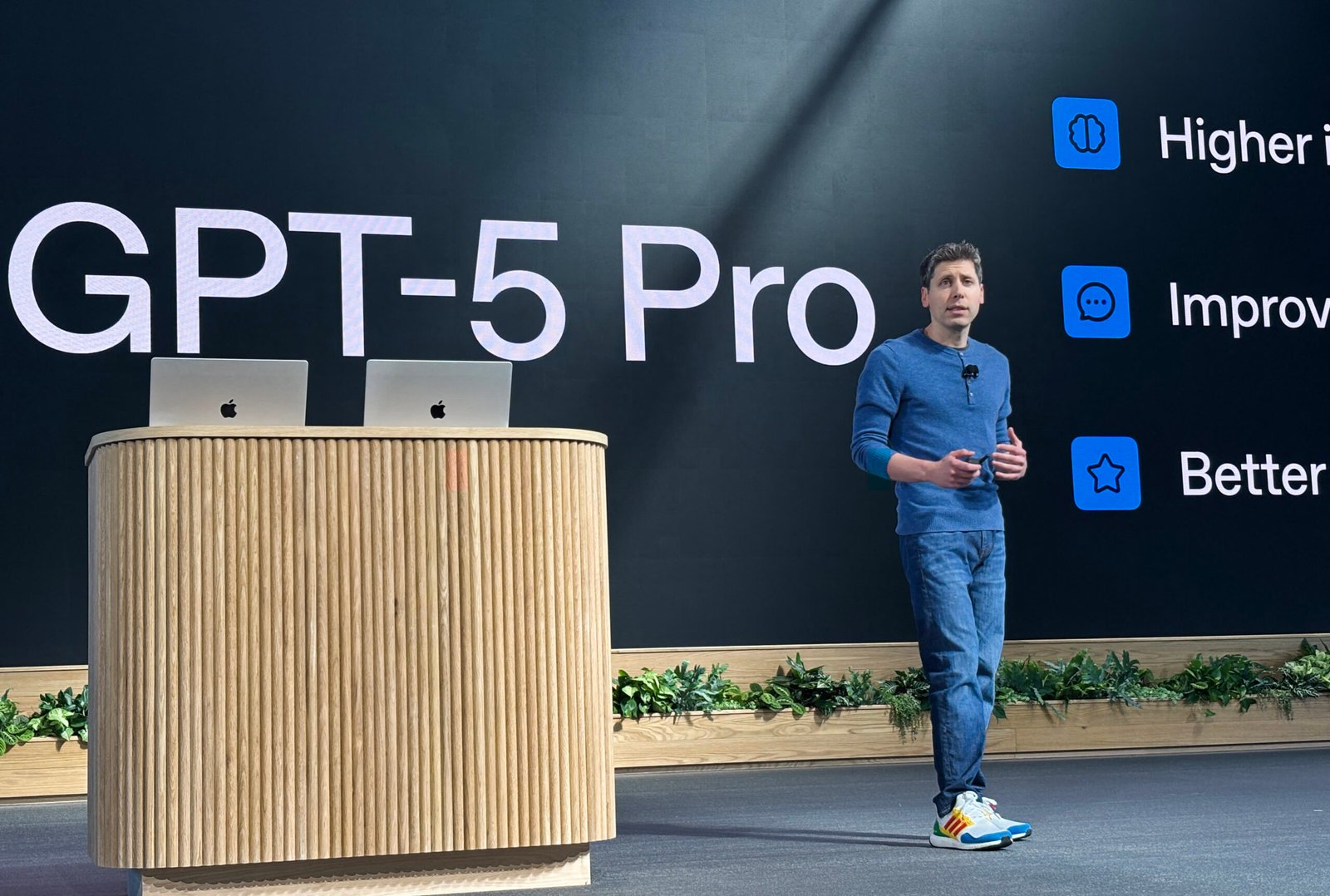
At its highly anticipated DevDay 2025, OpenAI didn’t just unveil new tools—it unveiled a future. A future in which ChatGPT ceases to be just an interface and becomes a platform, a marketplace, and potentially even a new operating system for the AI-driven world. Held at San Francisco’s Fort Mason, the third iteration of DevDay made one thing abundantly clear: OpenAI is building far beyond foundational models. It’s laying down the infrastructure for a full-stack AI ecosystem.
ChatGPT Becomes an App Platform
The headline-grabbing announcement was that developers can now build and deploy third-party apps directly within ChatGPT using a new Apps SDK, now in preview. This transformative update essentially embeds entire application experiences inside the ChatGPT chat flow, enabling developers to create tools that behave like native conversational agents.
Embedded Apps: A New Interaction Paradigm
From Spotify to Zillow, Coursera to Expedia, major brands are now weaving their services into the conversational thread of ChatGPT. A user might ask ChatGPT to create a design using Canva, then generate a video using Sora 2, and then book a venue—all in the same session.
This level of multi-modal interaction pushes ChatGPT closer to becoming an AI-powered super-app—one that can handle creative workflows, logistics, bookings, research, learning, and commerce all in a fluid exchange.
The AgentKit: Democratizing AI Agent Development
Another pillar of OpenAI’s evolving platform strategy is the launch of AgentKit, a toolkit designed to simplify the development of autonomous AI agents. This toolkit lowers the barrier for developers to build multi-step, stateful agents that can plan, execute, and learn over time.
A Visual Agent Builder on the Horizon
According to early leaks and developer reports, OpenAI is also preparing to launch a visual “Agent Builder” with a canvas-style interface, enabling drag-and-drop design of agent flows, logic, and API integrations. This could transform complex agent development—previously the domain of expert coders—into something accessible for broader developer communities.
GPT-5 Pro and Sora 2: Multimodal Futures
In addition to the platform tools, OpenAI also upgraded its foundational models. It introduced GPT‑5 Pro, a more powerful variant of its current top-tier model, tailored for enterprise and developer use cases demanding high context windows, multimodal fluency, and better memory handling.
Also showcased was Sora 2, an upgraded video generation model that deepens OpenAI’s push into multi-modal AI systems. Sora 2 supports advanced prompting capabilities and finer control over video output, enabling users to generate short-form content, visual explanations, and synthetic media directly from text prompts.
These advancements not only serve ChatGPT’s native capabilities but are also being made available via API, bolstering OpenAI’s growing developer ecosystem.
OpenAI’s Hardware Play: Ambient AI Devices in the Works
In one of the most talked-about moments of DevDay, design legend Jony Ive joined OpenAI CEO Sam Altman onstage to hint at a series of AI-native devices. While specifics were sparse, the pair suggested that the new hardware would focus on wellbeing, ambient intelligence, and minimalism, possibly moving away from screens altogether.
The collaboration between Ive’s design firm LoveFrom and OpenAI is expected to yield its first product by late 2026. The ambition: create a device that is neither a phone nor a screen—but a new interaction layer with AI that fits seamlessly into daily life.
If successful, this could mark the beginning of a new hardware category: contextual AI companions, always listening, always assisting—yet less intrusive than phones.
Strategic Partnerships: AMD Powers the Backend
To support its escalating compute needs, OpenAI announced a significant partnership with chipmaker AMD. This deal includes securing up to 6 gigawatts of compute capacity and a warrant to purchase up to 160 million shares of AMD stock.
A Bet Against GPU Scarcity
This strategic alliance is not merely about chips—it’s about supply chain security. By diversifying beyond Nvidia and tying up long-term GPU deals, OpenAI is seeking resilience in an increasingly compute-constrained world. However, analysts warn that execution matters: paper deals are one thing, actual deployment is another.
Ethical Tensions and Strategic Risks
With its increasing control over both distribution (apps inside ChatGPT), execution (agents via AgentKit), and compute (via AMD), OpenAI is inching toward ecosystem dominance. This invites scrutiny.
Walled Garden Concerns
By creating a closed-loop app environment within ChatGPT, OpenAI may find itself walking the same tightrope as Apple and Google—balancing innovation and monetization with openness and fairness. Will developers face harsh app review processes? Will user data remain secure across apps? Who owns user context?
AI Autonomy & Regulation
More autonomous agents and more embedded apps mean more consequential decisions being made by AI. The need for transparency, permission layers, and accountability mechanisms will become critical. Governments are already accelerating legislation to oversee exactly these sorts of platform consolidations and agent behaviors.
Conclusion: A Platform Awakens
OpenAI’s DevDay 2025 wasn’t just a product release event—it was a declaration of strategy. From apps and agents to hardware and infrastructure, OpenAI is building the rails for a new digital economy powered by conversational interfaces and intelligent agents.
The transformation of ChatGPT into a full-stack platform could redefine how we use software, how we interact with machines, and how we build businesses in the AI era. But success will depend on execution, ethics, and ecosystem trust.