In short
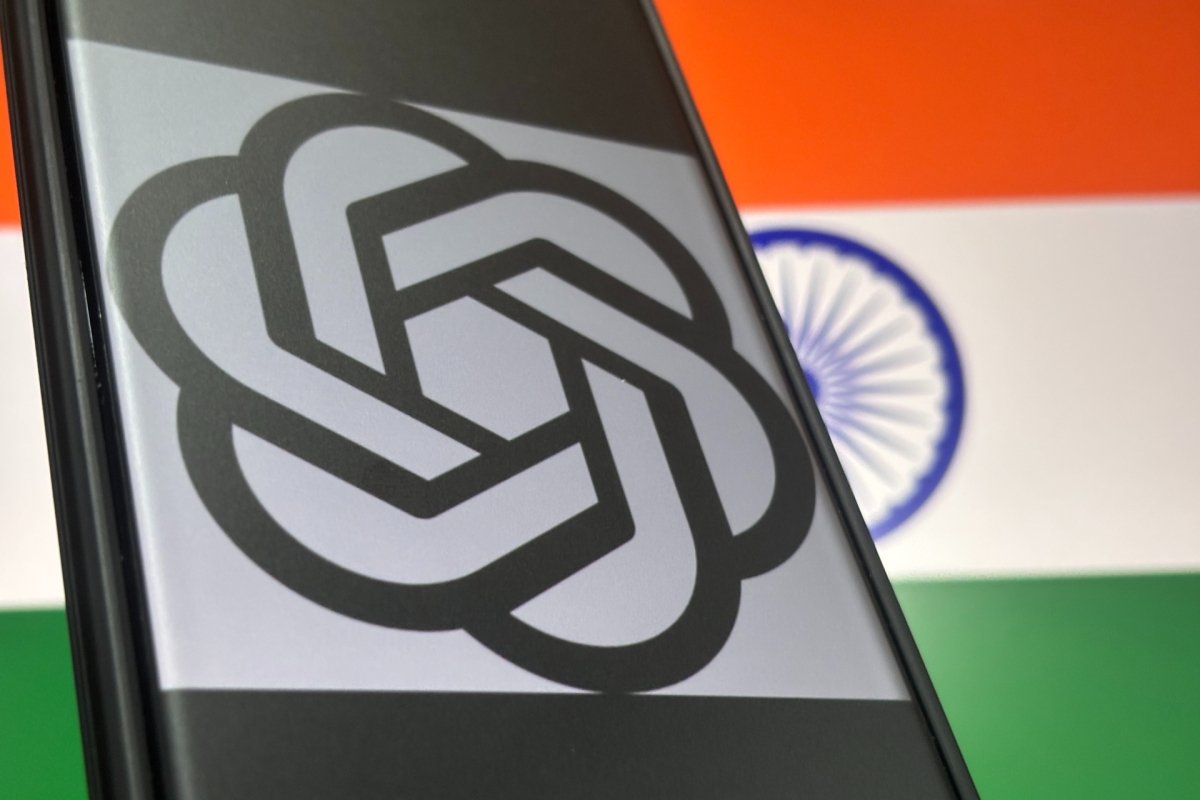
OpenAI has named former Uber India and South Asia president Prabhjeet Singh as its first managing director for India. The move underscores how central India has become to OpenAI’s global growth, partnerships and policy strategy.
- OpenAI appointed Prabhjeet Singh as its first managing director for India.
- The role covers consumer growth, enterprise adoption, partnerships, policy and operations.
- India is now a major strategic market, not just a user base, for OpenAI and rivals like Anthropic.
- The company is expanding its local footprint with offices, hires and partnerships across India.
OpenAI is sharpening its India strategy with a high-profile hire: former Uber India and South Asia president Prabhjeet Singh will become the company’s first managing director for India, a move that signals how central the country has become to the ChatGPT maker’s global ambitions.
Singh, who stepped down from Uber on Friday, is set to join OpenAI in September. He will report to Kiran Mani, OpenAI’s managing director for Asia-Pacific, and will be responsible for business performance in India across consumer growth, enterprise adoption, partnerships, regulatory engagement, and operations.
The appointment is more than a personnel move. It is the clearest sign yet that OpenAI is treating India as a strategic priority on par with its most important international markets. The company has described India as its second-largest market after the United States, and it is building out the local organization accordingly.
India has become one of the most important battlegrounds in the global AI race. It combines a huge population of internet users, a deep developer talent pool, fast digital adoption, and growing enterprise interest in AI tools. For U.S. AI companies, success in India is no longer a side project. It is an early test of whether their products can scale in price-sensitive, regulation-conscious, and highly competitive markets.
Why this hire matters
OpenAI’s decision to appoint a dedicated country head reflects a broader shift in how it is organizing its international business. Rather than relying only on regional leadership from Singapore or other Asia-Pacific hubs, the company is placing a senior executive on the ground in India to coordinate strategy locally.
That matters because India is not a single-channel market. Consumer growth, government engagement, enterprise sales, university partnerships, and infrastructure relationships all require different playbooks. A country-level leader gives OpenAI a central point of accountability as it tries to convert user adoption into durable commercial and policy relationships.
Singh arrives with a background that matches those needs. At Uber, he ran India and South Asia operations, a role that would have required coordination with regulators, cities, enterprise partners, and a massive consumer base. That experience is likely to be useful for OpenAI as it navigates a market where AI policy, data governance, and local partnerships all carry weight.
OpenAI said Singh will oversee consumer growth, enterprise adoption, partnerships, regulatory engagement and operations in India, underscoring the breadth of the role rather than a narrow sales-only mandate.
OpenAI’s India expansion is already underway
This hire is not happening in isolation. OpenAI has spent the past year building a visible footprint in India, starting with its first office in New Delhi last August. The company has also said it plans to open additional offices in Mumbai and Bengaluru, two cities that sit at the center of India’s corporate, startup, and developer ecosystems.
The expansion suggests OpenAI is trying to cover the country’s main strategic fronts at once:
- New Delhi for government relations, policy, and institutional presence
- Mumbai for enterprise, media, finance, and large-scale business partnerships
- Bengaluru for startups, developers, engineering talent, and product integration
OpenAI has also added Indian talent to its policy and strategy ranks. In 2024, it brought in Pragya Misra, previously of Truecaller and Meta, to lead public policy and partnerships. Her responsibilities later expanded to include strategy and global affairs. The company also previously hired former Twitter India head Rishi Jaitly as a senior adviser to help shape its outreach to the Indian government on AI policy.
Together, these moves show that OpenAI is not just trying to sell software in India. It is constructing a local operating model that can address regulation, market access, education, and public-sector expectations at the same time.
India’s role in OpenAI’s global growth plan
India has become one of the strongest indicators of how far OpenAI’s products can reach beyond the U.S. market. The company has repeatedly pointed to the country’s rapid ChatGPT adoption as evidence that demand for generative AI is spreading quickly among consumers, students, entrepreneurs, and businesses.
The appeal is obvious. India is home to more than a billion internet users and one of the world’s largest communities of software developers. That creates a rare combination of mass-market scale and technical sophistication. For an AI company, it means a user base large enough to matter commercially and a developer ecosystem capable of building on top of the platform.
India also offers an early signal on pricing. AI products must often be adapted for markets where consumers and small businesses are more cost-sensitive than in the U.S. Companies that find a way to convert Indian usage into paid subscriptions, enterprise deals, and platform partnerships may develop a model that works in other emerging markets as well.
A market with multiple revenue paths
OpenAI’s India opportunity is not limited to consumer subscriptions. The company is also pursuing enterprise adoption, education partnerships, and integrations with local commerce and financial services ecosystems.
That broader approach is important because India’s AI market may evolve differently from the U.S. In many cases, large-scale adoption will likely come through institutional channels rather than only individual users. Universities, companies, and platforms can introduce AI tools to large audiences faster than standalone consumer marketing campaigns.
As a result, a country head with both commercial and policy experience gives OpenAI more flexibility. Singh’s mandate suggests the company wants local leadership that can bridge product demand, business development, and government relations instead of treating them as separate functions.
What OpenAI has already done in India
OpenAI has spent recent months building a network of partnerships in India across several sectors. The company has signed relationships involving higher education, enterprise payments, AI-driven commerce, and web streaming. It has also become part of the country’s expanding data center ecosystem, a sign that infrastructure is becoming part of its local strategy.
Among OpenAI’s early local partners are Reliance and Tata Group, two of India’s most influential conglomerates. Their involvement gives OpenAI access to deep networks across telecom, retail, digital services, manufacturing, and industrial sectors.
These partnerships matter because India’s AI market is increasingly shaped by ecosystem plays rather than standalone product launches. Companies that can integrate with telecom operators, enterprise platforms, education providers, and digital marketplaces are likely to have more durable reach than those relying only on app-store downloads.
OpenAI’s local push also helps explain why the company is hiring across multiple functions in India. Job postings have included roles for AI deployment engineers, developer experience engineers, developer marketing leads, partner directors, and solutions engineers. That staffing pattern points to a company preparing for broader rollout and hands-on customer support rather than passive user growth.
OpenAI versus Anthropic: India becomes a competitive arena
OpenAI is not the only U.S. AI company building a serious presence in India. Anthropic, one of its most prominent rivals, opened an office in Bengaluru in late 2025 and later named former Microsoft India managing director Irina Ghose as its India head.
The parallel expansion shows how quickly India has become a strategic market in the global competition for AI developers, enterprise customers, and public trust. The companies are not just competing on model quality. They are competing on local relevance, policy alignment, partnerships, and the ability to support customers in person.
For Anthropic, the Bangalore choice makes sense given the city’s role as India’s tech capital. For OpenAI, setting up a multi-city structure with policy visibility in New Delhi and commercial reach in Mumbai and Bengaluru may help it cover more of the market’s key constituencies.
As the competition intensifies, local leadership will likely become a differentiator. A country head can build relationships with universities, regulators, startup founders, and enterprise buyers in ways that a regional team may struggle to replicate at the same pace.
The strategic logic behind a local leader
Hiring a country managing director is often a sign that a company expects the market to grow in complexity, not just size. In India, the complexity comes from several sources at once: regulatory scrutiny, rapid user adoption, diverse languages, uneven enterprise maturity, and the need to work through local partners for distribution and infrastructure.
Singh’s background at Uber suggests OpenAI may value his ability to operate in fast-changing environments where regulation, consumer behavior, and local partnerships all influence growth. The role also suggests OpenAI wants someone who can translate global priorities into local execution without slowing down product momentum.
Likely priorities for Singh
- Deepen ChatGPT adoption among consumers and professionals in India
- Expand enterprise relationships with Indian corporations and public institutions
- Coordinate with government stakeholders on AI policy and compliance
- Strengthen OpenAI’s partner ecosystem across education, payments, commerce, and infrastructure
- Build a durable local team that can support product and market expansion
OpenAI’s local expansion also reflects a broader lesson from the AI boom: the companies that win in major markets are increasingly those that combine frontier technology with local execution. A product may be global, but adoption is often local.
Timeline of OpenAI’s India build-out
The company’s India strategy has unfolded in stages, with each step adding a new layer to its presence.
| Time period | OpenAI move in India | Why it matters |
|---|---|---|
| 2024 | Hired Pragya Misra to lead public policy and partnerships | Built a local policy and partnership function |
| 2024 | Added Rishi Jaitly as senior adviser | Expanded government and AI policy engagement |
| August 2025 | Opened first India office in New Delhi | Established formal local presence |
| Late 2025 to 2026 | Built partnerships in education, payments, commerce, and streaming | Broadened commercial footprint |
| 2026 | Announced plans for offices in Mumbai and Bengaluru | Extended reach into major business and tech hubs |
| June 2026 | Named Prabhjeet Singh as first India managing director | Created a dedicated country lead for the market |
India’s appeal to AI companies goes beyond size
It is tempting to explain the rush into India simply by pointing to its population. But the country’s strategic value to AI companies goes deeper than scale alone.
First, India produces a large share of the world’s software engineers and startup founders. That makes it an influence market, not just a user market. If developers build on a platform, they can extend that platform into products, services, and workflows across many sectors.
Second, India’s digital infrastructure has matured quickly. Consumer payments, identity systems, and digital public services have created an environment where technology products can spread rapidly when they solve a real problem.
Third, the country’s price sensitivity forces product discipline. Companies that succeed in India often have to refine onboarding, support, localization, and pricing in ways that improve their products globally.
Finally, India is becoming a policy center for AI regulation in the Global South. Companies that establish trust and operational credibility there may gain an advantage as other markets study India’s approach to AI governance.
What this means for consumers and businesses
For Indian users, OpenAI’s deeper commitment could bring more localized product development, stronger support, and potentially new partnerships that make its tools more accessible. For businesses, the appointment suggests the company is preparing for a more serious enterprise push.
That could mean closer ties with companies looking to deploy generative AI in customer support, productivity tools, commerce workflows, and internal automation. It may also mean more tailored partnerships with universities, public institutions, and local startups.
For the broader AI market, the move is a reminder that the next phase of competition is as much about geography as technology. The companies that can establish themselves early in major markets like India may shape the future of adoption, regulation, and platform standards.
The bigger picture: local execution in the global AI race
OpenAI’s India strategy is a case study in how global AI firms are professionalizing their international operations. Early product hype can attract users quickly, but sustained growth usually depends on local leadership, policy fluency, and ecosystem partnerships.
By bringing in a senior operator with experience at a major platform company, OpenAI is signaling that India is moving from an expansion market to a core operating priority. The creation of a dedicated managing director role suggests the company is no longer merely testing demand. It is preparing to compete for long-term share.
That shift may become increasingly common across the AI sector. As the market matures, companies will need leaders who can do more than manage sales. They will need executives who can balance product growth with regulation, public policy, infrastructure, and reputation.
In India, those pressures are especially strong. OpenAI’s latest appointment shows it understands that. The company is betting that a focused local presence, led by an experienced operator, will help turn a massive market into a durable part of its global business.
Key facts at a glance
| Item | Details |
|---|---|
| New India leader | Prabhjeet Singh, former Uber India and South Asia president |
| Role | First managing director for India |
| Reporting line | Kiran Mani, managing director for Asia-Pacific |
| Start date | September 2026 |
| Main responsibilities | Consumer growth, enterprise adoption, partnerships, regulatory engagement, operations |
| India footprint | New Delhi office, planned Mumbai and Bengaluru offices |
| Main rival in India | Anthropic, which opened a Bengaluru office and named Irina Ghose as India head |
OpenAI’s latest hire confirms what the market has been signaling for some time: India is no longer just a fast-growing audience for AI products. It is a frontline market where the future of consumer adoption, enterprise deployment, and AI policy will increasingly be shaped.