Updated November 12, 2026 2:23 am
In short
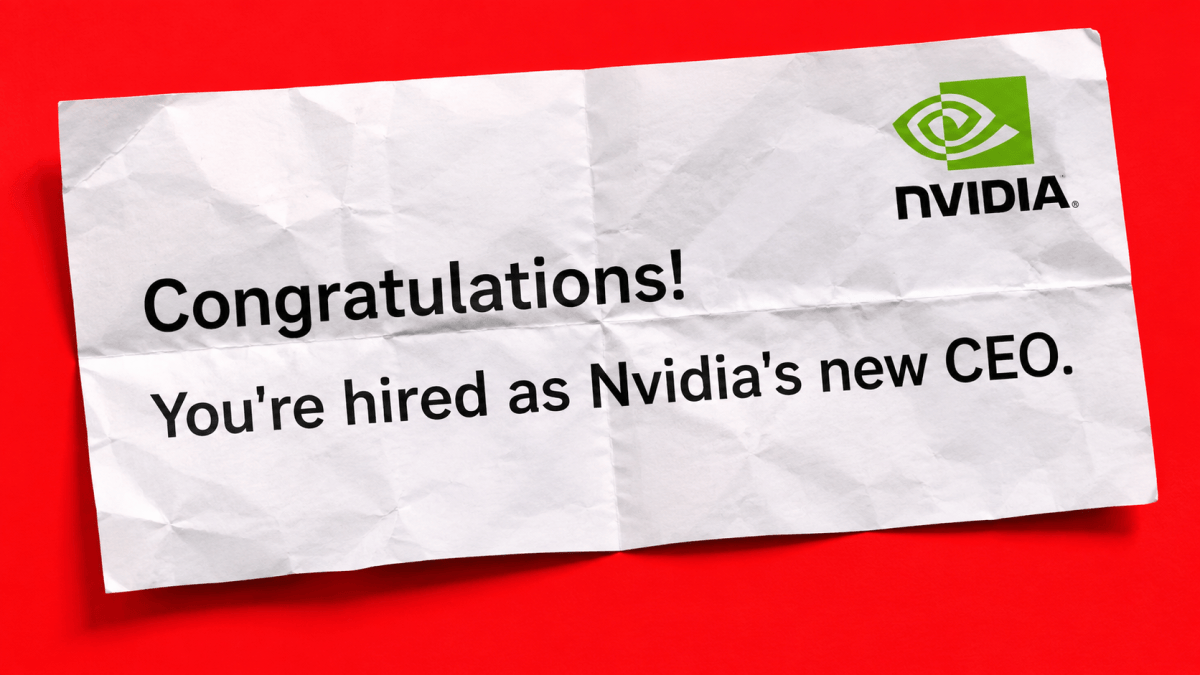
Nvidia’s board is reportedly preparing to fire Jensen Huang after a second alleged affair surfaced, with the company also said to have hired outside legal help as its stock slid further.
- The Verge reported Nvidia’s board may meet as soon as today to discuss Jensen Huang’s future.
- WIRED said the latest reporting centers on Alice Huang, a Megaspeed executive described as an alleged Chinese intelligence asset.
- TechCrunch reported Huang admitted infidelity, said he would cooperate, and that Nvidia shares fell more than 5% after his apology letter.
- Megaspeed denied wrongdoing, while Nvidia said it has no reason to believe secrets were compromised.
- The scandal has drawn congressional interest and could affect Nvidia’s investor confidence and China-related business.
Update — November 12, 2026 2:23 am
The board is now said to be moving toward actually dismissing Jensen Huang, not just weighing the possibility. According to the latest report, directors could meet as soon as today to decide his future.
The new reporting also adds more detail about the alleged second affair: the woman involved is said to be Nvidia health-care chief Kimberly Powell, and the Times is said to have relied on two unnamed sources who described the pair being seen together during GTC in March. The stock reaction also appears to have worsened, with Nvidia falling more than 7% in after-hours trading.
Separately, Nvidia is now said to have retained former U.S. attorney Joon H. Kim and Wachtell, Lipton, Rosen & Katz to handle the matter, suggesting the company is preparing for a more formal response.
Nvidia’s board is reportedly considering firing chief executive Jensen Huang after a New York Times report tied a second alleged affair to national-security concerns involving China. The latest round of reporting has turned a personal scandal into a governance crisis for the world’s most valuable AI chip maker, according to The Verge, WIRED and TechCrunch.
The board could meet as soon as today to decide Huang’s future, The Verge reported. The immediate trigger is the Times story, which WIRED said focused on Huang’s relationship with Megaspeed executive Alice Huang, described in the reporting as an alleged Chinese intelligence asset. Nvidia says it has launched its own investigation and does not believe any secrets or national security information were compromised.
What happened and why it matters
This is not only a CEO scandal. It is a test of Nvidia’s board, its credibility with investors, and the company’s position at the center of the global AI race. Nvidia’s chips are essential to the buildout of artificial intelligence infrastructure, but the company also sits inside a geopolitical squeeze: U.S. export controls restrict sales of its most advanced chips to Chinese entities, while questions around smuggling, diversion and intelligence risks have grown more serious.
According to the reporting, Huang had already acknowledged an earlier affair involving a woman described as a Chinese spy. The new allegation involves Kimberly Powell, Nvidia’s vice president of health care, who reports to Huang. The Verge said the Times reported Huang and Powell may have been filmed being affectionate at Nvidia’s GTC conference in March. That sequence, if accurate, gives the board a second potentially explosive personal matter to consider in rapid succession.
The stakes are unusually high because Nvidia is not a normal listed company weathering a garden-variety executive scandal. It is a dominant supplier of AI accelerators and one of the most closely watched companies in the market. WIRED said Nvidia’s stock had fallen about a quarter over the past month amid the scandal, even though the company remains the world’s second-most valuable company after a roughly 600% stock rise over five years.
How did the scandal escalate so quickly?
The escalation appears to have unfolded in layers: first the personal disclosures, then the espionage narrative, then the board’s response. TechCrunch reported that Huang publicly admitted he cheated on his wife and said the board opened an independent investigation. The same report said Huang added that he was deeply sorry and linked the matter to national-security concerns raised in the press.
That apology was followed by a sharp market reaction. TechCrunch said Nvidia shares fell more than 5% after Huang’s letter. The company’s public posture, meanwhile, has been to separate the personal allegations from the question of whether confidential information or export-sensitive material was compromised.
WIRED reported that Nvidia’s board launched its own investigation and said it has no reason to believe secrets or national security were compromised. At the same time, the article said U.S. intelligence officials reportedly warned top officials that Alice Huang was linked to China’s Ministry of State Security. China’s foreign ministry rejected the spy narrative as speculation and smearing.
How does the China angle change the story?
It turns the matter from a private conduct issue into a potential counterintelligence and corporate-compliance problem. Honeytrap or honeypot allegations are a standard concern in counterintelligence, and the fact sheet indicates the reporting has centered on whether romantic relationships might have been used to gain access. That is precisely the kind of allegation boards and regulators tend to treat as operationally sensitive, even before any enforcement action is taken.
But the reporting also draws an important line: allegation is not proof. WIRED said Nvidia’s board says it has no reason to believe secrets were compromised. Megaspeed, for its part, said U.S. authorities found no evidence of illicit chip transfers or illegal activity.
What is known about Alice Huang and Megaspeed?
According to WIRED, the New York Times report centered on Huang’s relationship with Alice Huang, whom the paper described as an alleged Chinese intelligence asset. The article also said Huang allegedly began the affair during the 2024-2025 period. A separate timeline in the fact sheet notes that Huang was reportedly seen socializing with Alice Huang in Taiwan in 2024, and that in early 2025 Alice Huang and a partner reportedly sought investors for an Asian data center.
Megaspeed is a Singapore-based cloud and infrastructure firm that used Nvidia chips and had already drawn scrutiny over possible diversion to China. TechCrunch said the U.S. and Singapore had previously investigated Megaspeed over suspected chip diversion to China. The same report said Megaspeed had bought $4.8 billion of Nvidia chips over the prior two years.
TechCrunch also said The Information reported that Shanghai Century Litong facilitated $7.5 billion in Nvidia chip purchases, including banned chips. Those claims matter because they frame the larger backdrop: not just whether one executive had an affair, but whether Nvidia hardware may have moved through channels that regulators and intelligence officials wanted to scrutinize more closely.
Why is Nvidia’s board under pressure?
The board is being asked to decide whether Huang’s conduct, and the reputational damage around it, is now too great for the company to absorb. The Verge reported that directors were weighing Huang’s removal and could meet as soon as today. The same report said the board meeting was intended to decide Huang’s future after the New York Times story.
That kind of move would be extraordinary for a chief executive so closely associated with a company’s success. Huang is not just any leader; he is the public face of Nvidia’s rise and its strategy in AI hardware. Removing him would signal that the board sees the scandal as a threat to the company’s governance structure, not merely its image.
It would also raise hard questions about succession, continuity and market confidence. A forced departure would almost certainly invite more scrutiny of Nvidia’s internal controls and its ability to handle the intersection of executive behavior, sensitive foreign relationships and export-restricted technology.
Who is pushing for answers?
At least some political attention has already landed on the case. TechCrunch said three Republican committee chairmen sought a closed-door briefing with Huang on national-security concerns. That suggests the scandal has begun to move beyond the boardroom and into the realm of congressional oversight.
The same report said President Donald Trump publicly backed Huang, answering “I think so. Oh yeah, sure.” when asked whether he supported him. That endorsement may complicate the political picture, but it does not settle the corporate one. A board can still decide that reputational and compliance risks outweigh any public support from Washington.
Background: how Nvidia became such a sensitive company
Nvidia’s current predicament makes more sense against its larger role in the AI economy. The company has become a central supplier of chips that power model training and inference, which means it sits near the bottleneck of the global AI buildout. That position has brought extraordinary financial rewards, but also unusual attention from governments and rivals.
U.S. export controls have limited the sale of Nvidia’s most advanced chips to Chinese entities. That has made every allegation involving cross-border transfers, shell buyers, or infrastructure firms more consequential. When a company as strategically important as Nvidia is linked to a possible smuggling investigation, even indirectly, the reputational fallout can be immediate.
The fact sheet points to a broader pattern of scrutiny around Megaspeed. TechCrunch said a 2025 U.S. government probe looked into suspected chip smuggling. It also said Commerce officials reportedly found boxed Nvidia gear at a Megaspeed site in Malaysia in 2024. Those details do not establish wrongdoing by Huang, but they help explain why the New York Times story landed with such force.
How did the personal and corporate threads collide?
The collision appears to have happened because the reported romantic relationship intersected with a firm already under suspicion in the chip supply chain. That is what turned private conduct into a story about national security, board accountability and investor trust.
TechCrunch reported that Huang had been married for 40 years before admitting infidelity. It also said he wrote that he was deeply sorry and that he would cooperate fully with the investigation. In a separate quote reproduced by the outlet, Huang said, “I support the investigation and will cooperate fully.”
That admission may help explain why the board appears to be moving quickly. A CEO who personally acknowledges misconduct while a company is already under geopolitical and regulatory scrutiny creates a difficult governance problem. Boards often tolerate reputational noise; they are less likely to tolerate unresolved questions that cut across ethics, security and shareholder value at once.
What the reporting says — and where it differs
There is broad agreement across the coverage that Nvidia’s board is in crisis mode. But the outlets differ in emphasis and specificity. The Verge focused on the board’s reported willingness to discuss Huang’s removal, as well as the timing of a potential meeting. WIRED focused more heavily on the spy allegations, the reported relationship with Alice Huang, and the company’s claim that no secrets were compromised. TechCrunch emphasized the financial and political fallout, including the share-price drop, the congressional request for a briefing and the past scrutiny of Megaspeed.
There are also differences in how far each outlet goes in linking the affair to national-security risk. WIRED said U.S. intelligence officials reportedly warned top officials that Alice Huang was linked to China’s Ministry of State Security. TechCrunch said the public apology connected the matter to national-security concerns raised in reporting. None of the reporting, based on the fact sheet, establishes that any classified material was taken or that any intelligence relationship affected Nvidia’s operations.
That distinction matters. The reporting raises serious questions, but it does not provide final proof. For a company of Nvidia’s size and strategic importance, however, questions can be nearly as disruptive as findings.
By the numbers
The scope of the fallout is easier to see in the figures attached to the story.
| Figure | What it refers to | Source |
|---|---|---|
| Today | Possible timing of the Nvidia board meeting on Huang’s future | The Verge |
| Over 5% | Nvidia share decline after Huang’s apology letter | TechCrunch |
| About 25% | Stock decline over the past month amid the scandal | WIRED |
| About 600% | Nvidia’s stock rise over the past five years | WIRED |
| $4.8 billion | Megaspeed’s Nvidia chip purchases over two years | TechCrunch |
| $7.5 billion | Chip purchases facilitated by Shanghai Century Litong, including banned chips | TechCrunch |
| Three | Republican committee chairmen seeking a closed-door briefing | TechCrunch |
| 40 years | Length of Huang’s marriage before his admitted infidelity | TechCrunch |
Why it matters
This story matters because Nvidia is one of the few companies where a CEO scandal can immediately affect technology policy, capital markets and U.S.-China tensions all at once. If the board does move against Huang, it would underscore how much pressure public companies now face when executive conduct touches national-security concerns.
For investors, the key issue is not only whether Huang stays or goes, but whether the scandal suggests deeper governance weakness. A company that depends on trust from regulators, cloud customers and governments cannot afford a lingering perception that its leadership team is entangled in unresolved security questions.
For the broader AI market, the episode is another reminder that chip supply is not just an engineering story. It is a strategic asset story. The more central Nvidia becomes to AI infrastructure, the more every allegation involving its leadership, its export channels or its China exposure can move markets and policy debates.
For readers, the immediate takeaway is simpler: the world’s most valuable AI chip company is now facing a board-level decision triggered by a scandal that merges private behavior with national-security suspicion. Whether the board acts, and how aggressively regulators respond, will shape how far the damage reaches.
What happens next?
The next development to watch is the board’s reported meeting, which The Verge said could happen as soon as today. That will be the first real signal of whether directors believe Huang can remain in place or whether the company needs a hard reset.
Also worth watching is whether any public agency turns the allegations into an enforcement action. The fact sheet says open questions remain about whether the U.S. or Singapore will bring any action tied to Megaspeed or possible chip diversion. The reported probe into suspected smuggling, and the mention of a closed-door congressional briefing, suggest the story may not stop with corporate governance.
There is still a gap between allegation and proof on the most serious point: whether Alice Huang was acting for Chinese intelligence or whether any Nvidia secrets were exposed. If investigators find no evidence of compromise, Nvidia may argue that the affair scandal was ugly but contained. If they find otherwise, the consequences could broaden quickly.
For now, the reporting points to a company in defensive mode, a board under pressure, and a CEO whose future may be decided not by product launches or earnings, but by whether directors believe the scandal has crossed a line they cannot ignore.
“I was unfaithful to my wife.”
That admission, coupled with the reported national-security fallout, is what makes this story so destabilizing for Nvidia. The question now is whether the board concludes that Huang’s personal conduct has become inseparable from the company’s risk profile.
Background context
Nvidia’s rise has made it unusually exposed to political, financial and security scrutiny. The company’s hardware sits at the heart of AI development, which gives it leverage over a global industry but also puts it in the crosshairs of governments trying to control access to advanced chips.
That context helps explain why a personal scandal could metastasize so quickly. In a less strategically sensitive company, an executive apology might be enough to contain the damage. At Nvidia, the same scandal lands on top of export restrictions, prior chip-diversion scrutiny, congressional attention and a market valuation that magnifies every headline.
The result is a governance problem with no easy precedent. The board must weigh reputation, security, leadership continuity and shareholder reaction at once. Few companies face that combination. Fewer still do while being one of the defining firms of the AI era.
Open questions
- Will Nvidia’s board actually move to fire Jensen Huang?
- Can the company show that no secrets or national security information were compromised?
- Will U.S. or Singaporean authorities take action related to Megaspeed or chip diversion?
- Is there any provable link between the second affair allegation and the spy claims?
- How much longer can Nvidia’s stock and reputation absorb the uncertainty?
Frequently asked questions
Why is Nvidia’s board reportedly considering firing Jensen Huang?
The board is reportedly weighing removal because a New York Times report added a second alleged affair to already sensitive national-security allegations. According to The Verge, directors could meet as soon as today to decide Huang’s future after the story intensified pressure on the company.
Did Nvidia say its secrets were compromised?
No, Nvidia said it has no reason to believe secrets or national security were compromised. WIRED reported that the board launched its own investigation, while Megaspeed also denied wrongdoing and said U.S. authorities found no evidence of illicit chip transfers or illegal activity.
How much did Nvidia stock move during the scandal?
TechCrunch said Nvidia shares fell more than 5% after Huang’s apology letter. WIRED also reported that the stock had dropped about 25% in the past month, even though Nvidia remains the world’s second-most valuable company after a roughly 600% five-year rise.
What is the connection to China?
The connection comes from reporting that linked Alice Huang, described by WIRED as an alleged Chinese intelligence asset, to a broader set of concerns about chip diversion and export controls. TechCrunch said Megaspeed had drawn prior scrutiny over suspected chip smuggling and large Nvidia chip purchases.
What happens next in the Nvidia CEO case?
The next major watchpoint is the board meeting reported by The Verge, which could happen as soon as today. After that, investors and policymakers will be watching for any formal board decision, any regulatory or congressional action, and whether investigators find any evidence of compromised information.