In short
Agility Robotics plans to go public through a SPAC merger valuing the company at about $2.5 billion. The funding will help the company scale Digit production, fulfill orders and expand deployments.
- Agility Robotics plans to list via SPAC with Churchill Capital Corp XI.
- The deal values the humanoid robotics company at about $2.5 billion.
- More than $620 million in proceeds will support production and deployments.
- Digit is already operating at nine customer sites, with more than $300 million in orders for Digit v5.
- Agility is positioning humanoid robots as tools for warehouses, logistics and manufacturing.
Agility Robotics, one of the most closely watched companies in humanoid automation, is preparing to enter the public markets through a merger with Churchill Capital Corp XI, a special purpose acquisition company, in a transaction that values the Oregon-based startup at about $2.5 billion. The deal marks a major milestone for a company that has spent years turning a research-born prototype into a commercially deployed machine aimed at the warehouse and logistics economy.
The agreement comes with more than $620 million in expected proceeds, according to the company, giving Agility fresh capital to scale manufacturing, deepen customer deployments and push its next-generation Digit robot toward broader commercial use. The move also places Agility among a small but growing group of robotics companies trying to reach public investors before profitability is fully in hand.
From university lab to public markets
Agility’s path has been unusual even by startup standards. The company was founded in 2015 after spinning out of Oregon State University, where its early work centered on bipedal locomotion and the challenge of building a robot that could move through human-designed spaces without needing the environment to be rebuilt around it.
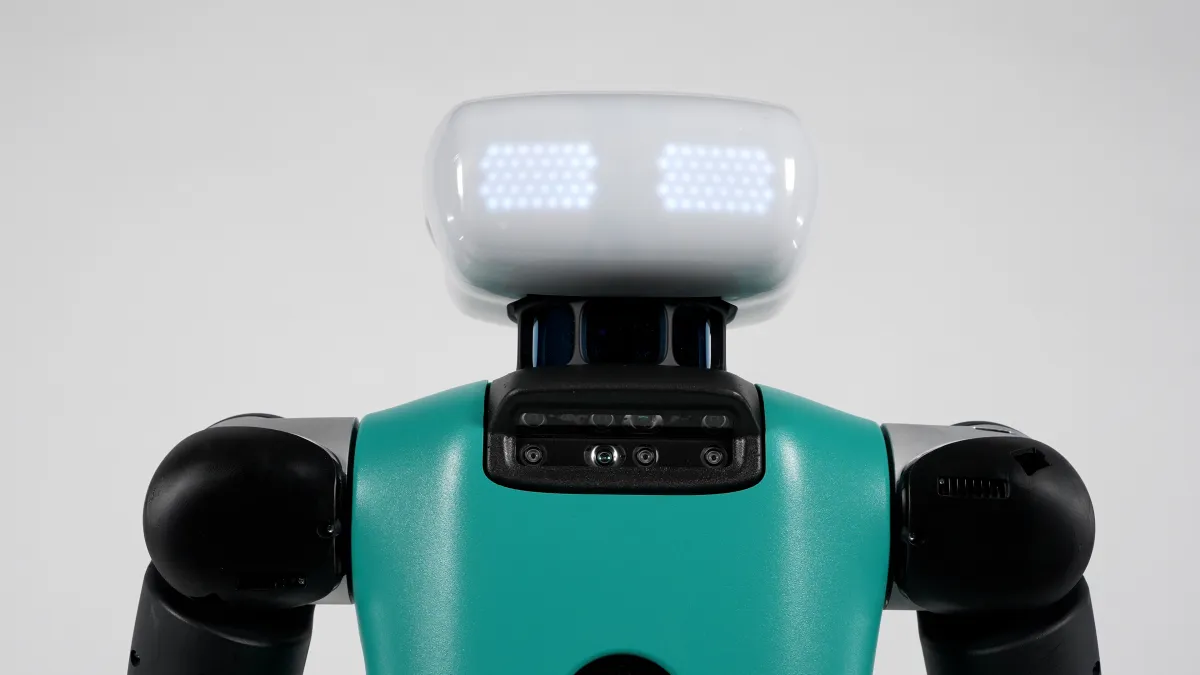
Over time, Agility evolved from a robotics research project into a commercial venture focused on labor-heavy industrial settings. Its best-known product, Digit, is a humanoid, two-legged robot designed to handle repetitive material-handling tasks in warehouses and distribution centers. The company says Digit is already deployed at nine customer sites, including facilities connected to Schaeffler, GXO, Toyota Motor Manufacturing Canada and Mercado Libre.
Those customers matter because humanoid robotics has long been judged less by the elegance of the technology than by whether it can survive the realities of a noisy, cluttered, fast-moving industrial workplace. Agility is now arguing that it has reached that point.
What the SPAC deal means for Agility
The transaction with Churchill Capital Corp XI will send Agility to the public market through the back door of a SPAC merger rather than a traditional initial public offering. Under the plan, the combined company is expected to trade under the ticker symbol AGLT on a North American exchange that has not yet been disclosed.
Agility says the deal should deliver more than $620 million in proceeds. That figure includes about $200 million from a mix of new and existing institutional investors, adding to the capital that would come from the SPAC structure itself.
For Agility, the timing suggests a company that sees a clearer line between technological progress and commercial opportunity than many of its peers. The capital is intended to increase production of Digit v5, the company’s next-generation robot, fill existing purchase commitments and support expansion with both new and current customers.
In practical terms, the raise is less about speculative research and more about industrialization. Humanoid robotics is entering a phase in which companies are being judged on factory throughput, reliability, installation speed and the ability to meet customer demand at scale.
Why go public now?
Agility’s decision reflects a broader shift in robotics financing. Investors have shown enormous interest in humanoids, but the sector remains capital intensive, with expensive hardware, long deployment cycles and demanding safety requirements. Public capital can help bridge the gap between prototype success and manufacturing scale.
By choosing a SPAC merger, Agility may also be seeking a faster and more flexible route to market than a conventional IPO. SPACs have fallen in and out of favor over the past several years, but they remain a viable path for companies that want more control over valuation and fundraising terms than the standard listing process often provides.
Inside Digit’s industrial pitch
Agility’s commercial argument rests on a simple proposition: human-shaped robots can work in places built for people. Warehouses, fulfillment centers and manufacturing sites were not designed for wheeled machines alone, and they frequently require workers to perform repetitive, physically taxing tasks that are difficult to automate with fixed systems.
Digit is built for that gap. The robot’s bipedal design lets it step through environments with stairs, narrow aisles and mixed-height surfaces. Agility has positioned it as a labor-support tool rather than a replacement for entire operations, emphasizing productivity gains, supply chain resilience and safer automation in environments where labor shortages remain persistent.
Agility CEO Peggy Johnson said the company believes humanoid robots are becoming a major force in productivity, supply chain durability and U.S. technology leadership, while pointing to robots that are already working in customer settings today.
Her remarks reflect a broader industry narrative: the value of humanoid robots will not be determined by demo videos or lab feats, but by whether they can repeatedly perform useful work without constant supervision.
Where Digit is already working
According to Agility, Digit is in use across nine customer locations. The list includes major industrial and logistics names, a sign that the company has progressed beyond pilot curiosity and into sustained operational testing.
That customer base gives Agility credibility in a field crowded with ambitious claims. Several humanoid robotics startups have drawn attention with flashy demonstrations, but relatively few can point to a meaningful number of real-world deployments. Agility’s focus on logistics and manufacturing may give it a more immediate commercial path than robots aimed at generalized consumer or household use.
Funding history and strategic backers
Agility has attracted a roster of influential backers over the years, including Amazon, Nvidia, SoftBank Vision Fund 2 and DCVC. That investor base reflects the intersection of artificial intelligence, automation and infrastructure that has fueled the current robotics wave.
The presence of high-profile technology investors also underscores how humanoid robotics has become a strategic theme for companies that stand to benefit from future automation platforms, advanced perception systems and AI-driven machine control.
In that sense, Agility’s listing is not just a financing event. It is also a signal that the market for advanced robotics may be moving out of the purely venture-backed phase and into a more scrutinized public-company era.
The commercial roadmap ahead
Agility says it has already secured more than $300 million in multi-year orders for Digit v5. The company also claims a pipeline of more than 30 prospective customers evaluating large-scale rollouts. Those numbers suggest a strong level of interest, though the real test will be conversion: turning interest into contracted deployments and then into repeatable revenue.
Scaling humanoid robotics is notoriously difficult. A robot may function well in a controlled pilot environment yet struggle when multiplied across multiple facilities, shifts and operating conditions. Agility’s new capital will likely be judged on whether it helps solve those scaling issues faster than competitors can.
- Increase production capacity for Digit v5
- Fulfill existing customer orders
- Expand deployments at current customer sites
- Win new enterprise customers
- Build manufacturing and support infrastructure for larger rollouts
How Agility fits into the humanoid race
Agility is entering public markets at a moment when humanoid robotics has become one of the most crowded and highly financed segments in AI-adjacent technology. The category has moved from theoretical promise to a race for industrial relevance, with companies across the U.S. and abroad trying to prove that general-purpose bodies can be paired with increasingly capable AI software.
That competition raises the stakes for every milestone. A public listing can help a company recruit talent, finance factory expansion and raise its profile with large enterprise customers. But it also exposes the business to quarterly scrutiny, investor expectations and the pressure to show that product demand is translating into durable economics.
For Agility, the advantage may be that it is not starting from zero. It has actual deployments, named customers and a product roadmap already oriented around industrial use cases rather than future concept work.
Why investors care about humanoids
Investors are drawn to humanoid robotics for the same reason technology companies are: the total addressable market could be enormous if the machines can do useful work in human environments without expensive remodeling or dedicated infrastructure.
Warehousing, packaging, material handling and manufacturing all involve tasks that are repetitive, physically demanding and often difficult to staff consistently. If robots can reduce bottlenecks, improve resilience and operate alongside workers without redesigning facilities, the payoff could be substantial.
Still, the sector faces big hurdles, including cost, battery life, dexterity, autonomy, safety certification and service support. That makes the leap to public markets especially significant. Investors will not just be buying a technology story; they will be buying an execution story.
SPACs return as a financing route
Agility’s decision to merge with a SPAC also offers a reminder that the special-purpose acquisition vehicle has not disappeared. After a boom period and subsequent backlash, SPACs are once again being used by companies that want to avoid the more unpredictable roadshow process of a traditional IPO.
For a hardware company with long development cycles and substantial capital needs, the appeal is obvious. A SPAC can provide a clearer path to a large cash infusion and allow management to tell a longer-range story to investors. The downside is that the public market may be less forgiving if scaling takes longer than expected or margins remain under pressure.
Agility will now have to manage both realities: the freedom to build with more capital and the discipline of public reporting.
Key facts at a glance
| Item | Details |
|---|---|
| Company | Agility Robotics |
| Founding year | 2015 |
| Origin | Spun out of Oregon State University |
| Deal structure | Merger with Churchill Capital Corp XI |
| Implied valuation | About $2.5 billion |
| Expected proceeds | More than $620 million |
| Investor capital included | About $200 million |
| Main product | Digit, a bipedal humanoid robot |
| Current customer sites | Nine |
| Orders for Digit v5 | More than $300 million in multi-year orders |
| Potential customer pipeline | More than 30 prospects |
| Planned ticker | AGLT |
Timeline of Agility’s rise
| Year | Milestone |
|---|---|
| 2015 | Agility Robotics is founded after spinning out of Oregon State University |
| 2020s | Digit advances from research platform to commercial deployments |
| 2026 | The company announces a planned SPAC merger with Churchill Capital Corp XI |
What happens next
The deal still has several steps before Agility becomes a public company. SPAC transactions require shareholder approvals, regulatory filings and finalization of listing details. The exchange where AGLT will trade has not yet been named.
Even so, the announcement signals that Agility believes it has moved past the experimental phase and into a period where industrial demand can support a broader capital base. If the company succeeds, it could become one of the most important early public tests of whether humanoid robots can deliver both technical performance and commercial scale.
For now, Agility is betting that the next chapter in robotics will be written not in the lab, but on factory floors and warehouse aisles. The public markets will soon get a chance to decide whether that bet is early, bold or exactly on time.