In short
Meta has introduced Content Seal, an invisible AI watermarking system for images made with its new Muse model. But the launch is limited, late and less integrated than Google’s SynthID, raising doubts about whether Meta needed its own system at all.
- Meta launched Content Seal, an invisible watermarking system for AI-generated images from its Muse model.
- The tool is limited at launch and currently requires a separate web scanner, with video support still to come.
- Google’s SynthID and C2PA-based standards are more established and broadly integrated.
- Reuters testing reportedly found Content Seal struggled after images were cropped.
- Meta’s broader challenge is to prove it can label AI content reliably across its own platforms and beyond.
Meta has launched Content Seal, a new invisible watermarking and detection system for AI-generated images, but the company’s late entry into content provenance is already drawing scrutiny because rival tools from Google and the C2PA ecosystem are more established and more widely integrated. The issue matters now because deepfake detection is becoming a core trust-and-safety feature across social platforms, and Meta’s first version appears limited to the company’s newest image model rather than the broader flow of synthetic content online.
The rollout comes after Meta’s own Oversight Board urged the company in March to use its internal tools to curb deceptive AI media. Yet instead of adopting an existing standard outright, Meta has introduced a proprietary system that resembles Google’s SynthID in how it hides a signal inside an image so later scanners can identify it as AI-made. Early testing suggests Content Seal is not yet a complete answer to the growing problem of machine-generated misinformation.
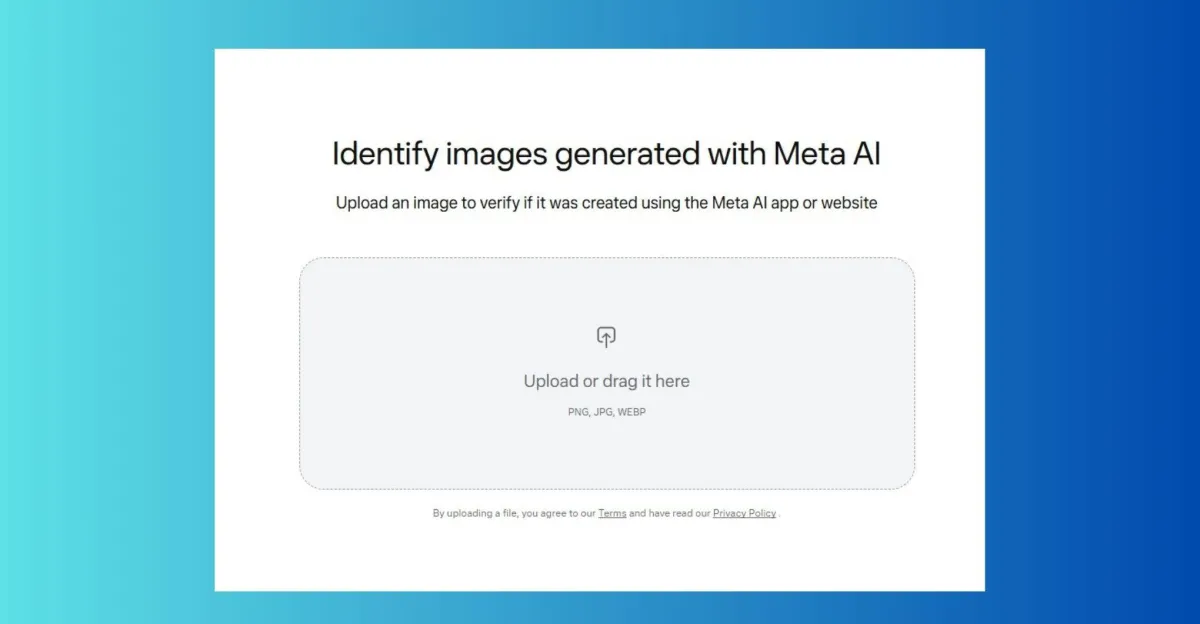
Meta says the watermark is designed to survive common editing steps such as cropping, compression, resizing and screenshots. But the system is only available for images created by Meta’s new Muse model inside the Meta AI app and on Meta.ai, with video support still promised for later. Detection is currently limited to a separate web tool under test, and there is no launch-day integration with Meta AI chat experiences in the way Google has embedded SynthID detection into Gemini.
What Meta launched and why it matters
Meta’s Content Seal is an invisible watermarking system intended to mark AI-generated media so users and platforms can tell synthetic images apart from authentic ones. In practical terms, the company is trying to solve the same provenance problem that has pushed Google, OpenAI and the C2PA coalition toward different forms of content labeling.
The timing is important. Social platforms are already flooded with synthetic images, manipulated videos and misleading AI-generated posts that can spread faster than fact checks can keep up. Meta’s own apps have become part of that broader problem, and the company is under pressure to show that it can both produce AI content and help identify it.
Content Seal is meant to address that gap. But its debut raises an obvious question: if the technology is functionally similar to existing solutions, why did Meta build another one instead of adopting a standard already in use elsewhere?
How Content Seal works
Content Seal works by embedding a hidden signal into images generated by Meta’s Muse model. The signal is not visible to users, but Meta says it can be detected by a matching scanner that checks whether an image was created by the company’s AI tools.
Meta describes the method as resilient to ordinary handling online. In theory, the watermark should still be detectable after an image has been cropped, compressed, resized or even screenshotted. That claim is central to the system’s value, since AI images are rarely posted untouched and are often reposted, edited or redistributed across multiple platforms.
Meta also says Content Seal is paired with metadata on its own platforms, including Facebook and Instagram, to help label AI-generated content. The company has not fully detailed how those labels interact with the watermark, but the goal appears to be a layered detection approach rather than a single marker.
Where users can detect it now
For now, users can only check Content Seal through a dedicated Meta web tool that is still being tested. That means the detection feature is not yet built into the everyday products where users most often encounter AI-generated media, such as Meta AI’s chatbot interface.
That is a notable weakness. If a labeling system is supposed to help people make split-second trust decisions while scrolling, it is more useful when the detection happens at the point of encounter. Meta says it is exploring ways to move detection closer to where people actually see AI content, but that capability is not part of the initial release.
Why Meta did not just use Google’s SynthID
Meta’s decision to create Content Seal instead of leaning on SynthID is one of the biggest questions surrounding the launch. Google’s system already performs a broadly similar function, and it has been adopted by OpenAI, which shows that major AI companies are willing to work across organizational lines when transparency tools are available.
Meta is also already involved in the Coalition for Content Provenance and Authenticity, or C2PA, which promotes the separate Content Credentials standard alongside companies including Google. That participation suggests Meta is not opposed in principle to shared provenance standards. It simply chose to ship its own solution anyway.
The company says it built Content Seal natively to fit its own technical stack and product needs. That may be true, but from a consumer standpoint the result looks like one more incompatible layer in an already fragmented ecosystem. If an image is stamped with one provenance tool, another platform may not know how to read it. The more standards that exist, the harder it can become to verify content consistently across the internet.
Meta says it developed Content Seal specifically for its own products and specifications, while also trying to contribute to broader industry efforts. The company argues that multiple approaches will be needed to address synthetic media at scale.
What are the limitations of Content Seal?
Content Seal’s biggest limitation is that it is narrow at launch. It currently applies only to images generated by Meta’s Muse model inside the Meta AI app and on Meta.ai. It does not cover older Meta image-generation tools, and it does not yet support video, even though that support is expected soon.
That leaves a large amount of Meta-generated synthetic content outside the system’s reach. Meta has been offering AI image generation since 2023, which means there is already a substantial archive of older outputs that its new watermarking standard cannot help identify.
Another issue is detection access. Meta has imposed a daily limit on how many times a user can check images through the Content Seal web tool. The company says the cap is intended to support normal use while preventing abuse of the scanner, though it has not fully described the abuse scenario it is trying to stop.
Rate limits are common in other detection systems, including Google’s SynthID and OpenAI’s tools, but they also highlight a central tension in AI transparency: the more tools are restricted, the less useful they are for broad public verification. C2PA’s Content Credentials is notable for not capping checks in the same way.
How does it compare with Google’s SynthID?
Content Seal and SynthID appear to solve the same problem in similar ways, but Google’s system is more mature and more deeply integrated. SynthID can be used for detection in more places, and Google has woven it into user-facing products more visibly than Meta has done at launch.
Meta’s system also appears to lag in real-world performance. Reuters reportedly tested Content Seal and found that it failed to identify more than half of the Muse-generated images it examined after they had been cropped. If those results hold up, they suggest a system that may be easy to talk about but harder to rely on in practice.
That is especially important because deepfake detection systems are only useful if they continue working after content is shared, reposted and edited. A watermark that breaks under common transformations is not robust enough for the messy environment of social media.
| System | Primary purpose | Launch status | Detection access | Known limitations |
|---|---|---|---|---|
| Meta Content Seal | Invisible watermarking for Meta-generated images | Newly announced | Dedicated web tool under test | Limited to Muse images; no video at launch; rate-limited scanning |
| Google SynthID | Invisible watermarking for AI media | Established | Integrated into Google products and tools | Also rate-limited; not universal across all platforms |
| C2PA Content Credentials | Provenance metadata and authenticity signals | Widely supported standard | Open detection ecosystem | Adoption depends on publishers and platforms |
How Meta is handling detection on Facebook and Instagram
Meta says Facebook and Instagram use additional metadata alongside Content Seal watermarks to label AI-generated content on its own services. That suggests the company is not relying on the watermark alone, at least within its own ecosystem.
But Meta has not clearly explained how those labels travel beyond its own apps. If users export, repost or remix an image on other platforms, the labels may not follow in a reliable way. That matters because content provenance is most useful when it persists across services, not when it works only inside one company’s walls.
Meta was asked whether other platforms that already scan and label AI media, including services such as TikTok and LinkedIn, had been briefed on how to detect Content Seal. The company did not provide a direct answer, saying only that it wants to work with industry partners to deliver the best experience possible.
That language suggests broader support for the system is still developing. Until other platforms can identify Content Seal reliably, Muse-generated images may remain effectively opaque outside Meta’s own products.
Why the company is under pressure to get this right
Meta has spent years pushing AI creation tools into its social products, but it has moved more slowly on the trust infrastructure needed to label the content those tools produce. That gap has made the company vulnerable to criticism from researchers, creators and safety advocates who say the industry cannot keep scaling synthetic media without also scaling detection.
The pressure is not just external. Meta’s earlier AI tags drew backlash in 2023 after some photographers said real images were incorrectly labeled as AI-generated. That episode damaged confidence in Meta’s ability to distinguish human-made material from synthetic work accurately and fairly.
Now the company is trying to reset the conversation with a brand-new watermarking label. But launching a fresh system after years of AI output can look more like catch-up than leadership, especially when stronger alternatives already exist.
Instagram chief Adam Mosseri has argued publicly that people will increasingly value originality and authenticity as synthetic content becomes more common, while also saying that users should be told when content is AI-generated.
What Adam Mosseri’s comments reveal
Mosseri’s comments point to the tension at the heart of Meta’s position. On one hand, the company appears to believe authenticity will become more valuable as AI-generated content proliferates. On the other hand, Mosseri has also said Meta should not simply hide AI content from users.
He has suggested that it may be easier to identify genuine media than fake media, which is a telling admission. It implies Meta may see the future of provenance as a verification problem built around authenticity signals rather than a detection problem focused on synthetic fakes.
That philosophy is not unreasonable, but it is incomplete. If Meta wants to let users know when content is AI-generated, it still needs a dependable system to do so. Content Seal is its latest attempt, but it has not yet demonstrated that it can serve as a serious consumer-facing standard.
What happens next for Meta’s watermarking strategy?
Meta says more will be shared about Content Seal later, and that likely means the company will expand the tool to video and improve integration with its apps. It may also try to bring more detection functions into the places where users already encounter AI content, which would address one of the biggest criticisms of the launch.
But the broader challenge remains. The internet does not need another isolated watermarking standard unless that standard is easy to use, broadly detectable and interoperable across platforms. Without those features, even a technically sound system risks becoming just another layer of confusion.
To matter at scale, Meta’s approach will have to do at least four things well:
- Work on content created today and in the future
- Travel across platforms without losing its signal
- Remain readable after common edits and reposting
- Be accessible to everyday users, not just specialists
At the moment, Content Seal does not clearly satisfy all four.
How the industry’s wider provenance battle is shaping up
The deeper story here is not just about Meta. It is about the competition between proprietary AI labeling systems and shared standards. Google has pushed SynthID, C2PA has promoted Content Credentials, OpenAI has adopted external approaches in some cases, and Meta is now trying to add its own mark to the mix.
That fragmentation is a problem because the public does not benefit if every company invents a different answer to the same trust issue. A user should not have to know which watermarking tool a platform prefers before deciding whether an image can be trusted.
There is also a practical enforcement question. If a platform cannot reliably detect its own AI content after minor edits, then bad actors may simply redistribute the media in ways that defeat the label. That is why the robustness of watermarking systems matters as much as their existence.
Meta’s launch appears to acknowledge that problem without fully solving it. The company says it wants to contribute to the ecosystem, but its first public step looks more like a local patch than a universal solution.
Timeline: Meta’s path to Content Seal
The company’s new watermarking effort did not appear out of nowhere. It sits at the end of a several-year arc in which Meta expanded AI generation, introduced labels and then came under pressure to improve detection.
| When | What happened | Why it matters |
|---|---|---|
| 2023 | Meta begins offering AI image generation tools | Creates large volumes of synthetic media before a dedicated watermarking standard exists |
| 2023 | Meta adds AI labels on Instagram and Facebook | Shows early effort, but also exposes false positives and confusion among creators |
| March 2026 | Oversight Board urges Meta to use its own tools against deceptive AI content | Increases pressure for a real solution |
| July 2026 | Meta announces Content Seal alongside Muse | Marks the company’s first branded watermarking system for its latest AI generation tools |
| After launch | Testing begins for a web-based detection tool | Shows the system is not yet fully integrated into user-facing products |
Why critics are skeptical
Skepticism is being driven by a simple comparison: Meta already had the option to work more closely with existing standards, but chose a custom route that offers few obvious advantages to users. If the end result is another scanner, another label and another ecosystem that doesn’t talk to the others, then the public gets more complexity without more clarity.
Critics also note that Meta’s own history raises doubts. The company has spent years generating AI media for its platforms while simultaneously trying to police it. That is a difficult balance under the best circumstances, and the launch of Content Seal does not yet show that Meta has solved it.
There is also a reputational issue. When a company known for large-scale social distribution introduces its own provenance system late in the game, it invites questions about whether the move is about transparency, ecosystem control or both.
None of that means Content Seal will fail. It does mean the company has work to do to prove that its system is more than a symbolic response to a much larger trust problem.
What users should expect now
For ordinary users, the immediate takeaway is limited but important: if you encounter a Meta-generated image from Muse, there may soon be a way to check whether it carries Content Seal. But that check will not necessarily work across platforms, and it may not confirm older AI content or any video files yet.
Users should also expect inconsistency during the rollout. Some AI images may be labeled on Facebook or Instagram but not detected by outside tools. Others may pass through the system if they have been altered or redistributed enough. In other words, Content Seal is best understood as an early-stage attempt rather than a finished safeguard.
That is why the broader industry still needs interoperable standards. The success or failure of one company’s watermarking effort will not solve the problem by itself.
Bottom line
Meta has taken a real step toward AI transparency with Content Seal, but the launch does not yet look strong enough to justify building a separate system from scratch. Google’s SynthID and the C2PA ecosystem already offer more mature alternatives, and Meta’s first version arrives with important coverage gaps, limited access and uncertain interoperability.
If the company wants users, creators and rival platforms to trust its approach, it will need to show that Content Seal can do more than exist. It will need to prove that it works at scale, survives real-world manipulation and helps people identify synthetic content in the exact places they encounter it.
Frequently asked questions
What is Meta’s Content Seal?
Meta’s Content Seal is an invisible watermarking system designed to mark AI-generated images created by the company’s Muse model. It embeds a hidden signal into the file so a matching tool can detect it later, helping users and platforms identify synthetic content.
Why is Meta’s AI watermarking launch getting criticism?
Meta is being criticized because Content Seal looks similar to existing systems such as Google’s SynthID and C2PA’s provenance tools, but it arrives later and with more limitations. At launch, it only covers certain Muse images, relies on a separate scanner and does not yet support video.
Can Content Seal detect all Meta AI images?
No, Content Seal cannot detect all Meta AI images. It currently applies only to images made with Meta’s newest Muse model in the Meta AI app and on Meta.ai. Older AI outputs and video content are not covered yet, which leaves a lot of synthetic media outside the system.
How does Content Seal compare with SynthID?
Content Seal and SynthID aim to solve the same problem by embedding hidden provenance signals in AI-generated media. SynthID is more mature, more widely integrated and already used by multiple companies, while Meta’s system is new, more limited and not yet built into everyday user experiences.
Will Content Seal work on other platforms?
Possibly, but not reliably yet. Meta says it wants to work with industry partners, but it has not explained how outside platforms will detect Content Seal at scale. Without broad interoperability, images may be labeled inside Meta’s ecosystem but remain hard to verify elsewhere.