In short
Nvidia unveiled a warm-water data center cooling system that can dramatically cut water use inside a facility. But the broader AI water problem remains because electricity generation and chip manufacturing still consume large amounts of water.
- Nvidia’s new cooling system can greatly reduce water use inside the data center itself.
- The company’s claim does not account for water used to generate electricity or make chips.
- Fossil fuel power plants remain a major hidden source of AI-related water consumption.
- Wind and solar power offer the lowest water footprint for data center electricity.
- The overall AI water problem requires changes across cooling, power, and manufacturing.
Nvidia says it has found a way to sharply reduce the water used inside an AI data center, but the company’s new cooling approach does not eliminate the broader water burden tied to the electricity and chips that power artificial intelligence. The distinction matters. As AI demand pushes more data centers onto the grid, the public debate is shifting from how much water a server hall sprays or evaporates on-site to how much water is consumed across the full life cycle of running the facility.
That broader picture is where Nvidia’s latest announcement runs into its limits. The company has introduced a warm-water cooling system designed to operate as a closed loop, recirculating fluid for the lifetime of a facility and avoiding the kinds of evaporative systems that can gulp down large amounts of water. Nvidia says the setup can virtually eliminate water use within the data center itself in some conditions. But the technology does not touch the much larger water footprint of the power plants that supply the electricity, nor the industrial processes used to make advanced semiconductors.
In other words: Nvidia may be solving a facility problem, but not the full AI water problem.
What Nvidia says its new system can do
Nvidia’s cooling design centers on warm liquid flowing through racks at about 45°C, or 113°F. That temperature is far higher than what would be comfortable for people, but it is still low enough to cool modern chips effectively. After circulating through the servers, the liquid exits at roughly 55°C, or 131°F, carrying away a significant amount of heat.
Because the coolant is contained in a closed loop, it does not need to be replenished during normal operation. Nvidia says the fluid is filled once and then reused for the life of the data center. In climates that allow the waste heat to be rejected efficiently into ambient air, the company argues the system can cut on-site water use by 100% compared with water-intensive cooling designs.
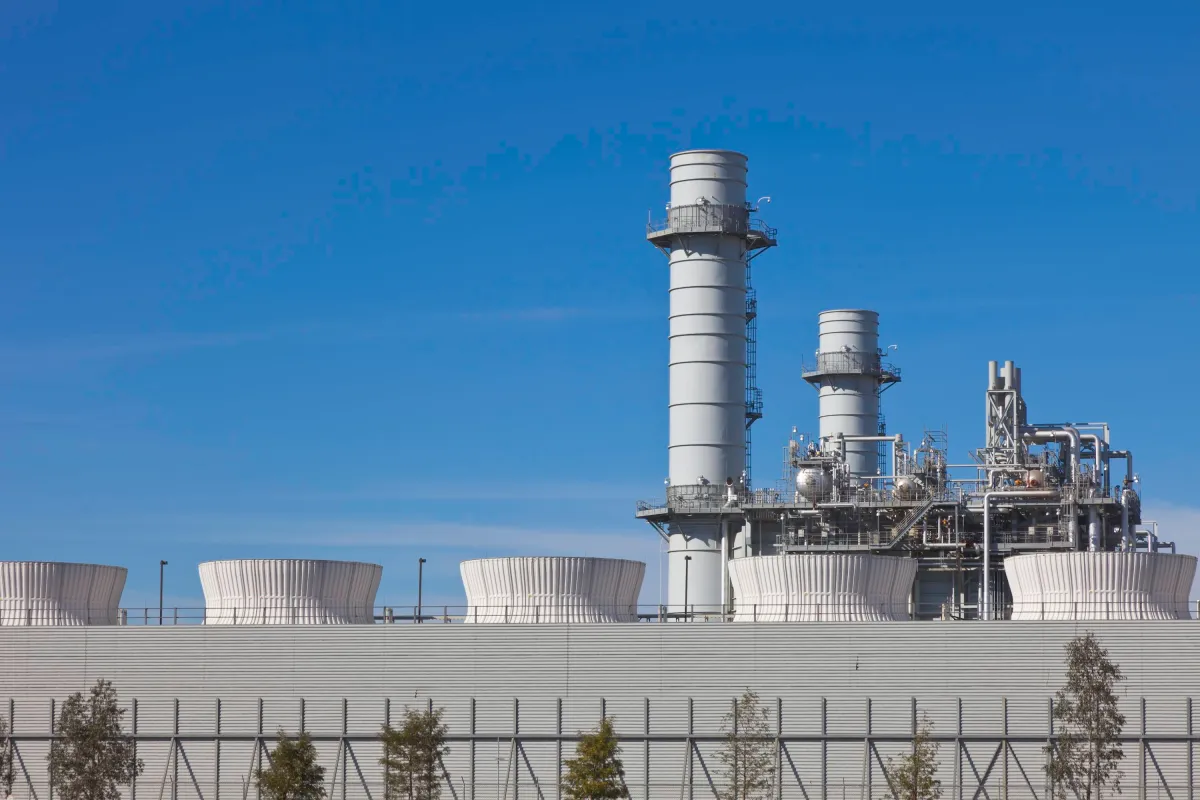
That is an important engineering improvement. Traditional data centers often rely on chillers, cooling towers, or evaporative systems that consume water as part of the heat-removal process. A setup that can operate with little or no evaporation is likely to be quieter, more efficient, and less dependent on local water supplies.
Nvidia’s chief sustainability officer, Josh Parker, has said that the water challenge for data centers is, in large part, already solved.
That statement reflects the company’s confidence in the new design. But the claim depends heavily on how the problem is defined.
The boundary problem: what counts as a data center’s water use?
The key issue is measurement. Nvidia’s framing effectively draws a boundary around the facility itself. Water that enters the building or is used directly in cooling is counted. Water used elsewhere — for example, at a power plant generating the electricity that feeds the servers, or in manufacturing the chips before they ever reach the rack — is not.
This is a common way to evaluate infrastructure, but it can create a misleadingly narrow picture. If the goal is to understand the total water demand associated with AI, then the facility is only one part of the equation.
That distinction is especially important because water use outside the data center can dwarf the water saved inside it. In some cases, the broader footprint can be two to three times larger than the direct on-site consumption. That means a system that eliminates cooling water inside the building may still address only about one-quarter to one-third of the total water associated with the facility’s operation.
So while Nvidia’s engineering may be real, the headline claim needs context. The achievement is meaningful, but it is not equivalent to solving AI’s overall water problem.
Why electricity matters as much as cooling
Every data center depends on a steady supply of electricity. That power has to come from somewhere, and the water footprint of power generation can be substantial.
Fossil fuel plants remain especially water-intensive. In the United States, they are among the largest consumers of water, using billions of gallons every day, largely for cooling. Natural gas plants and coal plants also consume water per unit of electricity produced, with coal generally the most water-hungry of the two.
Even when a data center itself is engineered for water efficiency, the upstream power system can still carry a heavy environmental cost. That is why a water-saving cooling design does not automatically translate into a water-saving AI stack.
The scale of this issue has become more urgent as data center demand rises. AI workloads require more computation, more servers, and more electricity. If that electricity is still supplied in large part by thermal generation, the indirect water footprint remains high even if the servers are cooled by a closed-loop system.
Power sources and their approximate water intensity
The difference between power sources is stark. Some draw heavily on water as part of their operation, while others barely use any at all.
| Power source | Approximate water use | Notes |
|---|---|---|
| Natural gas | 1.17 liters per kWh | Includes water used in power generation and cooling |
| Coal | 2.2 liters per kWh | Generally more water-intensive than gas |
| Hydropower | 6.8 liters per kWh lost to evaporation | Reservoir evaporation counts as a major water loss |
| Wind | 0.01 liters per kWh | Very low operational water use |
| Solar | 0.03 liters per kWh | Includes manufacturing and cleaning |
These figures underscore a broader reality: the cleanest water outcome for AI is not just better cooling hardware, but cleaner electricity.
Fossil fuels are still doing a lot of the heavy lifting
Despite the growth of renewables, the electricity mix that serves data centers still leans heavily on fossil fuels in many markets. Recent estimates indicate that fossil fuel plants generate roughly half of the power used by data centers today. That is a major reason why water use remains such a stubborn issue.
According to projections from the International Energy Agency, natural gas and coal are expected to account for more than 40% of the new electricity needed to meet data center demand through 2030. That forecast matters because it suggests the water intensity of AI infrastructure could remain elevated even as companies improve on-site cooling.
In practice, that means data center operators can reduce direct water use while still relying on an energy system that consumes large amounts of water upstream. The gains from engineering improvements at the facility level may be offset by the water embedded in the grid.
How Nvidia’s approach fits into a larger industry trend
The tech industry has spent the past several years trying to make data centers more efficient, especially as AI workloads have surged. Cooling has become a critical area of innovation because heat is one of the main constraints on server density and performance.
Nvidia’s approach is notable because it rethinks how much cooling infrastructure needs to sit around the chips. By pushing warmer liquid through the racks, the system reduces the need for traditional air-based cooling equipment in favorable environments. If the waste heat can be released without evaporative towers or mechanical chillers, the design can lower both water consumption and energy use.
That makes the system appealing from multiple angles: operational cost, environmental footprint, and facility simplicity. A quieter data center with fewer moving parts is easier to manage and may be more efficient over time.
Still, this is an incremental solution within a much larger resource puzzle. The AI industry’s water impact will depend on three major variables at once:
- how efficiently chips are cooled inside the data center;
- what electricity sources are used to power the facility;
- and how much water is consumed in semiconductor manufacturing.
Any serious effort to reduce the total footprint has to address all three.
Chip manufacturing also carries a water cost
The water story does not begin when a server is switched on. It begins long before that, in the fabrication plants that produce cutting-edge semiconductors.
Advanced chipmaking is highly water-intensive because manufacturing processes require extremely pure water for cleaning, rinsing, and processing wafers. Those supply chains are often hidden from public view, but they are part of the total environmental cost of AI hardware.
For a company like Nvidia, which designs the chips rather than operating most of the data centers that use them, the upstream manufacturing footprint sits outside its cooling announcement. Yet it still affects the real-world water burden of the AI economy.
That means a cooling system can only claim so much. Even if a data center itself uses almost no water to remove heat, the chips inside it may have already consumed substantial water during fabrication.
Renewables offer a far cleaner path
The most effective way to reduce the water footprint of AI is to shift the electricity supply toward low-water generation. Wind and solar stand out because their operational water use is minuscule compared with thermal power.
Wind power uses only tiny amounts of water, and solar is similarly low, even after accounting for manufacturing and panel cleaning. That is a major reason why clean electricity is increasingly seen as a water strategy as well as a climate strategy.
Hydropower is more complicated. It is often treated as renewable and low-emission, but reservoirs can lose substantial amounts of water to evaporation. In dry regions, that loss can be significant. Geothermal can also vary widely depending on the technology used and the local resource, which is why some developers are experimenting with systems that rely on degraded or non-potable water rather than fresh supplies.
The lesson is straightforward: if data centers are powered by low-water energy, the indirect water footprint falls dramatically. If they are powered by coal or gas, even the best cooling system has a limited effect.
What the new cooling system could mean in practice
Nvidia’s new design is still important. Facility operators care about reliability, cost, density, and local water constraints. In places where water scarcity limits expansion, a low-water cooling system can make the difference between opening a data center and shelving the project.
It could also help companies cluster more computing power in areas that would otherwise be difficult to serve with traditional evaporative cooling. That may ease pressure on municipal water supplies, especially in arid regions or fast-growing industrial hubs.
But the industry should be careful not to confuse a better rack-level solution with a complete sustainability fix. The public increasingly wants to know not just whether a data center has a modern cooling loop, but what kind of power it draws, where its chips are made, and how much water is consumed along the way.
From a communications standpoint, that distinction matters. A claim that the “water challenge” is solved can be read as broader than the evidence supports. It may be more accurate to say that Nvidia has sharply reduced one major source of water use inside the facility, while the total AI water footprint still depends on the grid and the supply chain.
Why this debate is getting louder
AI is no longer a niche computing workload. It is becoming a foundational layer of digital infrastructure, and that makes its environmental costs harder to ignore. Communities near data centers are already asking about electricity demand, land use, noise, and water consumption. Regulators and utilities are watching too.
As the industry expands, the distinction between direct and indirect water use will become more consequential. Companies can publish efficiency gains at the site level, but environmental advocates, researchers, and local governments are increasingly asking for full accounting.
That pressure is likely to grow if data center development continues at its current pace. More AI means more servers. More servers mean more electricity. And more electricity, if it comes from water-intensive sources, means more hidden water use.
Three reasons the issue is hard to solve
- Facility metrics are narrow. Most corporate reporting focuses on direct water use inside the building, not the upstream supply chain.
- The grid is uneven. A low-water facility can still sit on top of a water-heavy electricity mix.
- Chipmaking is opaque. Semiconductor manufacturing consumes water, but the data are often difficult for outsiders to verify.
Those challenges mean no single cooling product can address the entire system. Progress will require coordinated changes across hardware design, energy procurement, and manufacturing practices.
A useful innovation, but not a full answer
Nvidia’s announcement is a real step forward in data center engineering. A closed-loop cooling system that avoids ongoing water consumption inside the facility is a meaningful improvement, especially for operators trying to build in water-stressed regions.
But the climate and resource impact of AI cannot be measured by the walls of a server room alone. The electricity that powers the hardware and the industrial processes that produce the chips can together make up the larger share of the water footprint. In that sense, Nvidia has tackled part of the problem, not the problem itself.
That nuance is crucial as AI infrastructure scales. The next phase of the debate is unlikely to be about whether one data center can cool itself with less water. It will be about whether the entire AI supply chain can be built on a power system and manufacturing base that use dramatically less water than today’s fossil-fueled model.
For now, Nvidia’s solution is best understood as an efficiency gain with clear limits: impressive at the rack level, incomplete at the system level.
| Issue | Nvidia cooling system | Broader AI footprint |
|---|---|---|
| On-site water use | Potentially near zero in favorable conditions | Depends on facility design |
| Electricity-related water use | Not addressed | Can be substantial, especially with fossil fuel power |
| Chip manufacturing water use | Not addressed | Significant for advanced semiconductors |
| Overall impact | Improves facility efficiency | Does not solve end-to-end water demand |
As AI adoption accelerates, that distinction will shape how companies present their environmental claims — and how closely those claims are scrutinized.