In short
Besxar, founded by former OpenAI staffer Ashley Pilipiszyn, is using SpaceX Falcon 9 flights to test an orbital chip factory concept. The startup says space could help it produce cleaner semiconductor materials for advanced power chips.
- Besxar has flown early semiconductor test payloads in orbit on SpaceX missions.
- The startup says the vacuum of space may reduce contamination compared with Earth-based chipmaking.
- It has raised nearly $14 million, including a $9 million seed round.
- The company is aiming first at wafer and precursor materials for power semiconductors.
- Long-term success depends on cheaper, higher-capacity rockets such as Starship.
Besxar, a startup founded by former OpenAI employee Ashley Pilipiszyn, is testing whether some semiconductor manufacturing can be done in orbit and brought back to Earth, using SpaceX Falcon 9 flights as its near-term testbed. The company has already flown early “fabship” payloads, raised nearly $14 million, and says the vacuum of space could help it make cleaner, higher-value chip materials for advanced power semiconductors.
The effort matters because chipmaking on Earth depends on extraordinarily expensive clean-room infrastructure, while Besxar believes space may offer a naturally cleaner environment for part of the production process. If the startup can scale the idea, it could create a new path for making materials used in data centers, robotics and electric vehicles.
What Besxar is trying to build
Besxar wants to turn orbital flight into a manufacturing tool, not just a transportation service. The startup’s goal is to expose semiconductor wafers and precursor materials to space conditions, then return those materials to Earth for further processing and eventual use in advanced chips.
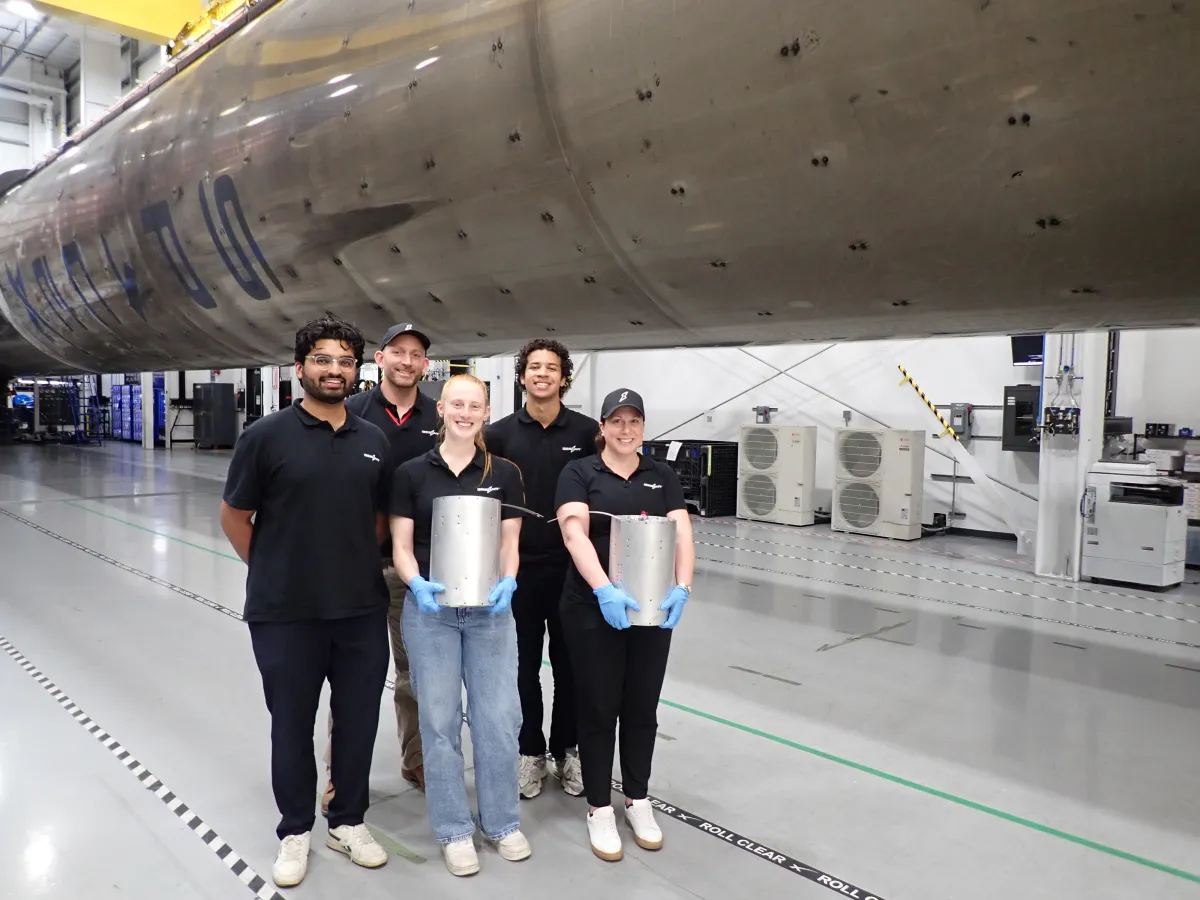
Instead of relying entirely on giant terrestrial fabs, Besxar is developing compact payloads that can ride on rockets, survive launch, operate in orbit and come home with samples intact. The company describes these payloads as “fabships,” a nod to spacecraft designed for factory-like experiments.
The concept is still early, but the company’s thesis is straightforward: for some steps in chip production, space may provide an environment where contamination control is easier than on the ground.
Why space could matter for semiconductors
Space offers a vacuum that eliminates many of the contamination problems chipmakers spend billions trying to solve on Earth. Semiconductor fabrication requires extreme cleanliness because even microscopic particles can ruin a wafer or compromise a device’s performance.
Besxar argues that instead of building even more elaborate clean-room facilities, it may be cheaper for certain processes to use orbit itself as the production environment. That idea becomes more compelling if launch costs keep falling and reusable rockets continue to improve reliability.
“We’re at a time where it’s actually more cost-effective to go where the physics already works,” Pilipiszyn told TechCrunch. “Don’t do it on Earth where you’re fighting physics.”
How SpaceX became part of the plan
Besxar’s near-term strategy depends on SpaceX’s Falcon 9, the workhorse rocket that has become the most frequently reused orbital booster in the industry. The startup says it has secured a dozen flights to test its technology on SpaceX missions, using the booster’s repeated trips as a practical way to mature the system before attempting something bigger.
That choice is significant. A reusable Falcon 9 booster has a far more established cadence than most orbital systems, which gives Besxar more opportunities to iterate quickly. The company also sees SpaceX’s future Starship vehicle as the eventual platform for much larger manufacturing payloads.
Pilipiszyn said she first discussed the possibility of buying Starship flights with SpaceX years ago. For now, however, Besxar is using the more accessible booster payload option to reduce technical risk while it proves the manufacturing concept.
| Milestone | What happened | Why it matters |
|---|---|---|
| Company founded | Besxar was started by former OpenAI staffer Ashley Pilipiszyn | Brings AI-era startup experience into deep-tech manufacturing |
| Funding raised | Nearly $14 million total, including a $9 million seed round | Provides runway for orbital testing and payload development |
| First flight tests | Two fabships launched on a July Starlink mission | Validated launch survival and contamination-control goals |
| Next phase | Heat wafers, deposit one material, then multiple materials | Moves from durability testing toward real manufacturing steps |
| Long-term ambition | Larger orbital fabs, potentially aboard Starship | Could enable higher wafer volumes and commercial output |
What the first flight tests showed
Besxar’s first two fabships flew during a July Starlink mission. The company used the mission to test whether the canisters could handle launch, protect wafer samples from contamination and expose those samples to the vacuum of space.
According to Pilipiszyn, the experiment succeeded on the main objectives, although one canister experienced a malfunction in its flight data system. The startup is still investigating that issue, but it says the underlying payload goals were achieved.
Pilipiszyn said the flown samples were cleaner than comparable terrestrial wafers and showed less particulate contamination, which she described as an encouraging result as the company prepares for larger-scale tests.
That matters because semiconductor manufacturing is extremely sensitive to particulate matter. If the orbital samples continue to show lower contamination than ground-based controls, Besxar could strengthen its argument that parts of the process belong off Earth.
What happens next in the process
Besxar’s roadmap is incremental. The company plans to begin with heating wafers, then move to depositing a single material layer, followed by multiple material layers as the process becomes more sophisticated.
This staged approach reflects the reality of early-stage hardware development: each additional step introduces new engineering challenges, from thermal control to material handling to reentry reliability. The company is not yet trying to produce finished chips in orbit. It is working first toward qualification samples that can prove the process is commercially viable.
Why Besxar is focusing on power chips first
Besxar says its eventual customers are likely to be major chipmakers that need wafers for advanced power semiconductors. These components are central to controlling and distributing electricity in systems that range from data centers and robots to electric vehicles.
That market choice makes strategic sense. Power semiconductors are valuable, technically demanding and widely used across growing sectors. If orbital manufacturing can produce higher-purity precursor materials or better wafers, the payoff could be meaningful even before the company attempts to build a full chip in space.
Besxar is also taking a stepwise business approach. Rather than promising full-scale chip manufacturing immediately, it is framing its first commercial value around the materials and wafers that feed existing supply chains.
How big is the challenge of scaling in orbit?
The biggest obstacle is not proving that space can improve cleanliness; it is proving that the process can scale economically. Semiconductor factories on Earth are already among the most expensive industrial facilities ever built, and the orbital version adds the cost and complexity of launch, return and payload integration.
For Besxar, the ability to scale from a handful of wafers to hundreds and eventually thousands per fab will depend heavily on lower-cost, higher-capacity rockets. The company says that path becomes much more realistic if SpaceX’s Starship reaches operational status.
There is also the question of competition. Several other companies are trying to use microgravity and space conditions for semiconductor production, including United Semiconductors and Space Forge. But all of them face the same bottleneck: returning enough product to make the economics work.
- Launch enough material into orbit to justify the mission.
- Process it in a way that improves purity or performance.
- Bring back enough finished material to support commercial sales.
- Repeat the cycle often enough to make the business sustainable.
That challenge is why launch vehicle economics matter as much as fabrication science. If rockets remain expensive and scarce, the market for orbital manufacturing will stay niche. If rockets become abundant and reusable enough, the idea starts to look more like an industrial process than a science experiment.
What makes Falcon 9 the immediate enabler?
Falcon 9 is the most practical current bridge between Besxar’s concept and a commercial orbital factory. Its frequent reuse and launch cadence make it a realistic platform for iterative testing, which is essential when a startup needs to refine both hardware and materials behavior over multiple flights.
Last year alone, Falcon 9 boosters completed 163 round trips between launch and Earth, and this year they have already flown more than 100 times. For a startup trying to validate space-based manufacturing, that level of activity creates a valuable opportunity to test repeatedly without waiting for rare launch windows.
Besxar’s pitch depends on exactly that sort of transport layer. The startup sees launch as infrastructure, not as the end goal.
Pilipiszyn told TechCrunch that the company believes the transport layer is mature enough now to let it concentrate on the manufacturing side and on getting products back to market quickly.
Who is Ashley Pilipiszyn?
Ashley Pilipiszyn is the founder of Besxar and a former OpenAI staffer who has moved from artificial intelligence into hard-tech manufacturing. Her background reflects a broader trend: technical founders with experience at frontier software companies are increasingly turning to deep-tech problems that require patience, capital and a willingness to build real-world infrastructure.
Besxar itself takes its name from “beskar,” the fictional metal associated with Mandalorian armor in Star Wars. The branding underscores the company’s mix of science fiction ambition and industrial pragmatism.
How Besxar compares with other space manufacturing efforts
Besxar is part of a broader wave of companies trying to turn orbit into an industrial platform. But while some startups focus on pharmaceuticals, materials or biologics, Besxar is targeting one of the most demanding and capital-intensive sectors of all: semiconductor manufacturing.
That choice gives the company a potentially large upside, but it also raises the bar for performance, reliability and economics. Unlike many space experiments, chip materials must ultimately integrate into a mature and unforgiving supply chain.
| Company | Space manufacturing focus | Core limitation |
|---|---|---|
| Besxar | Semiconductor materials and wafers | Need to scale launch and return volume |
| Space Forge | Space-based materials production | Transport capacity and economics |
| United Semiconductors | Orbital semiconductor concepts | Limited returnable product volume |
Why investors are paying attention
Besxar has raised nearly $14 million to date, including a $9 million seed round led by Dauntless Ventures and Overture VC. That funding gives the company room to keep building payloads, running tests and refining its materials process before it reaches any meaningful commercial scale.
The investor interest suggests that orbital manufacturing is no longer viewed only as a speculative moonshot. Backers appear willing to support a phased strategy in which the company proves one step at a time that space can outperform Earth for selected manufacturing tasks.
Still, the business case remains unproven. The next two years will likely decide whether the startup is building a new industrial category or merely demonstrating a clever but uneconomic experiment.
What the next two years could decide
Besxar expects to spend the next two years iterating on payload design, wafer handling and in-orbit processing. The company wants to move from sample survival tests to actual manufacturing steps that can produce qualification material for chipmakers.
If those tests work, the company could move toward larger payloads and a clearer commercial pitch. If they do not, the project may remain a compelling demonstration of what is technically possible but not yet practical at scale.
The timing is important because the space industry is entering a transitional period. Reusable rockets are making routine access to orbit more feasible, but next-generation vehicles such as Starship are still not fully operational. That means Besxar’s business model is tied not just to its own engineering progress, but to the broader maturation of the launch market.
Why this story matters beyond space
Besxar’s work sits at the intersection of two of the most capital-intensive technologies in the economy: semiconductors and space launch. Both industries depend on massive upfront investment, long development cycles and complex supply chains.
If orbital manufacturing proves useful for even a narrow class of chip materials, it could change how companies think about where high-value industrial processes belong. It would also signal that space is becoming a real production environment, not just a place for science missions and satellites.
For now, Besxar has not built a semiconductor fab in orbit. What it has built is something arguably more important at this stage: evidence that the first pieces of one might survive launch, endure space and come back clean enough to justify further investment.
That is the threshold the company now has to cross repeatedly. The next flights will determine whether its vision of a spaceborne chip factory remains an elegant theory—or becomes the beginning of a new manufacturing supply chain.
Frequently asked questions
What is Besxar building?
Besxar is building an orbital semiconductor manufacturing system that tests whether some chip materials can be processed in space and returned to Earth cleaner than conventional wafers. The company is starting with small “fabship” payloads before attempting larger-scale production.
Why does Besxar want to make chips in space?
Besxar believes space can solve part of the contamination problem that makes Earth-based chip fabrication so expensive. The vacuum of space may offer a cleaner environment for certain manufacturing steps, potentially reducing the need for massive clean-room infrastructure.
How is SpaceX involved in the project?
SpaceX is providing the launch platform. Besxar says it has secured a dozen Falcon 9 flights to test its payloads, and it eventually hopes to use Starship for larger orbital manufacturing missions if that vehicle becomes operational.
Has Besxar already tested its technology in orbit?
Yes. Besxar flew its first two fabships on a July Starlink mission and says they met the main test objectives, including launch survival and contamination control, although one canister had a flight-data-system malfunction that is still under review.
What products is Besxar targeting first?
Besxar is initially targeting wafers and precursor materials for advanced power semiconductors. Those chips are used in applications such as data centers, robots and electric vehicles, where efficient power management is critical.