In short
Google DeepMind is investing $75 million in A24 to co-develop AI tools for filmmaking, framing the deal as an artist-led partnership. The move underscores both Hollywood’s growing interest in AI and the industry’s ongoing concerns about creative labor and control.
- Google DeepMind is investing $75 million in A24 to build AI tools for filmmaking.
- The companies say the partnership will involve feedback from artists and filmmakers.
- The deal arrives as Hollywood continues debating AI’s role in creative work.
- Netflix and Amazon have already made similar moves into AI-assisted production.
Google DeepMind is moving deeper into Hollywood with a high-profile investment that could reshape how artificial intelligence is used in film production. The company has committed $75 million to A24, the acclaimed independent studio behind some of the past decade’s most talked-about releases, in a partnership designed to develop AI tools for filmmakers while keeping artists involved in the process from the start.
The deal, first reported by the Wall Street Journal, is being framed by Google DeepMind as more than a financial stake. The companies say they will work together to create new creative technology for filmmaking, with A24 offering feedback and guidance from working artists. For DeepMind, the arrangement is an attempt to position AI not as a threat to creative labor, but as a set of tools built in conversation with the people who actually make films.
The investment lands at a sensitive moment for the entertainment industry. In Hollywood, AI remains one of the most divisive topics in production, with actors, writers, directors and crew members debating where automation can assist and where it crosses a line. Yet despite those tensions, studios and tech companies continue to test ways to use AI across development, pre-production, visual effects and post-production. A24 is now joining that experiment in a far more visible way.
Google DeepMind chief executive Demis Hassabis said the company believes the safest and most effective path to creative AI is direct collaboration with artists. In a statement, he argued that building tools alongside filmmakers and industry leaders can help produce technology that supports authentic storytelling rather than forcing creators to adapt to software designed without them.
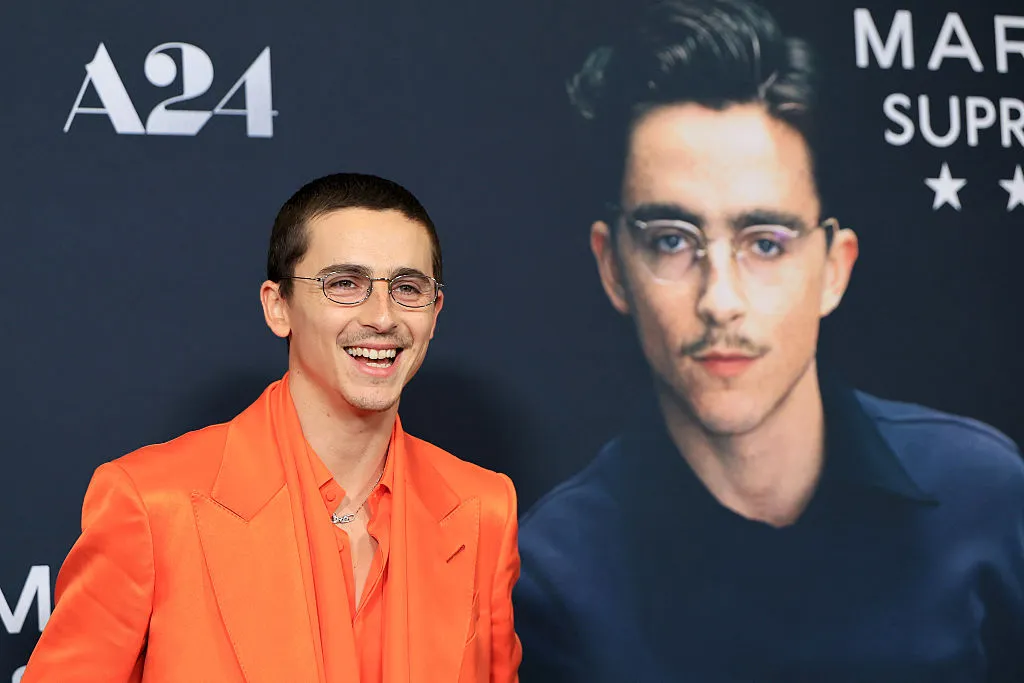
A24, known for prestige films and unconventional commercial hits, brings a strong creative brand to the partnership. The studio has worked with major talent including Timothée Chalamet and Anne Hathaway, and its releases have often become cultural touchstones, from Everything Everywhere All At Once to recent box-office successes such as Marty Supreme and Backrooms. That makes the company an attractive testing ground for any technology seeking legitimacy in the film world.
But the move also raises familiar questions: what exactly will AI do in filmmaking, which workers will benefit, and how will studios avoid deepening suspicion around synthetic media? The answer may depend less on the technology itself than on how much creative control is left in human hands.
A strategic alliance aimed at Hollywood’s next workflow shift
DeepMind’s investment in A24 reflects a broader strategic push by major AI developers to embed their tools in industries that rely heavily on creative judgment. Rather than launching a consumer product first and then trying to convince filmmakers to adopt it, the company appears to be trying a different approach: build with studios from the outset.
The partnership is being described as “first of its kind,” a phrase that reflects both its unusual structure and the symbolic value of pairing a leading AI lab with one of Hollywood’s most respected independent studios. In practical terms, that likely means future tools may be aimed at helping with tasks such as visual brainstorming, story development, pre-production planning, editing workflows or other parts of the filmmaking process where speed and iteration matter.
DeepMind has not outlined exactly which products are in development, and neither company has publicly detailed how the money will be deployed. Still, the nature of the arrangement suggests a long-term plan to bring AI closer to the creative pipeline rather than keeping it in the background as a technical utility.
Why A24 matters in this deal
A24 is not a random acquisition target or a generic production partner. It is one of the most influential independent studios in the world, with a reputation for shaping taste and backing distinctive voices. The studio has built trust with audiences who often see its branding as a mark of ambition, originality and cultural relevance.
That reputation matters because AI adoption in entertainment depends heavily on credibility. A technology company can demonstrate features in a lab, but it is much harder to win over directors, producers and artists who fear being replaced or diluted by automation. A24’s involvement gives DeepMind an opportunity to show that its tools are designed for prestige storytelling, not just cost-cutting or mass content generation.
The studio also has the kind of creative range that may help AI companies test tools across genres and production styles. An independent drama, a surreal visual effects-heavy film and a commercially oriented title each present different challenges. That diversity may prove useful if DeepMind wants to prove its software can assist without flattening artistic identity.
What Google DeepMind said about the partnership
Demis Hassabis said the company believes the best way to build tools that help artists is to work with them directly, adding that collaborating early with filmmakers and industry leaders can lead to features that support authentic storytelling and creative vision.
That framing is important. AI firms have often been accused of releasing products first and dealing with ethical or labor concerns later. DeepMind is instead trying to position the A24 deal as a model for how creative technology should be developed: collaboratively, transparently and with artist feedback built into the process.
Whether that promise holds in practice will depend on how the tools are designed and who gets to use them. If the software helps small teams prototype scenes, organize footage or generate visual references, it may be welcomed as a productivity booster. If it becomes a mechanism for replacing writers, editors or visual effects specialists, resistance is likely to intensify.
Hollywood’s uneasy relationship with AI
The A24 deal does not exist in a vacuum. Hollywood has spent the last several years arguing over generative AI, data rights and the future of creative labor. The concerns are not only philosophical; they are economic. Film and television production depends on skilled human workers across writing, performance, design, post-production and distribution. Any technology that promises efficiency can also trigger fears of displacement.
That tension has only grown since the rise of public-facing AI systems that can generate text, images, audio and video on demand. In the entertainment industry, the technology has been both tempting and alarming. Studios see opportunities for faster iteration, cheaper development and new creative workflows, while artists worry about their work being scraped, mimicked or replaced.
The labor disputes that shook Hollywood in recent years brought many of those concerns into the open. AI was one of the central issues in negotiations involving writers and actors, and the debate has not gone away. Instead, it has shifted from abstract concern to practical implementation. Every new studio partnership is now scrutinized as a test case for what responsible AI adoption might look like.
How this compares with other studio experiments
A24 is not the first entertainment company to explore AI tools, and it will not be the last. The broader industry is already making selective bets on the technology in the hope of reducing bottlenecks and improving workflows.
Netflix, for example, has recently moved to acquire Ben Affleck’s company Interpositive, which develops AI tools for filmmakers. That deal signals that major streaming and content platforms are also looking at how machine learning might support production processes, from ideation to execution.
Amazon’s MGM Studios took a similar step last year when it launched an AI unit focused on creating tools for television and movie production. That move made clear that large-scale media owners are not waiting for the technology to mature elsewhere; they are actively trying to shape its direction inside their own organizations.
DeepMind’s investment in A24 is different in tone, even if it points in the same general direction. Rather than a broad corporate initiative, this deal is presented as a creative partnership with a studio known for artistic distinction. That could make it easier for Google to argue that its tools are being developed in service of storytelling rather than industrial efficiency alone.
What AI could change in the filmmaking process
Filmmaking is a chain of decisions, many of them repetitive, visual or collaborative. That makes it a natural candidate for AI-assisted workflows. The technology could potentially help with storyboarding, concept visualization, scheduling, asset organization, subtitle generation, scene analysis and even rough-cut support.
But the specific areas most likely to be adopted first are usually the least glamorous ones. Production teams often spend enormous amounts of time on administrative, logistical and technical tasks. If AI can shorten those steps, it may free creative teams to focus on storytelling. That is the optimistic case being made by many AI advocates in media.
Still, the line between support and substitution is difficult to maintain. Once a tool becomes effective enough to draft, edit or recommend creative choices, pressure builds to use it for more than assistance. That is why partnerships like the one between DeepMind and A24 matter: they will influence the norms that govern how AI enters the production pipeline.
Potential use cases studios are likely to test
- Pre-production visualization and concept art generation
- Script analysis and breakdowns for production planning
- Editing assistance for rough assemblies and shot organization
- Metadata tagging and archive search for large footage libraries
- Localization support, including subtitles and dialogue adaptation
Each of these use cases offers efficiency gains, but each also carries risks. Tools that speed up creative work can also reshape what jobs exist, what skills are valued and how much control humans retain over the final product.
The business logic behind the investment
From a business standpoint, the A24 deal is easy to understand. Hollywood remains one of the world’s most influential storytelling ecosystems, and the studios that shape it can give AI firms both cultural legitimacy and a practical testing environment. For DeepMind, partnering with a respected studio may open the door to broader adoption across the industry.
The $75 million commitment is also large enough to signal seriousness without being the kind of investment that would force a full corporate takeover. That makes it easier for both sides to present the arrangement as collaborative rather than extractive. It also gives Google a way to test whether creative tools can generate meaningful product value in a sector that is notoriously protective of its workflows.
For A24, the upside may include early access to emerging technology, influence over how those tools are shaped and a chance to define what responsible creative AI looks like in practice. Independent studios often pride themselves on innovation and artistic risk-taking. If AI is going to become a standard part of filmmaking, being among the first to help design it could be a strategic advantage.
Why the timing matters now
The entertainment industry is still adjusting to post-strike realities, streaming economics and changing audience habits. At the same time, AI companies are under pressure to prove that their products can do more than generate novelty content. Creative sectors offer a huge market opportunity if AI can be integrated without provoking severe backlash.
That makes the current moment unusually important. A deal like this may help establish an early template for how AI and studio filmmaking can coexist. If it succeeds, it could encourage similar investments elsewhere. If it triggers pushback from creators or fails to produce practical tools, it may become a cautionary example.
| Key fact | Details | Why it matters |
|---|---|---|
| Investment size | $75 million | Signals a major, strategic commitment from Google DeepMind |
| Partner | A24 | Gives the project cultural credibility and industry visibility |
| Stated goal | Build AI tools for filmmaking | Positions the deal as product development, not just equity investment |
| Creative input | Guidance from artists and filmmakers | Suggests an artist-led approach to tool design |
| Industry context | Rising debate over AI in Hollywood | Explains why the partnership could face scrutiny |
What this says about Google DeepMind’s larger ambitions
DeepMind has long been known for advances in frontier research, from games and science to large-scale AI systems. This Hollywood investment shows a different side of the organization: one focused on commercialization, integration and product relevance.
The company is not merely trying to build models that benchmark well. It is trying to place AI inside industries where judgment, taste and workflow are central. That is a more difficult challenge than improving benchmark scores, but it may be where the next wave of AI value is created.
In that sense, the A24 partnership is also a branding move. It suggests DeepMind wants to be seen not only as a research leader but as a creator-friendly platform capable of serving artists, studios and media companies. If the tools become genuinely useful, the company could carve out a durable role in creative production.
At the same time, the partnership will likely be watched closely by critics who question whether AI firms can truly design artist-centered tools while still pursuing scale. The entertainment sector has seen enough technology promises to remain skeptical until results are visible.
The broader stakes for artists and audiences
For artists, the question is not simply whether AI enters filmmaking, but on what terms. Tools that are built with creative workers may preserve more autonomy than systems imposed from above. But collaboration does not eliminate concern. Artists still want assurance that their labor will be valued, credited and protected.
For audiences, the stakes are subtler but no less real. Filmgoers care about authenticity, originality and emotional truth. If AI becomes invisible infrastructure that helps artists realize their ideas, many viewers may never notice. If, however, it begins to shape performances, dialogue or visual style in ways that feel artificial, trust could erode.
The success of deals like this one may therefore depend on transparency. Studios and tech companies will need to explain what AI is doing, why it is being used and how human creators remain in control. Without that clarity, even well-intentioned tools may be met with suspicion.
What happens next
Neither Google DeepMind nor A24 has publicly mapped out a product roadmap, and that leaves plenty of unanswered questions. Will the partnership result in tools used only internally, or will it produce products sold across the industry? Will the focus be on development, production or post-production? And how will the companies address copyright, consent and labor concerns?
Those details will determine whether the deal becomes a genuine turning point or simply another headline in the long run-up to AI’s deeper integration into entertainment. For now, the partnership is notable less for any specific tool than for what it represents: a direct attempt by one of the world’s most powerful AI labs to enter Hollywood through one of its most admired creative brands.
If the bet pays off, DeepMind could help define a future in which AI is treated as a creative collaborator rather than a disruptive intruder. If it fails, the result may reinforce the belief that some parts of filmmaking are too dependent on human judgment to be meaningfully automated.
Either way, the message is clear: the race to shape AI’s role in entertainment has moved from theory to investment, and the industry’s next chapter may be written in partnership rooms as much as on soundstages.