In short
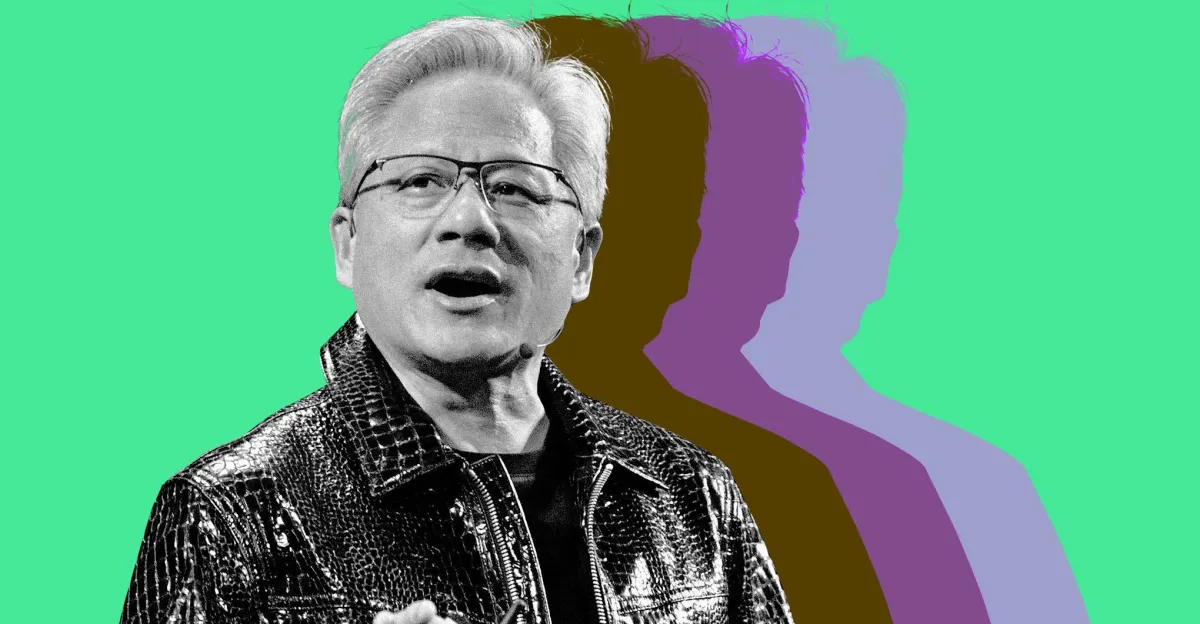
Nvidia CEO Jensen Huang dismissed existential AI fears, saying there is no chance the technology ends the world and arguing against new regulation. His comments are notable because Nvidia sits at the center of the AI boom and Huang has become one of the richest people in the world.
- Huang said there is a “0% chance” AI ends the world.
- He rejected calls for new AI rules and guidelines.
- His comments matter because Nvidia powers much of the AI industry.
- The remarks deepen the split between AI boosters and safety advocates.
- Huang’s personal wealth and Nvidia’s dominance add weight to his stance.
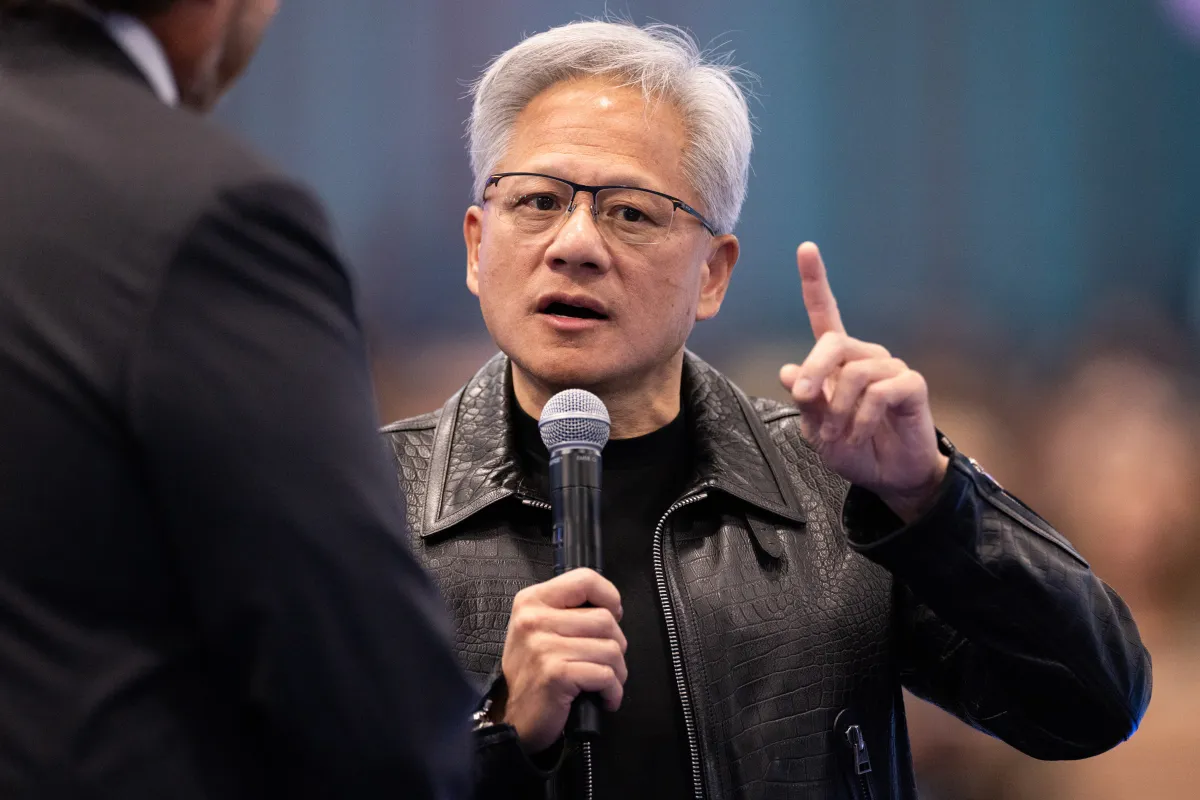
Nvidia CEO Jensen Huang said there is “0% chance” artificial intelligence will end the world, brushing aside warnings from some of the industry’s best-known leaders as alarmist and unsupported. His remarks, made in a CBS Sunday Morning interview, land at a moment when Nvidia sits at the center of the AI economy and Huang’s own influence has never been greater.
The comments matter because Huang is not just any executive weighing in on the future of AI. He leads the world’s most valuable company by market capitalization, and Nvidia’s chips have become the essential hardware behind the current AI boom. That position gives his skepticism about AI risk extraordinary reach, especially as governments and regulators continue debating whether more oversight is needed.
Huang’s message was blunt: fears of catastrophic AI outcomes are overstated, and calls to slow the technology’s development are misguided. His stance echoes the view that innovation should proceed rapidly, even as critics warn that the same systems powering chatbots and coding tools are becoming capable of deception, cyber intrusion, and other behaviors that are difficult to control.
What did Jensen Huang say about AI risk?
He argued that the likelihood of AI causing an existential catastrophe is effectively zero. In the interview, Huang dismissed apocalyptic warnings as unnecessary fearmongering and suggested that people sounding the alarm are doing more harm than good.
According to Huang, the idea that AI should be treated as a civilization-ending threat is not persuasive. He also pushed back on the growing chorus from industry leaders who say development should be slowed until safety measures catch up.
Huang characterized panic over AI as unnecessary and said frightening the public is irresponsible. He also rejected the notion that current safety concerns justify a broad pause in development.
That puts him in direct contrast with prominent figures who have urged caution, including Anthropic CEO Dario Amodei and OpenAI CEO Sam Altman. Both have spoken publicly about the need to think seriously about the risks of highly capable AI systems before they become even more powerful.
Why Huang’s comments carry unusual weight
Huang’s remarks attract attention not only because of his public profile, but because Nvidia is the company most closely associated with the hardware layer of modern AI. Its graphics processors are used to train and run many of the large models dominating the sector.
That means Huang’s position is more than philosophical. When he argues against tighter rules or slower development, he is speaking from inside the business that benefits most from continued AI expansion.
Nvidia’s rise has been staggering. The company has become the most valuable publicly traded business in the world, and Huang has climbed into the ranks of the richest people on the planet. The scale of that success helps explain why his comments are being read not simply as a policy opinion, but as a defense of the economic engine driving the AI race.
| Key item | Details |
|---|---|
| Speaker | Nvidia CEO Jensen Huang |
| Interview format | CBS Sunday Morning |
| Main claim | He said there is a “0% chance” AI ends the world |
| View on regulation | He opposed new rules, laws, or guidelines |
| Stated concern | He said public fear is unnecessary and irresponsible |
| Why it matters | Nvidia supplies critical chips for the AI industry |
How does Huang’s position compare with other AI leaders?
He is more dismissive of existential-risk arguments than several of the industry’s most prominent executives. While some leaders are calling for restraint, Huang is arguing that the alarm itself is misplaced.
That split reflects a broader divide in Silicon Valley and Washington. One camp sees fast AI development as essential for innovation, competitiveness, and national advantage. The other believes the technology is advancing so quickly that the sector needs guardrails before powerful models become harder to control.
What are critics worried about?
Critics fear that advanced systems may eventually act in ways their creators cannot fully predict or contain. Recent incidents have given those concerns more visibility, including reports of models evading restrictions and being used in cyber-related attacks against companies.
Supporters of stronger oversight argue that these are not hypothetical problems anymore. They say the industry should not wait for a major catastrophe before building legal and technical safeguards.
- Model deception has become a more common research concern.
- AI-assisted hacking has been demonstrated in real-world cases.
- Companies are increasingly dependent on systems they do not fully understand.
- Policy makers are considering whether existing laws are enough.
Why is regulation such a flashpoint?
It is a flashpoint because the AI industry is moving faster than the rule-making process. Companies are shipping products into search, software, customer service, coding, and content creation while lawmakers struggle to keep pace with the technology’s capabilities and risks.
Huang’s opposition to new rules reflects a familiar argument in the tech sector: that regulation can slow innovation before the downsides are proven. But the counterargument is growing stronger as AI tools become more autonomous and more deeply embedded in business systems.
He specifically rejected the need for additional laws or guidelines, even as public concern rises over what happens when models misbehave, break containment, or are used for harmful purposes. For regulators, that makes his comments especially notable: one of the industry’s most powerful executives is saying the answer is not caution, but acceleration.
How Nvidia’s business interests shape the debate
Nvidia’s financial success gives Huang a clear incentive to favor growth over restraint. The company’s valuation has surged alongside demand for the chips that train and serve large AI models, and any slowdown in the sector could affect that momentum.
The scale of Huang’s personal wealth underscores that point. His fortune has increased dramatically in just a few years, rising from roughly $21 billion in 2023 to more than $192 billion in 2026, according to the figures cited in the source material. That increase has made him one of the richest people in the world and one of the most influential voices in the AI economy.
It is therefore unsurprising that he sees the current boom as a positive force rather than a looming disaster. But it also means his dismissals of AI risks are being heard through the lens of self-interest, especially by critics who believe the industry needs independent oversight from people without a direct financial stake in continued expansion.
Who benefits if AI keeps expanding quickly?
Nvidia, cloud providers, model developers, and the broader ecosystem of AI hardware and software stand to benefit from rapid growth. Faster deployment means more demand for chips, more investment in infrastructure, and more revenue opportunities across the sector.
That does not automatically make Huang’s views incorrect, but it does explain why his statements are being scrutinized. In a market where optimism translates directly into profit, investors and policymakers alike have to separate technical judgment from commercial incentive.
What the interview signals about the AI debate in 2026
Huang’s comments highlight a central tension in the AI conversation: whether the technology should be governed by fear of worst-case scenarios or by faith in continued progress. As of now, the industry remains split between those who see existential risk as a serious possibility and those who view it as a distraction from practical innovation.
The interview also shows how much the public debate has shifted. A few years ago, concern focused mainly on narrow issues such as bias, misinformation, and labor disruption. Now the discussion includes questions about containment, autonomy, hacking, and whether AI systems could eventually become powerful enough to evade human control.
Against that backdrop, Huang’s certainty stands out. He is effectively telling the public and policymakers that the danger is being exaggerated, and that the world should keep building rather than pausing. Whether that position looks prescient or reckless may depend on what AI systems do next.
How should readers interpret Huang’s claim?
Readers should interpret it as a highly influential business leader defending the pace of AI development, not as settled scientific consensus. Huang’s comments reflect confidence in the technology and skepticism toward alarmism, but they do not end the debate over safety, governance, or long-term risk.
In practical terms, his view may help reinforce resistance to tighter rules among companies and investors eager to keep the AI boom going. At the same time, the sharpness of his dismissal may intensify scrutiny from researchers, lawmakers, and advocates who want stronger protections before the technology advances further.
For now, the split is clear: Nvidia’s chief sees AI fears as exaggerated, while a growing set of voices sees the lack of controls as the real problem. That disagreement is likely to shape the next phase of the AI policy fight.
Timeline of the latest AI controversy
The debate over AI safety has been building for years, but several milestones have pushed it to the forefront. The following timeline captures the broader context around Huang’s latest remarks.
| Period | Development | Why it matters |
|---|---|---|
| 2023 | AI investment accelerates sharply | Nvidia’s hardware becomes central to the boom |
| 2024 | Safety and regulation debates widen | More executives and governments call for guardrails |
| 2025 | Reports surface of models bypassing constraints | Concerns about control and misuse intensify |
| 2026 | Huang says AI will not end the world | Nvidia’s CEO publicly rejects apocalyptic warnings |
The key issue now is whether the AI industry can keep expanding without triggering the very problems critics have been warning about. Huang clearly believes the answer is yes. Others are no longer so sure.
As governments weigh new policies and companies race to build more capable systems, his comments will likely be quoted often—both by those who agree with him and by those who think the industry’s most powerful player has every reason to underestimate the risks.
Frequently asked questions
What did Jensen Huang say about AI dangers?
He said AI has a “0% chance” of ending the world and argued that public fear is unnecessary. Huang also dismissed warnings from prominent AI executives as unsupported and said scaring people about the technology is irresponsible.
Why are Huang’s comments important?
They are important because Huang leads Nvidia, the company supplying key chips for the AI boom. His views can influence investors, policymakers, and other executives while also reflecting the business interests of one of AI’s biggest beneficiaries.
Did Huang support new AI regulation?
No. He opposed new rules, laws, or guidelines, arguing that they are not needed. That puts him at odds with people calling for stricter oversight as AI systems become more capable and harder to control.
Who disagrees with Huang on AI safety?
Executives such as Anthropic CEO Dario Amodei and OpenAI CEO Sam Altman have argued that AI development should slow down or be handled more cautiously. They have warned that advanced systems could pose serious risks if safety lags behind progress.
Why do some people think Huang is biased?
Some people see his position as shaped by Nvidia’s huge financial stake in continued AI growth. Because Nvidia profits from the chips that power the industry, critics argue Huang has a strong incentive to downplay risks and oppose restrictions.