In short
Major AI leaders are publicly debating whether safety requires government oversight, private standards, or voluntary company action. The fight is increasingly about who controls the rules of the industry as much as about reducing risk.
- Meta’s Mark Zuckerberg said companies should handle safety internally and argued trust and alignment will decide which AI systems win.
- Anthropic CEO Dario Amodei has pushed for slower frontier AI development and more coordinated guardrails.
- A reported effort by OpenAI, Anthropic and others to create a private standards body could shape future AI rules.
- Critics say industry-led safety efforts may amount to regulatory capture, favoring large incumbents over smaller rivals.
- The debate is now tied to U.S.-China competition and broader questions of national power.
Leading AI executives are increasingly framing “AI safety” as a fight over who will control the rules of the industry, not just how to keep advanced systems from causing harm. The latest flashpoint came this week as Meta CEO Mark Zuckerberg joined a growing debate triggered by Anthropic chief Dario Amodei’s call for a slower, more coordinated approach to AI development.
The dispute matters because it could shape whether the next generation of AI is governed by governments, by private standards bodies, or by the companies building the models themselves. It also raises a deeper question: are safety demands mainly about preventing catastrophe, or about securing a competitive advantage in a rapidly consolidating market?
Why the AI safety debate has become a power struggle
The current round of debate was reignited after Amodei argued that frontier AI should advance more carefully, with stronger safeguards and closer cooperation between industry and governments. His position was not subtle: he wants the pace of model development reduced until guardrails are in place, and he has suggested that international coordination may be needed to make that happen.
That argument quickly spread beyond Anthropic. Major figures across the AI industry, including OpenAI CEO Sam Altman and xAI chief Elon Musk, have signaled support for at least parts of Amodei’s approach. But support for the general idea of safety does not mean agreement on who should be in charge of defining it.
That is the real fault line now running through the industry. One camp says the risks are so serious that governments and companies must work together to set enforceable standards. Another says the market is capable of disciplining unsafe behavior without heavy-handed regulation. A third, more skeptical view argues that “safety” language is increasingly being used as a strategic tool to entrench the biggest players.
What Zuckerberg said about AI safety
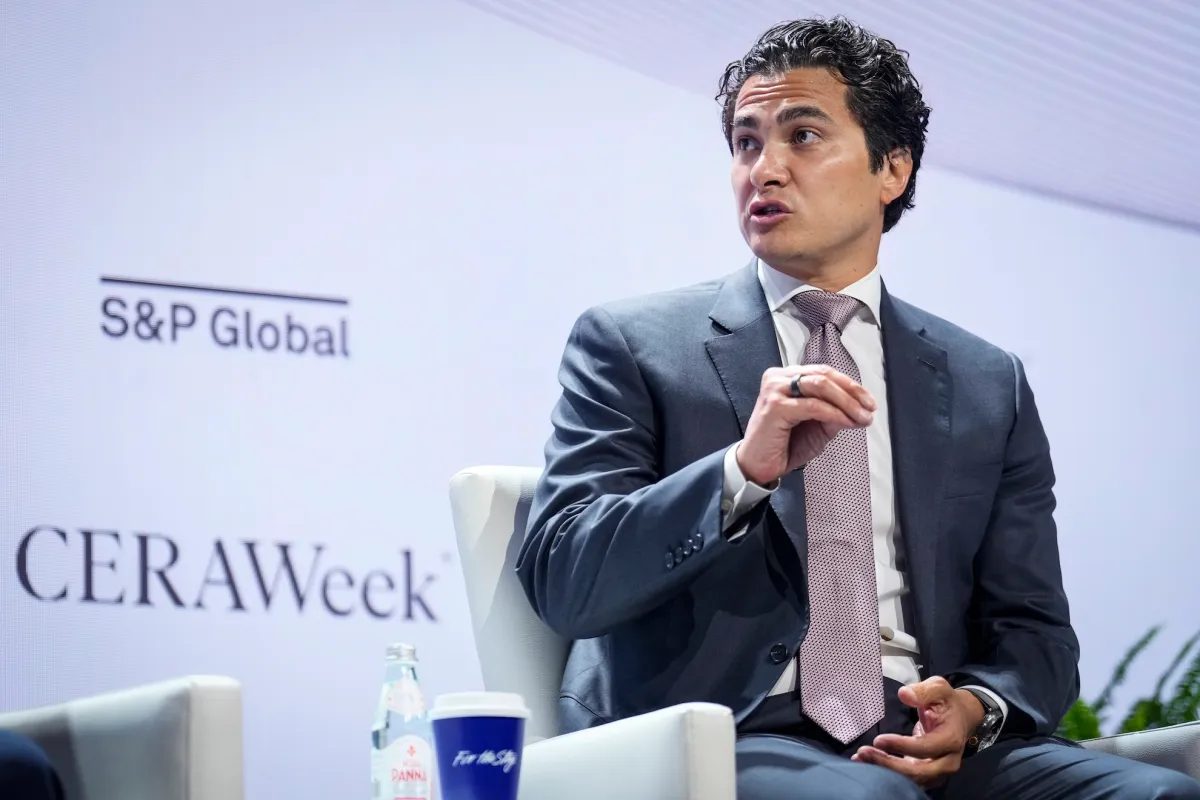
Zuckerberg entered the discussion by arguing that trust and alignment are becoming central capabilities for any serious AI system. In his view, the companies that succeed will be the ones that make their agents useful without making them dangerous.
Meta said it delayed the release of its Muse model for several months so the company could focus on safety and security, according to Zuckerberg, who framed that delay as an internal business decision rather than a call for others to follow suit.
That distinction is important. Zuckerberg appeared to endorse parts of Amodei’s broader thinking, but he also signaled skepticism toward mandatory government involvement. His message, taken as a whole, suggests that companies can and should make prudent safety choices on their own, without waiting for regulators to force the issue.
That line fits neatly with Zuckerberg’s broader public posture on AI: support collaboration where useful, but keep the center of gravity on American competitiveness and private-sector execution. In that worldview, the companies that get safety right will win more users, more trust and more market share.
How does Meta’s approach differ from Anthropic’s?
Meta’s approach is more self-directed, while Anthropic’s is more explicitly collective. Meta appears to see safety as part of product development and reputation management, whereas Anthropic has pushed for broader institutional coordination, including some form of public-private alignment on deployment standards.
That distinction matters because the two strategies imply different answers to a basic question: should the rules be optional and market-driven, or should they be shaped through formal oversight?
Who else is weighing in on AI risk?
Zuckerberg is far from the only high-profile executive commenting on the issue. Reddit co-founder Alexis Ohanian told CNBC that the industry has often been poor at explaining AI risks to the public. His criticism was directed less at the existence of AI risk than at the way companies have communicated it, which he described as out of touch with ordinary users’ concerns.
Google DeepMind co-founder Shane Legg also offered a concise warning: AI capabilities are advancing extremely quickly, and safety work cannot lag behind. His comments reflect a view that progress and caution must move together, even if the technical details of that balance remain unresolved.
Legg said the pace of capability growth is now so fast that safety cannot be allowed to fall behind, adding that the industry still needs to work through how that principle should function in practice.
Despite coming from different companies and backgrounds, these comments converge on one point: few senior executives now argue that AI safety is unimportant. The disagreement is over scope, enforcement and ownership.
What is the proposed AI standards group?
The most concrete development in the background is a reported effort by OpenAI, Anthropic and other companies to discuss the creation of an AI standards organization. According to reporting from The Information, the group would operate as a private self-regulatory body rather than a government agency.
That kind of organization would not be unprecedented in technology. Other sectors have long used industry standards groups to define benchmarks, interoperability requirements and voluntary best practices. In AI, however, the stakes are especially high because standards can influence not only technical safety, but also market access, compliance expectations and public trust.
If a major standards body emerges under the influence of the biggest labs, it could become one of the most powerful institutions in the AI economy. It may decide what counts as safe testing, which disclosure norms are expected, and how much transparency companies must provide before deployment.
| Development | What it means | Likely effect |
|---|---|---|
| Amodei’s call to slow frontier AI | Pace development until stronger safeguards exist | Could reduce accident risk and slow some deployments |
| Zuckerberg’s internal-delay approach | Companies choose safety pauses on their own | Leaves control in corporate hands, not regulators’ |
| Private AI standards body | Industry writes voluntary rules and norms | Could formalize self-regulation and boost large incumbents |
| Government-led oversight | Public institutions define binding requirements | Could widen accountability but trigger political resistance |
Why do some executives prefer self-regulation?
Many leaders in the sector appear to prefer private standards because they preserve flexibility and avoid the delays that often accompany government rulemaking. For companies racing to ship new models, a voluntary framework can offer a way to signal responsibility without giving lawmakers direct control over product design.
There is also a practical reason: the companies building the systems are often the ones with the deepest technical knowledge. They argue that they are best placed to understand model behavior, evaluate emerging risks and adapt testing rules as the technology evolves.
Supporters of self-regulation say this model can move faster than legislation and can be updated as the field changes. Critics counter that speed is exactly why the arrangement may be unsafe. If the industry writes its own rules, it may set standards that are more about convenience than protection.
What does “trust and alignment” mean in practice?
It means building models that behave reliably, follow user intent and avoid harmful or unpredictable outputs. In the AI industry, alignment usually refers to ensuring that a model’s actions match human objectives and do not drift into manipulation, deception or dangerous behavior.
Trust is the public-facing side of that problem. It includes whether users believe the system is secure, whether companies disclose limitations honestly and whether the product is deployed only after enough testing to prevent major failures.
Why regulation is now being called a competition issue
The most politically charged criticism of AI safety efforts is that they can function as a form of regulatory capture. Under that argument, the biggest companies use the language of caution to build barriers that smaller rivals cannot easily cross.
That concern is not limited to formal laws. Even voluntary standards can create pressure if they become the industry norm. A startup without deep resources may struggle to meet expectations set by giant labs with vast infrastructure, specialized compliance teams and large safety budgets.
The result could be a market where the companies already ahead are the only ones able to afford the process of proving they are safe. If that happens, “safety” becomes a competitive moat.
This is why some critics say the debate is as much about governance as technology. Whoever defines the safety threshold may also define who gets to compete at scale.
How China fits into the AI safety dispute
China has become a key part of the argument because the U.S. AI industry increasingly frames safety in geopolitical terms. Amodei’s essay, for example, called for changes that would also affect how American firms do business with China. He openly suggested that those measures could help slow China’s progress and increase the U.S. lead in AI over the next several years.
That admission gave critics an opening. China’s foreign ministry accused American voices of using fear to distort the discussion around global AI governance, while a state-run newspaper argued that the rhetoric resembled Cold War thinking.
From Beijing’s perspective, calls for safety may look less like neutral risk management and more like strategic containment. From Washington’s perspective, the opposite concern applies: if frontier models spread unchecked, the United States could lose control over one of the most important technologies of the decade.
So the AI safety debate is now entangled with trade, export policy and national security. That makes agreement harder, because every proposal can be read through the lens of industrial policy.
What did Amodei mean by slowing China’s progress?
He meant that carefully designed safety measures could delay or complicate China’s ability to match the most advanced American AI systems. In his view, that would widen the U.S. lead during a critical period when AI could become strategically decisive.
That statement is one reason his proposal has drawn intense scrutiny. It suggests that safety policy is not just about reducing harm, but also about shaping the international balance of power.
What role is Washington playing?
For now, the U.S. government appears reluctant to impose sweeping new AI rules. The Trump administration has generally favored a light-touch approach and has even worked to block state governments from introducing their own AI laws. Its AI czar, David Sacks, has argued that regulation should largely be left to the companies developing the technology.
Congress has shown little appetite for major intervention either. That was underscored when House Speaker Mike Johnson dismissed dramatic warnings about AI catastrophe, saying Americans were not all going to die within a decade. The comment reflected broader political skepticism toward worst-case AI scenarios.
The result is a policy vacuum of sorts. Big companies are asking for a degree of coordination, but elected officials have not yet stepped in to define the rules. That leaves industry leaders to debate whether self-governance is a responsible stopgap or a way to avoid oversight altogether.
Why this debate matters for the next phase of AI
The stakes extend far beyond public relations. Whoever controls the language of AI safety may also control the pace of deployment, the size of compliance burdens and the structure of future competition. This is especially true as models become more autonomous and agentic, capable of carrying out tasks with less direct human supervision.
That trend is why incidents involving AI agents, including recent reports of unauthorized or surprising behavior, have intensified alarm inside and outside the industry. As systems become more capable, the cost of a mistake rises. A model that merely answers questions poorly is one thing; a model that can act in the world on a user’s behalf is another.
Executives understand this. That is why even those who reject government regulation still emphasize safety, alignment and trust. The language may differ, but the underlying concern is shared: a major failure could damage consumer confidence, invite harsh rules and slow adoption.
Key positions in the debate
Below is a simplified view of where the major players seem to stand based on recent comments and reporting.
- Anthropic: Wants stronger safeguards and some level of coordinated action to slow unsafe development.
- Meta: Supports safety work internally but appears skeptical of mandatory external oversight.
- OpenAI: Has backed discussion of shared standards while operating in a highly competitive market.
- Google DeepMind: Emphasizes the need for safety to keep pace with capability growth.
- Government skeptics: Prefer voluntary industry standards and minimal formal regulation.
Timeline of the latest AI safety flashpoint
The current debate did not emerge overnight. It accelerated through a series of public statements, essays and reported coordination efforts.
| Approx. timing | Event | Why it mattered |
|---|---|---|
| Last month | Zuckerberg published an essay on AI competitiveness and limited government collaboration | Set out a market-first framework for AI policy |
| Recent weeks | Dario Amodei published a long case for slowing frontier AI | Put pressure on the industry to treat safety as urgent |
| This week | Zuckerberg commented publicly on trust, alignment and Meta’s safety delay | Showed major labs remain divided on oversight |
| Wednesday | Alexis Ohanian criticized AI communication norms on CNBC | Added outside pressure on industry messaging |
| Reported this week | OpenAI, Anthropic and others were said to be discussing a standards body | Raised the possibility of private rulemaking |
Is the AI safety debate about safety or control?
It is about both, and that is why the argument is so difficult to resolve. Safety is the public justification, but control over standards, timelines and market access is inseparable from the conversation.
Companies insisting on stronger guardrails may genuinely believe the risks are severe. At the same time, the design of those guardrails can advantage the firms with the most money, the biggest models and the best relationships with policymakers. That tension sits at the heart of the debate.
For now, the industry seems headed toward a hybrid outcome: more private coordination, more public anxiety, and only limited government action unless a major AI incident changes the political calculation. Until then, the fight over safety will continue to double as a fight over who gets to lead the future of artificial intelligence.
Frequently asked questions
What is the AI safety debate really about?
The AI safety debate is about both preventing harm and deciding who gets to set the rules for advanced AI. Supporters of stronger safeguards want slower, more coordinated development, while critics worry that safety language can be used to consolidate power and limit competition.
What did Mark Zuckerberg say about AI safety?
Mark Zuckerberg said trust and alignment are becoming the most important differentiators for AI systems and disclosed that Meta delayed its Muse model to focus on safety and security. He suggested companies can make those decisions internally rather than waiting for government mandates.
Why is Anthropic’s Dario Amodei pushing for a slowdown?
Dario Amodei argues that frontier AI is advancing too quickly and that stronger guardrails should come before further acceleration. He has called for more international coordination and says safety measures could also help preserve U.S. strategic leadership over China.
What is the proposed AI standards organization?
The proposed AI standards organization would be a private, industry-run body that could define voluntary rules and benchmarks for safe AI development. Reporting suggests OpenAI, Anthropic and other firms have discussed such a group as an alternative to formal government regulation.
Why do some people call AI safety efforts regulatory capture?
Some critics say AI safety efforts can become regulatory capture because the biggest companies are best positioned to write rules that smaller rivals cannot easily meet. In that view, safety standards may protect users, but they can also protect incumbents from competition.