In short
Industrial Next says its AI-driven robotic stations can let manufacturers switch factory robot tasks in minutes rather than weeks. The startup also announced a BMW Group Technology Office partnership to evaluate its technology.
- Industrial Next wants to make factory automation flexible enough to change tasks in minutes.
- The startup was founded by two former Tesla engineers with backgrounds in autonomy and manufacturing.
- Its robots train in high-fidelity simulation rather than relying only on traditional programming.
- Some stations are already being used in smartphone manufacturing, the company says.
- BMW Group Technology Office will evaluate the startup’s dexterous manipulation technology.
Industrial Next says it can help factories change robot tasks in minutes instead of weeks, using AI-powered workstations built on proprietary foundation models and high-fidelity simulation. The San Francisco startup also announced it is working with BMW Group Technology Office to evaluate its dexterous manufacturing technology.
The pitch is straightforward but ambitious: replace rigid, single-purpose industrial automation with robotic stations that can be reconfigured quickly, taught new tasks through simulation and demonstration, and moved across production lines without the lengthy reprogramming and physical retooling that still define much of manufacturing.
What Industrial Next says it is building
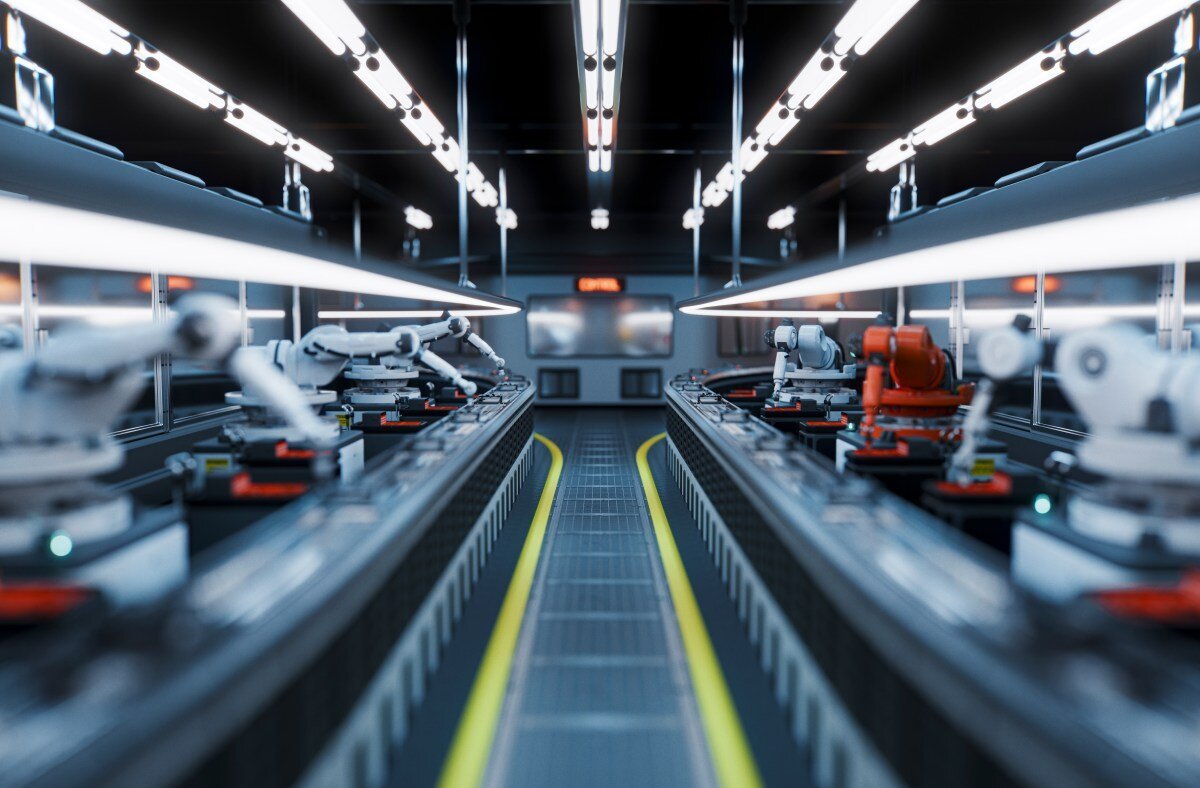
Industrial Next is developing self-contained robotic stations designed for complex manufacturing jobs that are difficult to automate with traditional systems. The company says its platform combines vision, task context and motion through proprietary foundation models, allowing the robots to understand what they are doing rather than simply repeating fixed instructions.
According to the startup, that approach makes it possible to redeploy a station across product lines and switch from one production task to another with far less downtime. Instead of depending on hard-coded scripts or extensive manual programming, the system is trained through simulation and demonstration, with the goal of adapting to new parts, new products and new factory environments much faster than conventional industrial robots.
Why factory automation is still so hard
Factory automation has long lagged behind advances in consumer AI and autonomous systems because industrial robots are usually optimized for repeatability, not flexibility. In many plants, a machine is designed to perform one narrow action on one specific product, and even minor changes can force manufacturers to stop the line, reprogram the equipment or swap hardware.
That rigidity can be expensive. It slows product changes, limits design freedom and can push manufacturers to simplify products just so robots can handle them consistently. Industrial Next is trying to attack that weakness directly by making the automation layer more adaptable.
Its founders argue that modern manufacturing is still being constrained by decades-old industrial assumptions, even as software, machine learning and autonomous systems have moved forward rapidly in other sectors.
Who founded Industrial Next?
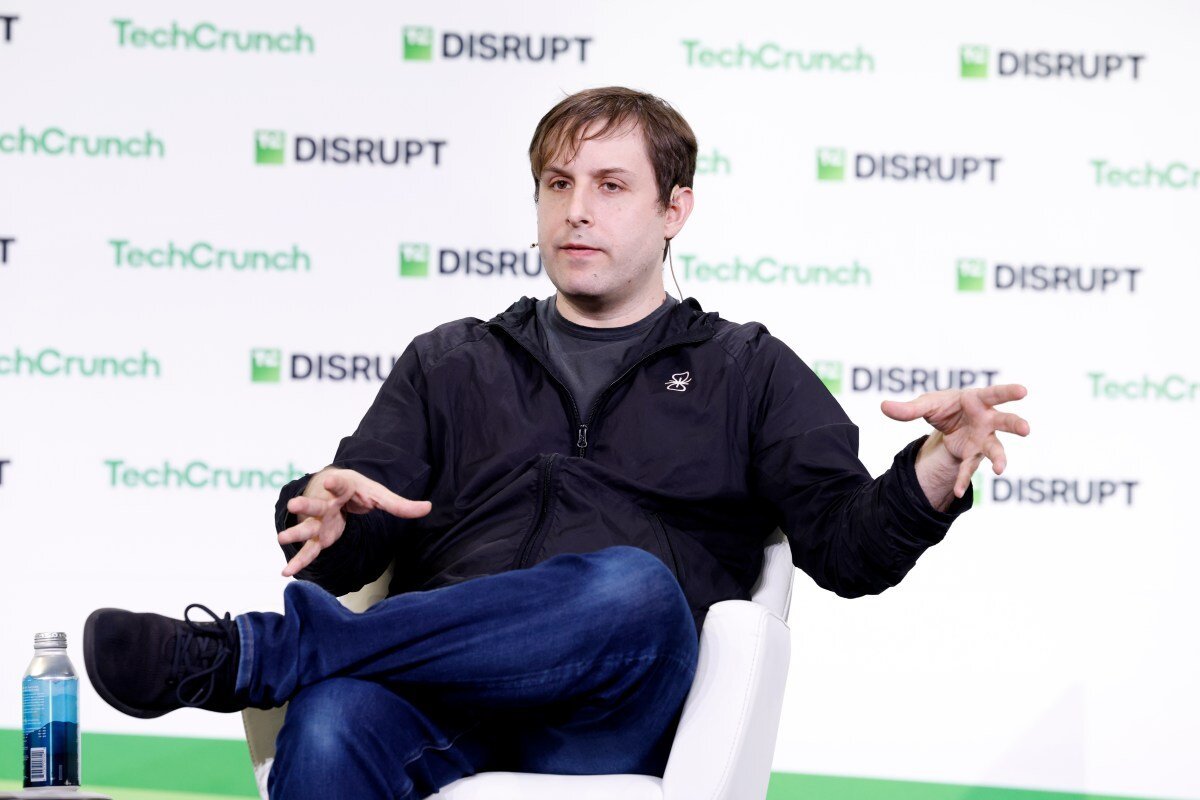
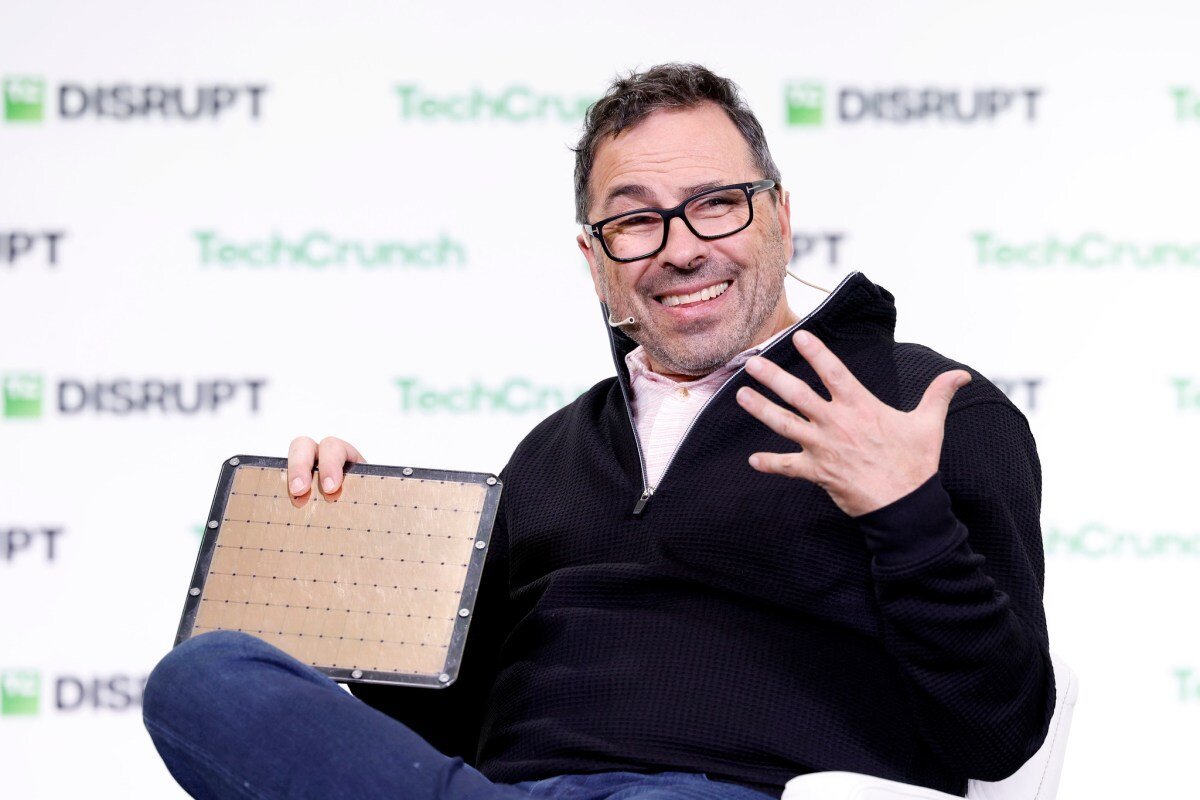
The company was founded in 2021 by Lukas Pankau and Allen Pan, two engineers who previously worked at Tesla and later took jobs in autonomous driving and self-driving systems.
Pankau served as a lead electrical architect at Tesla before moving to Waymo. Pan led Tesla’s autonomous factory work and later became chief architect at Neolix, an autonomous-driving company in China. Both founders have spent years focused on automation, robotics and manufacturing systems, and both say their frustration with factory equipment helped inspire the startup.
The pair first met at Tesla, where they worked together on industrial problems that, in their view, were not keeping pace with the sophistication of the vehicles being built. That contrast became the spark for Industrial Next.
“We had all these fancy things that we could do on cars. I could run machine learning algorithms to design a car for me. But I couldn’t figure out how to program a robot,” Pankau said, describing the gap he saw between advanced software tools and factory-floor reality.
Pankau said engineers at Tesla often found themselves blocked by equipment that was still operating with the logic of older industrial eras. The mismatch, he argued, made it clear that manufacturing needed a new technical foundation.
He said the team kept asking why cutting-edge vehicle design and autonomous systems were paired with factory tools that felt frozen in the 1980s, and that the answer eventually became to rebuild the automation stack from the ground up.
How the founders moved from frustration to startup
The two founders stayed in touch after leaving Tesla and continued comparing notes about industrial limitations at their later jobs. Pankau said he was restless at Waymo and Pan felt similarly constrained at Momenta, another self-driving company.
Their conclusion, after years of revisiting the same complaints, was that they should stop talking about the problem and start the company. By then, both had seen enough of advanced robotics and autonomous systems to believe there was a path toward a more flexible industrial platform.
Industrial Next’s origin story is rooted less in a single breakthrough than in a long-running conviction: if software can transform vehicles and machines, then factory robots should be able to learn with similar sophistication.
How does the technology work?
The short answer is that Industrial Next trains robots in simulation before deploying them in real production settings. The company says its virtual environments are highly detailed and designed to resemble real-world physics closely enough that robots can learn precision movements and task sequences without needing extensive exposure to real parts.
That simulated training is meant to solve a core problem in robotics: the scarcity of large-scale physical data. Unlike internet-trained AI models, which can learn from enormous text and image datasets, industrial robots often lack the broad, diverse examples needed to master delicate physical tasks.
Industrial Next claims its system gives robots a general understanding of a process and then refines that understanding through a simulation engine that closely mirrors the physical dynamics of the real manufacturing line. The result, the company says, is a machine that can perform high-precision work with far less manual programming than traditional industrial robots require.
Why simulation matters
Simulation is becoming increasingly important in robotics because it allows developers to expose machines to many more scenarios than a factory floor could provide. In practice, that can mean more robust learning, quicker iteration and fewer failures when the system is transferred to an actual plant.
For Industrial Next, simulation is not just a training tool; it is the backbone of its flexibility story. The company says this is what allows its stations to be taught new tasks without traditional code-heavy reprogramming.
- Robots practice in a highly realistic virtual environment.
- Tasks are taught through demonstration and simulation rather than fixed scripts.
- Stations can be moved and reused across multiple product lines.
- Manufacturers can potentially avoid long shutdowns for retooling.
What has Industrial Next already done?
The startup says some of its stations are already being used in the manufacture of one of the world’s most popular smartphones. Pankau described tasks that manufacturers had struggled to automate for years, including threading a fragile flex cable and snapping a small connector cap into place.
He did not identify the customer, but said the use cases involved jobs that are both delicate and repetitive enough to benefit from robot precision if the system can be made reliable enough.
Pankau also said the company has built a “film peeling” station that removes protective film from camera modules and buttons at or above human speed while maintaining 100% accuracy. He added that the system can be moved to a new phone model and production line without losing performance, even when the robot has not encountered that exact setup before.
If those claims hold up under broader deployment, the technology could help factories automate steps that were previously left to human workers because they were too subtle, fragile or inconsistent for conventional robotics.
What is the BMW partnership about?
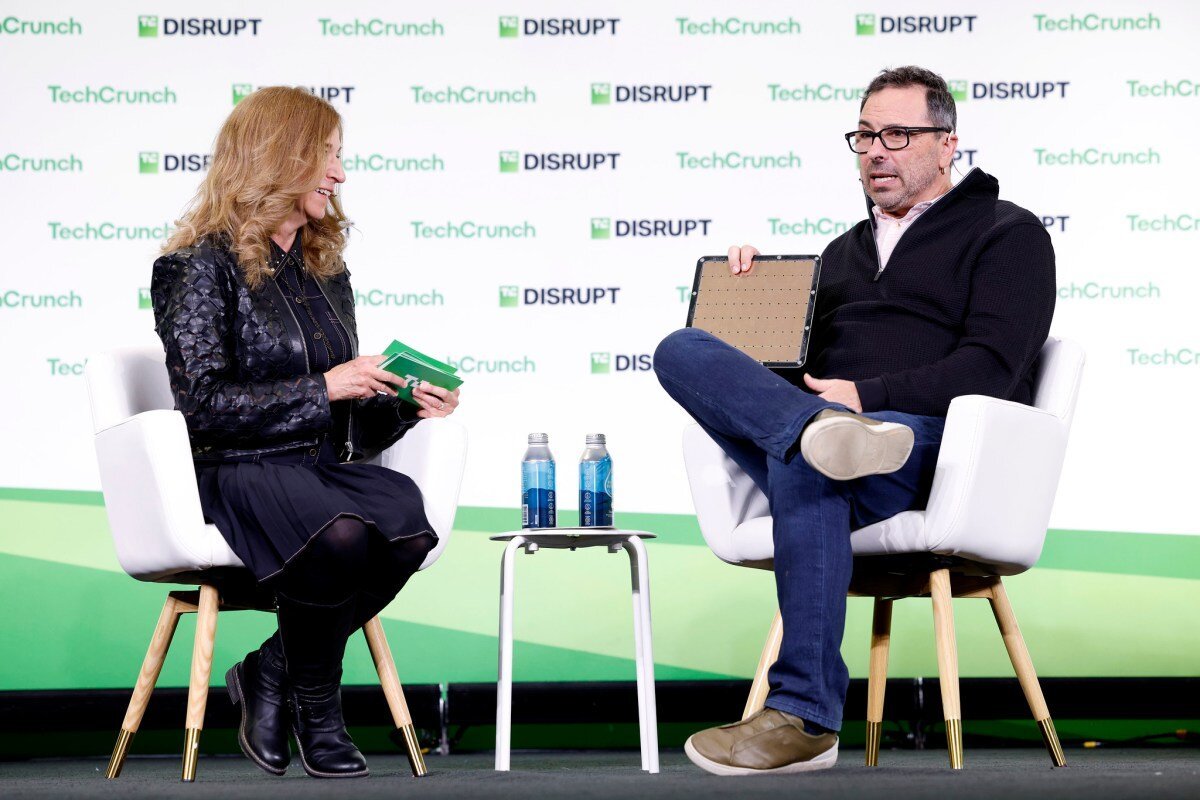
Industrial Next announced on stage that it is partnering with BMW Group Technology Office to evaluate its dexterous manipulation system for manufacturing. The collaboration is intended to assess whether the startup’s AI-powered stations can meet the demands of industrial production in a real-world automotive setting.
Evaluation partnerships like this matter because manufacturing buyers are rarely persuaded by demos alone. Automotive production, in particular, demands high reliability, repeatable quality and systems that can integrate into complex supply chains and process flows. A BMW Technology Office review suggests Industrial Next is entering the critical phase where promising lab performance must be translated into industrial proof.
| Company milestone | Details | Why it matters |
|---|---|---|
| Founded | 2021 by Lukas Pankau and Allen Pan | Built by engineers with deep automotive and autonomy experience |
| Core product | AI-driven robotic stations with vision, task context and motion modeling | Targets flexible automation instead of single-task robots |
| Training approach | High-fidelity simulation plus demonstration | Helps robots learn without massive real-world datasets |
| Current use cases | Phone manufacturing tasks, including delicate assembly and film removal | Shows the system can handle precision work |
| New partnership | BMW Group Technology Office evaluation | Signals interest from a major automotive manufacturer |
How big could the ambition get?
Industrial Next is not only trying to improve a few factory steps. Its founders say they want to move toward something much larger: a fully automated vehicle assembly process with no human hands touching the product at all.
That is a long way from a phone assembly task or a single peeling station, but the company’s vision is to build modular automation that can be recombined and redeployed across the manufacturing process. In theory, if the stations are flexible enough, manufacturers could scale from one station to many without rebuilding the entire line each time the product changes.
Pankau framed the effort as a way to overcome a problem he encountered repeatedly at Tesla: sophisticated software and engineering teams forced to work around hardware that could not keep up. Industrial Next is trying to erase that gap by making the robot itself more adaptable and more aware of the process it is performing.
Pankau said the startup was born from the desire to get beyond factory stations that were effectively skipped over because they could not be programmed well enough with older methods, and to apply modern AI to more complex manufacturing tasks.
Why manufacturers may be paying attention
Manufacturers care about flexibility for a simple reason: product cycles are getting faster, customization is growing and downtime is costly. A robot system that can switch tasks in minutes instead of weeks would not just save time; it could change how factories are designed and how products are introduced.
In sectors such as consumer electronics and automotive production, even small improvements in retooling speed can matter. Factories often run multiple variants of the same product, and every additional changeover adds friction. A more adaptive robot system could lower the threshold for automating work that was previously considered too nuanced to machine.
That said, the claims are substantial, and the practical test will be whether Industrial Next can prove reliability at scale, across different materials, lighting conditions, production volumes and line configurations. Manufacturing buyers tend to demand evidence, not just potential.
What is at stake for factory AI?
What is at stake is whether the next wave of industrial automation will remain narrowly scripted or become genuinely adaptable. If companies like Industrial Next succeed, factory robots could start behaving less like fixed appliances and more like software-defined systems that can be updated, redeployed and reused across different jobs.
That shift would matter beyond a single production line. It could reshape the economics of manufacturing automation, reduce dependence on specialized integration work and open the door to automating tasks that have resisted machines for decades.
- Less downtime when products change.
- Greater feasibility for delicate assembly jobs.
- More reuse of robotic hardware across lines.
- Potentially lower barriers to automation in complex factories.
How the startup fits into the broader AI moment
Industrial Next is part of a larger wave of companies applying AI foundation models to physical systems rather than just text or images. The idea is to bring the adaptability of modern machine learning into environments that have historically depended on rigid, handcrafted rules.
In robotics, that ambition is especially significant because the physical world is less forgiving than software. A language model can make a mistake in a sentence; a factory robot can damage parts, stop a line or create safety issues. That means the leap from AI research to production robotics requires both technical sophistication and industrial discipline.
By combining simulation, dexterous manipulation and modular stations, Industrial Next is betting that factories will eventually demand the same kind of flexible intelligence that software users now expect from AI tools. The startup is far from alone in that pursuit, but its manufacturing focus and automotive roots give it a distinctive angle.
What happens next?
The immediate next step is likely validation. A partnership with BMW Group Technology Office suggests the startup will need to demonstrate that its technology can survive the scrutiny of a major industrial player. If those tests go well, Industrial Next could strengthen its position as one of the more ambitious entrants in AI-driven manufacturing.
For now, the company’s message is clear: factory robots do not have to remain locked into a single task forever. Industrial Next wants them to learn, shift and adapt quickly enough to keep up with the pace of modern product development.
Whether that promise becomes a scalable manufacturing standard will depend on performance in real factories, not just simulated ones. But if the startup can deliver on its claims, the idea of retooling a production line in minutes rather than weeks may move from a startup-stage slogan to an industrial reality.
That is why the company’s appearance at TechCrunch Disrupt 2026 drew attention: it is pitching not just a better robot, but a different model for how factories are built, updated and automated.
Frequently asked questions
What does Industrial Next do?
Industrial Next builds AI-powered robotic stations for manufacturing. The company says its system combines vision, task context and motion so factory robots can learn complex jobs through simulation and demonstration instead of traditional hard-coded programming.
Why is Industrial Next’s technology important?
Industrial Next is trying to solve one of manufacturing’s biggest bottlenecks: rigid automation. If its system works as promised, factories could switch robot tasks much faster, reducing downtime and making it easier to automate delicate or changing production steps.
Who founded Industrial Next?
Industrial Next was founded in 2021 by Lukas Pankau and Allen Pan. Both previously worked at Tesla and later held roles at Waymo, Neolix and Momenta, giving them backgrounds in automotive engineering, robotics and autonomy.
What partnership did Industrial Next announce?
Industrial Next announced that it is partnering with BMW Group Technology Office to evaluate its AI-powered dexterous manipulation technology. The collaboration suggests the company is moving from startup demos toward real industrial testing.
How does Industrial Next train its robots?
Industrial Next says it trains robots in high-fidelity simulation that closely matches real-world physics. The company then uses demonstration and simulation to teach tasks, which it says helps robots handle precision work without extensive manual coding.