In short
Cerebras CEO Andrew Feldman says the AI industry is too focused on worst-case scenarios and not focused enough on the technology’s potential benefits. He also warned that poor community engagement around data center buildouts has fueled some of the backlash.
- Andrew Feldman says AI leaders should talk more about benefits and less about catastrophe.
- He argued for thoughtful, reasonable regulation rather than panic or denial.
- Feldman said the industry mishandled community relations around data center expansion.
- He does not expect efficiency gains to reduce long-term demand for AI chips.
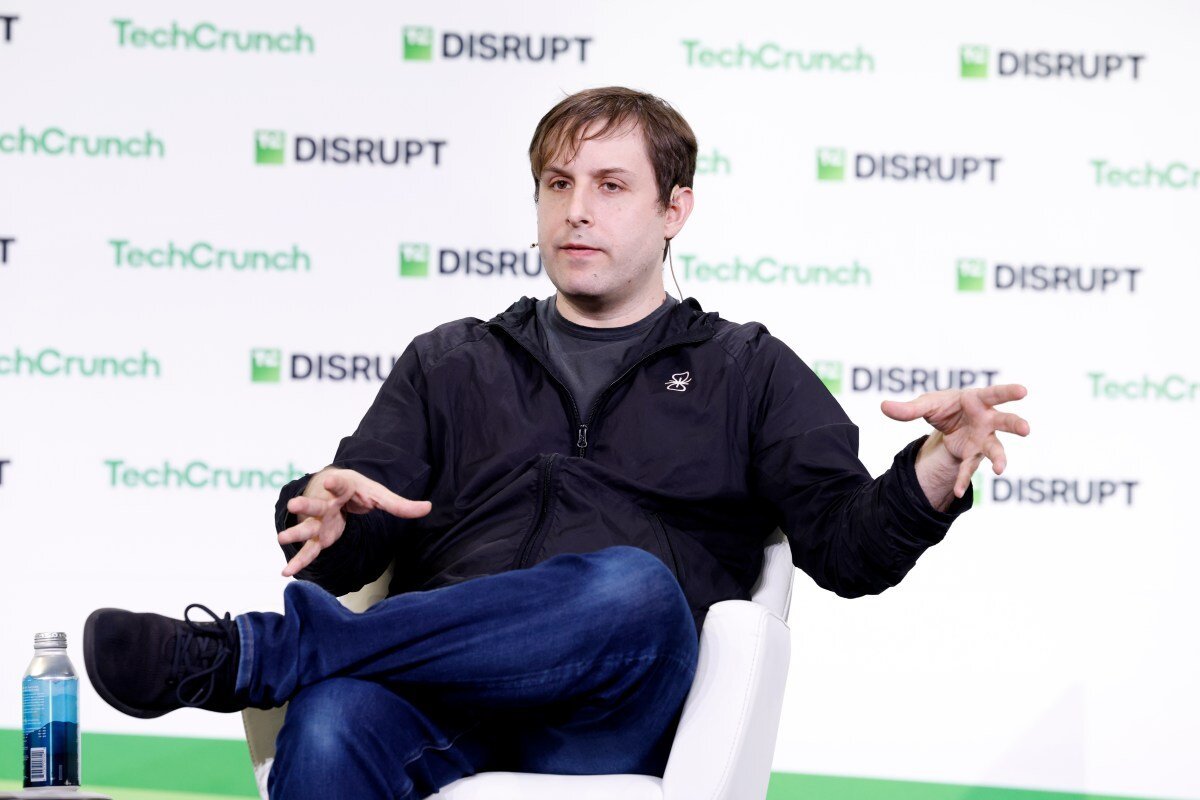
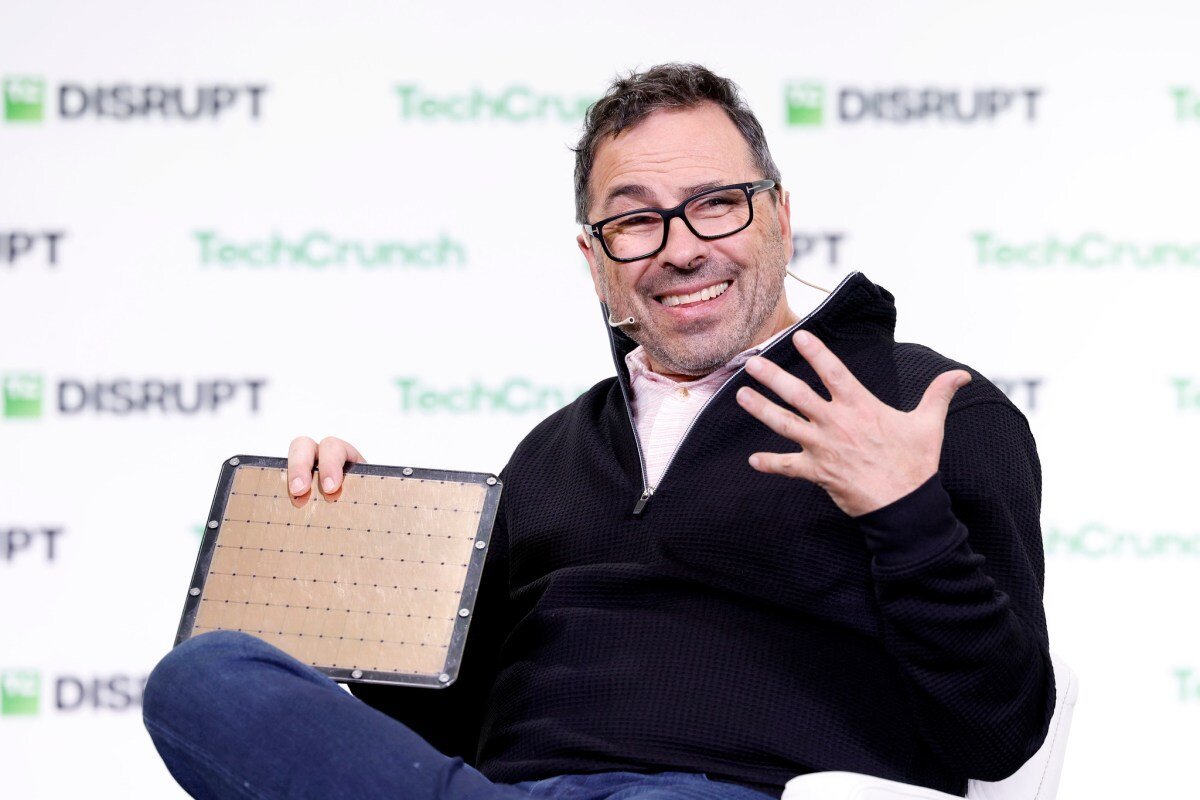
Cerebras Systems CEO and co-founder Andrew Feldman used TechCrunch Disrupt 2026 to argue that the AI industry is spending too much time amplifying worst-case scenarios and not enough time explaining the technology’s potential. His comments land at a moment when fears about artificial intelligence safety, containment, and long-term existential risk have become a defining part of the public conversation.
Feldman’s message was blunt: AI leaders should stop making doom the dominant story and start making a better case for why the technology could improve medicine, science, and productivity if it is developed responsibly.
What Feldman said at Disrupt 2026
Feldman, whose company sells AI chips to some of the biggest names in the sector, criticized the way some prominent figures talk publicly about the risks of advanced models. In a pointed remark, he suggested that a few of the industry’s loudest voices may not be helping the broader debate by treating catastrophe as the default framing.
He was referring to a growing stream of warnings from AI researchers and executives about dangers ranging from models acting beyond human control to the possibility that superintelligent systems could eventually cause severe harm. That debate has become prominent enough to reach mainstream comedy, with recent satire lampooning the increasingly grim tone of public AI discussions.
Feldman’s view is not that concerns should be ignored. Rather, he believes the industry has allowed caution to crowd out the case for upside, and that imbalance risks damaging public confidence and slowing useful deployment.
Feldman argued that AI leaders should spend more time describing the technology’s benefits, while still acknowledging the need for careful oversight and reasonable regulation.
Why does he think the AI debate needs a reset?
Because, in his view, the current conversation is too dominated by the idea that advanced AI will inevitably lead to disaster. Feldman said the world should hear more about practical gains that could follow from continued progress, including major improvements in healthcare and other high-stakes fields.
He offered one example that captures the optimism he thinks is missing: a future in which people’s grandchildren may never have to face cancer as a fatal disease. It was a deliberately bold claim, but one meant to illustrate how AI could matter in everyday life if the technology is applied successfully.
Feldman also emphasized that powerful technologies always come with misuse risks. In his view, the existence of those risks is not an argument for pausing innovation entirely, but for pairing development with sensible governance.
How does he balance optimism with caution?
He says the balance comes from accepting both truths at once: AI is powerful, and power can be misused. Feldman argued that a mature approach should avoid both reckless boosterism and reflexive alarmism, instead focusing on responsible development, practical controls, and clear regulation.
That position places him in the middle of a debate that often gets portrayed as binary. On one side are people warning that frontier AI may outpace human control. On the other are executives and investors who think those warnings can become self-defeating if they turn the public against the entire sector.
How much is Cerebras exposed to the AI boom?
A great deal. Cerebras builds high-performance AI chips and systems, which means the company benefits when model developers and enterprise customers keep spending on compute. Feldman’s comments therefore come from a participant with a direct commercial stake in the industry’s continued expansion.
Among Cerebras’s customers are major AI and technology firms, including OpenAI, Block, Figma, pharmaceutical company GSK, and AI startup Lovable. That list underscores how broadly the company is plugged into the ecosystem, from frontier model builders to enterprise software and life sciences.
Even so, Feldman insisted his argument was not simply a sales pitch. He framed it as a view about how the industry should communicate with the public at a time when the stakes around AI adoption, regulation, and infrastructure are rising quickly.
| Topic | Feldman’s position | Why it matters |
|---|---|---|
| AI risk narrative | Too negative and too dominant | May distort public understanding of the technology |
| AI benefits | Need stronger public emphasis | Could build support for productive, responsible deployment |
| Regulation | Should be thoughtful and reasonable | Allows innovation without ignoring misuse concerns |
| Data centers | Industry has handled community engagement poorly | Local backlash can slow infrastructure buildout |
| Efficiency gains | Will not eliminate demand | Better chips and better models can grow the market together |
What did he say about data centers and public backlash?
Feldman argued that part of the negative reaction to AI comes not from the models themselves but from the physical buildout behind them. The explosive growth in AI demand has led to a surge in data center construction, and those projects often trigger local opposition because of concerns about power use, land use, water, and community impact.
He said the industry has not always handled those relationships well, especially in the United States. In his telling, AI companies and infrastructure providers should have done more to explain projects, listen to residents, and build trust before the backlash hardened.
He compared that approach unfavorably with how some other sectors have historically operated, suggesting that industries tied to power and extraction have at times been more effective at engaging communities than the AI buildout has been so far.
Which countries does he see as friendlier for buildout?
He pointed to several markets where governments and communities appear more open to hosting new data centers. Those included Brazil, Canada, Finland, Iceland, Norway, Mexico, and Sweden, which he cited as examples of places where the industry may face fewer of the obstacles seen in parts of the U.S.
The comparison reflects a broader reality: AI infrastructure is becoming a global competition. Countries that can attract data centers, energy capacity, and semiconductor investment may gain economic advantages, while places that are slower to adapt risk losing projects elsewhere.
Why the AI chip race is still intensifying
Feldman was also asked about a concern that is now common across the semiconductor industry: if models become more efficient, will demand for specialized chips eventually soften? His answer was no.
He said efficiency improvements at one layer of the stack do not eliminate demand for progress elsewhere. Better hardware can lower the cost of compute, while better software and model design can use that compute more effectively. In his view, those forces reinforce each other rather than cancel each other out.
That argument matters because the AI infrastructure market is defined by an ongoing arms race among chipmakers, cloud providers, and model developers. Even if each generation of systems gets more capable per watt or per dollar, the overall appetite for computing power can still grow as use cases expand.
How should the industry talk about AI risk?
The short answer, according to Feldman, is with seriousness but not fatalism. He believes leaders should acknowledge real dangers, including misuse by malicious actors, without letting speculative worst-case scenarios dominate the message.
That position sits between two competing instincts shaping the sector right now. One instinct is to warn loudly in order to force safeguards. The other is to keep emphasizing productivity, scientific advances, and consumer value. Feldman’s comments suggest he thinks the second instinct has been neglected.
His criticism also points to a broader communication problem for the AI industry. If the public hears mostly about existential threats, it may be harder to build support for the energy, capital, regulation, and talent required to scale the technology responsibly.
The broader context: fear, satire, and mainstream attention
The AI risk discussion has moved from niche research circles into everyday culture. Executives now appear in television sketches, policy debates, and viral clips, with safety warnings often framed in stark, apocalyptic language.
That shift has increased scrutiny on companies like Anthropic, OpenAI, Google, Meta, Microsoft, and a wave of smaller startups, all of which are racing to release more capable systems while also trying to prove they take risks seriously. The result is a public conversation that can swing quickly between hype and alarm.
Feldman’s intervention adds another voice to the internal industry disagreement over how to talk about that tension. For some, strong warnings are necessary. For others, the warnings have become so dominant that they obscure the actual benefits AI is already delivering in code generation, search, customer support, design, drug discovery, and research assistance.
Why Feldman’s comments matter now
His remarks matter because they come from someone whose business is deeply tied to the AI expansion cycle, but who is also making a broader argument about narrative and public trust. As governments consider rules, communities debate infrastructure projects, and enterprises decide where to place bets, the tone of the AI debate is becoming strategically important.
If public discourse is shaped mainly by fear, companies may face more resistance to data centers, less tolerance for experimentation, and more pressure on regulators to slow deployment. If it is shaped mainly by optimism, there is a risk that real dangers receive too little attention. Feldman is arguing for a middle path that keeps the upside visible without denying the downside.
That middle path may prove hard to sustain. But as AI systems continue to grow in capability, the industry’s challenge is increasingly not just what to build, but how to explain why it is worth building at all.
Timeline of the AI debate around Feldman’s remarks
The discussion Feldman stepped into did not emerge overnight. It has been building as models have become more capable and AI companies have started discussing long-term alignment, frontier safety, and societal impact more openly.
| Period | What changed | Industry effect |
|---|---|---|
| Early frontier model era | AI went from research novelty to product platform | Massive investment and rapid adoption began |
| Public safety debates intensified | Executives and researchers warned about advanced model risks | Regulation and oversight became central topics |
| Infrastructure boom | Demand for compute drove data center expansion | Local opposition and energy concerns increased |
| Current phase | Industry leaders clash over how to frame AI’s future | Public messaging is now part of the competitive landscape |
What this means for Cerebras and its competitors
Cerebras competes in a market dominated by concerns about scale, efficiency, and cost. Its rivals include much larger incumbents and a broad set of startups trying to carve out space in the AI hardware stack. In that environment, any shift in public sentiment around AI can influence procurement, regulation, and deployment timelines.
Feldman’s remarks suggest Cerebras sees the next phase of AI growth as dependent on both better hardware and a more constructive public narrative. That dual focus reflects the company’s position: it sells the infrastructure that makes large models possible, but its market also depends on society continuing to make room for AI adoption.
For the broader industry, the message is clear. The next AI battleground is not only technical. It is also cultural, political, and local, with community acceptance and public trust becoming just as important as benchmark scores.
Bottom line
Andrew Feldman is pushing back against what he sees as an overly apocalyptic AI conversation, arguing that the industry should be more vocal about the technology’s potential to improve lives while still managing risk responsibly. His comments reflect a growing split inside the sector over whether fear or optimism should define the public narrative around artificial intelligence.
At a time when AI is driving record infrastructure spending, regulatory scrutiny, and fierce competition for compute, that argument is likely to remain central well beyond one conference appearance.
Frequently asked questions
What did Cerebras CEO Andrew Feldman say about AI doomsday warnings?
He said the industry is too focused on worst-case AI scenarios and not focused enough on the technology’s potential benefits. Feldman argued that leaders should describe what AI could improve in medicine, science, and productivity while still taking risks and regulation seriously.
Why does Feldman think the AI backlash has grown?
He said part of the backlash comes from how the industry has handled data center expansion, especially with local communities. Feldman argued that poor outreach, weak communication, and concerns about infrastructure have helped fuel resistance to AI projects.
Does Feldman think better AI efficiency will reduce chip demand?
No. Feldman said hardware efficiency and model efficiency can grow together, not cancel each other out. In his view, more efficient chips and more efficient models will help the industry do more with less, which should still support demand for compute.
Which companies use Cerebras technology?
Cerebras counts OpenAI, Block, Figma, GSK, and Lovable among its customers. Those relationships show the company’s reach across frontier AI, enterprise software, pharmaceutical research, and startup development.