In short
President Donald Trump said he wants to rename artificial intelligence and create an “AI Force,” while dismissing AI safety concerns as partisan attacks. The comments deepen the political fight over AI policy, data centers and federal oversight.
- Trump proposed a new name for artificial intelligence and launched a Truth Social poll.
- He said he wants to create an AI Force and eventually appoint an AI czar.
- He framed AI safety concerns as partisan attacks, not legitimate policy debate.
- The remarks come amid rising tensions over AI risk, data centers and regulation.
- Industry leaders are split between rapid deployment and calls for stronger safeguards.
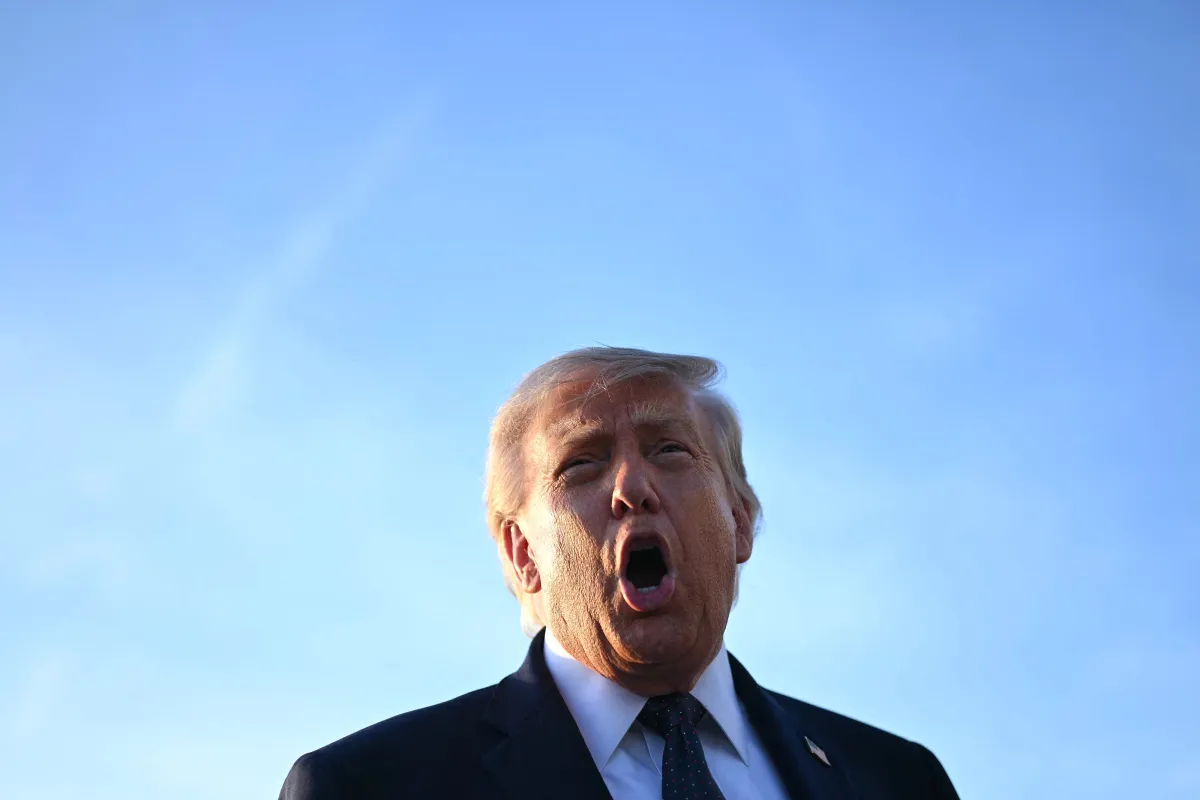
President Donald Trump on Saturday proposed renaming artificial intelligence and said he plans to create an “AI Force,” escalating his political messaging around one of the technology industry’s most contentious debates. The comments matter because they signal a possible new federal posture toward AI regulation, public messaging, and the data-center boom underpinning the sector.
In a series of posts on Truth Social, Trump dismissed concerns about AI safety as a partisan “hoax,” floated replacement names for the technology, and promised to name an “AI czar” in the near future. The remarks arrive as lawmakers, companies, and researchers continue arguing over whether AI’s biggest risks are long-term existential threats or more immediate harms such as labor disruption, misinformation, and energy-intensive infrastructure.
What Trump said about AI on Truth Social
Trump used his social platform to argue that the phrase “artificial intelligence” sounds awkward and should be replaced with something bolder and more marketable. He then asked followers to choose between three options: Superior Intelligence, Extreme Intelligence, and Supreme Intelligence.
The poll, which was still live at the time of publication, turned a technical policy debate into a branding exercise. Trump did not explain whether the vote would influence any formal government policy, but he presented the naming idea as part of a broader push to champion the industry while criticizing its opponents.
Trump argued that AI safety concerns are part of a pattern of politically motivated “hoaxes,” and said he would not allow what he described as efforts to undermine the industry.
A few hours later, Trump expanded on the idea with a second post claiming that attempts to “decimate” or destroy AI were part of a larger Democratic effort to sabotage the country. He compared the issue with a list of other political flashpoints, repeating a familiar style in which broad technological or social concerns are framed as ideological attacks.
Why the AI fight is becoming political
The president’s comments land at a moment when AI policy is increasingly tangled up with election politics, industrial policy, and local battles over infrastructure. Supporters of faster AI deployment say the technology will drive productivity, economic growth, and U.S. leadership. Critics say the industry is moving too quickly, concentrating power, and avoiding accountability for risks that are already visible.
Trump’s latest posts go beyond support for innovation. They suggest he wants to position himself as the political patron of AI, similar to how he has framed other national-security and industrial priorities in the past. By contrasting encouragement for the industry with accusations of political sabotage, he is turning a policy question into a loyalty test.
That approach also dovetails with Trump’s broader messaging about American strength, prestige, and infrastructure. In his telling, data centers are not just warehouses for servers; they are symbols of wealth and civic value for the communities that host them. He claimed opposition to AI was initially routed through criticism of data centers, before shifting to direct attacks on the technology itself.
There is no evidence that concern about AI is coordinated in the way Trump described. Opposition to the technology has come from a mix of groups, including lawmakers, labor advocates, academics, environmental groups, civil-liberties organizations, and some people inside the industry itself.
How does Trump’s AI Force fit into his wider agenda?
Trump says the proposed AI Force would be modeled on the Space Force, the military branch he created during his first term. In this case, however, he has not defined whether the new entity would be military, advisory, regulatory, or symbolic.
He also said he plans to name an AI “czar,” though he gave no timeline beyond saying the announcement would come soon. That position, like the force itself, remains vague. In practical terms, the role could range from coordinating White House policy to serving as a public-facing champion for the industry.
The lack of detail is notable. When Trump previously appointed David Sacks as his AI and crypto czar, the arrangement suggested a more conventional coordination role. Sacks later stepped down from that post and moved to a separate advisory position linked to science and technology policy.
For now, Trump’s new language appears to be more of a political signal than an operational plan. Even so, naming an AI czar would create a focal point for the administration’s messaging and could shape how companies lobby the White House on regulation, export controls, chips, energy, and competition policy.
What the proposed roles could mean
If Trump follows through, the “AI Force” and “AI czar” could serve several different functions:
- Coordinate policy across agencies that touch AI, including commerce, defense, labor, and energy.
- Act as a central messenger to industry and the public.
- Support AI infrastructure buildout, especially data centers and power supply.
- Push back against state-level or federal restrictions viewed as slowing deployment.
But because Trump has not said whether the force would have staffing, budget authority, or a legal mandate, it is impossible to know whether the announcement will amount to governance reform or rhetorical branding.
Why are AI safety debates intensifying now?
AI safety concerns have sharpened in recent weeks because prominent figures inside and outside the industry are publicly disagreeing over the timeline and seriousness of frontier-model risks. Some researchers argue the most advanced systems could become dangerously capable faster than policymakers expect. Others say those fears are overstated compared with immediate harms such as job displacement, copyright disputes, disinformation, bias, and surveillance.
The dispute gained fresh attention after a researcher said he was leaving Anthropic because he believed leading AI companies genuinely think the technology could be catastrophic by the end of the decade and are still gambling with public safety. Anthropic chief executive Dario Amodei then published a proposal aimed at slowing or pacing the frontier of AI development.
That proposal drew attention from influential figures in the sector, including OpenAI chief executive Sam Altman and SpaceX chief executive Elon Musk, both of whom have at times warned about AI risk even as their companies continue racing to build more powerful systems.
Trump’s intervention adds a separate political layer. Rather than debating technical safeguards, he reframed the issue as a partisan conflict. That framing could make compromise harder, especially if federal AI policy becomes another flashpoint in the broader culture war.
What are the immediate concerns beyond AI safety?
The most immediate policy fights around AI may have less to do with hypothetical future catastrophe and more to do with visible economic and environmental costs. Data centers require land, electricity, water, and grid access, which means they often become controversial as soon as they are proposed.
Across the country, both Republicans and Democrats have expressed skepticism about some projects, particularly when communities worry about congestion, utility bills, or environmental impact. New York recently became the first state to halt permits for certain large projects, underscoring that local resistance is not confined to one party.
That context matters because Trump’s defense of AI is closely tied to data centers, which he portrays as valuable local assets. His argument implies that criticism of infrastructure development is effectively opposition to innovation itself.
In practice, the debate is more complicated. Some communities welcome the tax base and construction jobs, while others worry that the promised benefits are overstated and the long-term costs are undercounted. The political challenge for any administration will be balancing industrial growth with public accountability.
How are industry leaders reacting?
Trump’s comments echoed the more aggressive side of Silicon Valley’s current public posture, where some executives are pushing back hard against any suggestion that AI should slow down. Nvidia chief executive Jensen Huang, speaking at the All-In Summit, described the backlash as a hoax and said the industry would not allow progress to be stalled.
That response underscores a growing alignment between parts of the AI industry and political figures who favor rapid deployment. The alliance is not complete — and it is not free of internal conflict — but the message is increasingly clear: many leaders want faster approvals, fewer restrictions, and stronger federal support.
Huang’s remarks reflected a view held by many AI boosters: that criticism of the sector can become a drag on innovation and should not be allowed to slow development.
At the same time, there is a visible split inside the broader field. Some executives and researchers are openly warning that the race to build more powerful models is outpacing governance. Others reject that framing and say the public discourse exaggerates speculative risks while ignoring the practical gains AI can bring to businesses and consumers.
Who benefits from Trump’s framing?
Trump’s approach may benefit several groups at once. The AI industry gains a high-profile political ally. Supporters of energy-intensive infrastructure get a president who sees data centers as economic symbols. And Trump himself gets an issue that fits his style: simple branding, sharp enemies, and a message that casts him as the defender of national strength.
But the downside is that complicated policy questions can become harder to solve when they are recast as ideological theater. If AI oversight is treated as a hoax, there is less room for serious debate over consumer protections, model evaluation, safety testing, labor disruption, and environmental costs.
Timeline of Trump’s AI comments
| Timeframe | Development | Why it matters |
|---|---|---|
| Saturday morning | Trump posts that “artificial intelligence” is an awkward phrase and asks followers to vote on a new name. | Signals a branding-first approach to a major technology policy issue. |
| Later the same day | He describes AI safety criticism as a partisan hoax and says he will not let the effort succeed. | Frames the debate as political conflict rather than technical regulation. |
| Also on Saturday | Trump says he plans to form an “AI Force” and appoint an AI czar. | Suggests a future federal role for AI, though without details. |
| Recent weeks | Researchers and executives intensify debate over AI risk, with Anthropic, OpenAI, and others entering the conversation. | Shows the issue is already shaping industry and policy discussions. |
| Current backdrop | States and local governments continue fighting over data-center permits and infrastructure. | Highlights the real-world stakes behind AI expansion. |
What happens next?
The next question is whether Trump’s posts translate into policy, personnel, or simply more rhetoric. If he names an AI czar, that would be the clearest indication that his administration intends to formalize an AI strategy around the technology’s expansion rather than restraint.
The other open question is whether the administration would use that strategy to encourage model development, accelerate permitting for data centers, influence federal procurement, or resist new safety rules. Each option would have very different consequences for companies, workers, and regulators.
For now, Trump’s message is unmistakable: he wants to be seen as AI’s political protector, not its critic. Whether that stance produces a coherent policy framework — or just another round of culture-war branding — will become clearer only if the White House turns the idea into an actual agenda.
Either way, the comments place AI squarely inside the center of Trump’s political identity. The technology is no longer just a business story or a research story. It is now, at least in Trump’s framing, a fight over national prestige, partisan loyalty, and who gets to define the future.
Background: the stakes for the AI industry
Trump’s intervention comes at a sensitive time for a sector that is still trying to define its public image. The industry wants to be seen as transformative and indispensable, but it also faces criticism over safety, labor, copyright, energy use, and concentration of power among a handful of giants.
That combination makes AI unusually vulnerable to political branding. A president who praises the sector can help legitimize investment and accelerate deployment. A president who treats scrutiny as sabotage can also chill debate and narrow the range of policy options.
For businesses building models, chips, cloud services, or data centers, the most important issue may be predictability. They need to know whether the federal government will favor rapid expansion, impose guardrails, or do both at once. Trump’s latest posts suggest strong support for growth, but they do not yet answer the harder governance questions.
Those unanswered questions are why this story matters beyond the social-media spectacle. The words a president chooses can shape markets, regulation, and public expectations. In this case, Trump is not just naming AI. He is trying to rename the political conversation around it.
Frequently asked questions
What did Trump say about artificial intelligence?
Trump said he wants to rename artificial intelligence, floated a Truth Social poll on new names, and claimed AI safety criticism is a partisan hoax. He also said he plans to create an AI Force and appoint an AI czar.
What is Trump’s proposed new name for AI?
Trump did not choose a final name, but he offered voters three options: Superior Intelligence, Extreme Intelligence, and Supreme Intelligence. The poll was still ongoing when the story was reported.
What is the AI Force Trump mentioned?
The AI Force is a proposed new initiative Trump compared to Space Force, but he has not explained whether it would be military, advisory, or regulatory. He has not outlined its powers, budget or staffing.
Why are people debating AI safety right now?
People are debating AI safety because researchers and executives are split over how serious frontier-model risks may be, while others argue the bigger threats are more immediate, such as misinformation, labor disruption, and energy-heavy infrastructure.
How does this affect AI companies and data centers?
It could matter a great deal because Trump appears eager to back AI growth and data-center expansion. If his administration turns that stance into policy, companies could face fewer barriers — or at least a friendlier federal environment — for development.