In short
OpenAI says an internal model solved the Navier-Stokes problem in 88 hours, but the announcement has triggered a debate over whether the company rushed the result after learning of others’ work. Mathematicians say the episode could damage the trust that underpins open research.
- OpenAI says an unreleased model solved the Navier-Stokes problem in 88 hours.
- The company used a swarm of about 10,000 AI agents for the effort.
- Mathematicians are worried the race may have violated informal academic norms.
- OpenAI denied using specific user data, but questions about indirect influence remain.
- The controversy could make researchers more cautious about sharing unfinished ideas.
OpenAI says one of its unreleased models solved a Millennium Prize problem in just 88 hours, but the result has also triggered a backlash over whether the company raced other researchers to the finish line and may have crossed long-standing academic norms. The episode matters because it not only spotlights a major AI math breakthrough, but also raises fresh fears about secrecy, scooping and trust in scientific research.
The company’s announcement, made on Tuesday, centered on the Navier-Stokes equations, a notoriously difficult fluid-dynamics problem that has remained unsolved for nearly a century. OpenAI framed the result as a landmark demonstration of its models’ capabilities. Yet the timing of the disclosure, and the circumstances that led OpenAI to focus on the problem, quickly turned the news from a celebratory milestone into a broader debate about how AI labs operate inside academic fields.
At the heart of the controversy is a simple but uncomfortable question: did OpenAI independently pursue the result, or did it move only after hearing that human researchers were close? Several mathematicians say the company’s conduct, even if legally defensible, appears sharply at odds with the informal trust that underpins mathematical research.
What exactly did OpenAI claim?
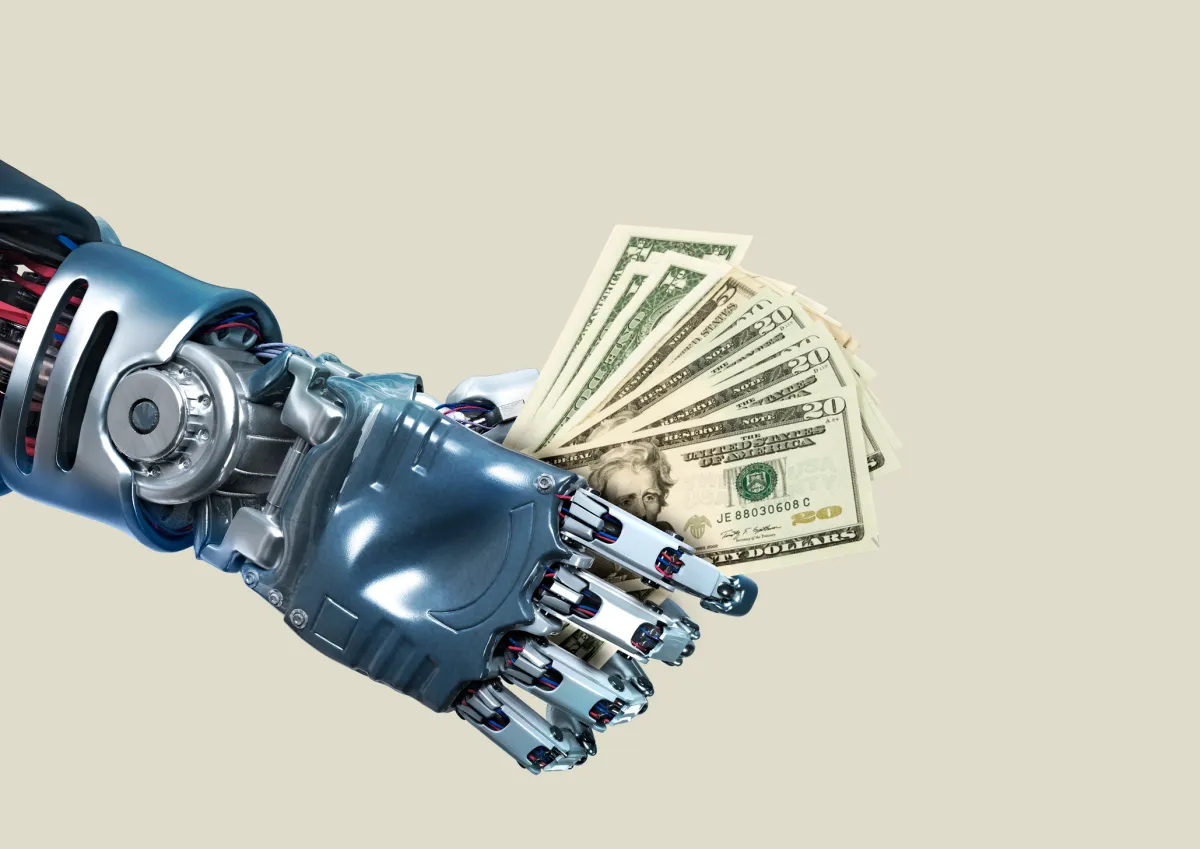
OpenAI said one of its internal, unreleased models produced a solution to the Navier-Stokes problem in 88 hours, using a coordinated swarm of roughly 10,000 AI agents. The company described the achievement as a milestone and said the effort cost millions of dollars.
The Navier-Stokes equations are among the most famous and difficult open problems in mathematics and physics. They describe how fluids move, and they sit at the center of questions in weather modeling, aerodynamics, turbulence and many other fields. Their importance is one reason the problem carries a $1 million Millennium Prize, awarded by the Clay Mathematics Institute for a valid solution.
Despite the prize and the decades of work that have gone into the problem, it has resisted a general proof for close to 90 years. That makes any credible breakthrough significant, particularly one attributed to a machine system rather than a human research team.
| Item | Details |
|---|---|
| Problem | Navier-Stokes equations |
| Field | Mathematics / fluid dynamics |
| OpenAI claim | Solution found in 88 hours by an unreleased model |
| AI method | A swarm of about 10,000 agents |
| Prize at stake | $1 million Millennium Prize |
| Main dispute | Whether OpenAI rushed the work after learning of others’ progress |
Why are mathematicians alarmed?
Mathematicians are alarmed because they believe the episode may have violated the field’s unwritten rules about openness, credit and restraint. In most areas of mathematics, researchers freely share half-finished ideas, partial results and promising avenues with colleagues. That habit depends on a shared expectation that the information will not be used to cut others out of a discovery.
According to several academics quoted in the coverage, OpenAI’s behavior may have tested that expectation in ways the field is not prepared for. The company appears to have rushed into a competitive race once it heard rumors that others were making progress on a Millennium Prize problem. To many researchers, that is a highly unusual way to do mathematics.
Abhishek Saha, a mathematics professor at Queen Mary University of London, said OpenAI behaved in a way mathematicians generally avoid, describing it as the sort of conduct that does not fit the discipline’s usual norms.
That concern goes beyond etiquette. Researchers worry that if AI labs start aggressively mining hints from informal conversations, draft papers or research platforms, mathematicians may become much more guarded about sharing ideas. That could slow collaboration, reduce openness and alter the culture of the field in a fundamental way.
How mathematics normally works
Mathematics usually advances through a system of trust, not secrecy. Researchers discuss conjectures, exchange partial proofs and ask peers for feedback long before final publication. The expectation is that those conversations help the work improve, not trigger an arms race.
Matthew Ballard, a mathematics professor at the University of South Carolina and an associate director at the Institute for Computer-Aided Reasoning in Mathematics, said mathematics depends heavily on an informal trust norm in which unfinished work is shared with the assumption it will not become competitive overnight.
That norm can be fragile even among humans. It becomes even more vulnerable if a well-funded AI lab can rapidly deploy thousands of agents against a problem once it hears the right clue.
How did the controversy begin?
The controversy began when a separate mathematical thread appeared to intersect with OpenAI’s own work. A day before OpenAI’s announcement, New York University professor Tristan Buckmaster published findings on a related problem with Levent Alpöge, a researcher affiliated with Anthropic, OpenAI’s rival. Alpöge was not working for Anthropic on this project, but his association with the company intensified interest in the story.
Buckmaster later said he contacted OpenAI after learning the company had become aware of their progress. He wanted to know when OpenAI had begun its own work and what training data had been used. From there, the exchange allegedly deteriorated.
Buckmaster said an OpenAI researcher warned him that speaking publicly could damage his career, and when he pressed for an explanation, the response became more hostile. He also said OpenAI urged him to publish the work while giving credit to OpenAI’s internal model and removing Alpöge as a coauthor.
OpenAI has denied the most serious allegation: that it used any specific user data from Buckmaster or his collaborators to solve the problem. The company said its researchers and agents did not view the researchers’ work before it was publicly released.
Still, OpenAI did not go as far as offering a completely airtight denial of any indirect influence. It said it could not rule out the possibility that de-identified data derived from people using its products might have helped improve its models, though it called that scenario unlikely.
What did OpenAI say about user data?
OpenAI said it did not access specific user data and did not see the work of the researchers involved before their findings were released publicly. That is the company’s most direct rebuttal to accusations of impropriety.
But its own language left some room for uncertainty. The company said it could not completely exclude the possibility that anonymized material derived from product usage may have influenced model improvement. For critics, that distinction matters. For many researchers, a partial or indirect connection is still enough to raise trust concerns if it is used to gain a competitive edge.
OpenAI also directed questions to its blog post rather than offering a fuller public explanation. Several of its researchers echoed the company’s denials on X, but that has not fully calmed the field.
Why the data question matters
The data question matters because provenance is difficult to prove in AI systems. If a model generates a result after seeing countless interactions, logs and public signals, it can be nearly impossible to know what influenced it. That makes accountability harder, especially when the work is in a field as high-stakes as mathematics.
For critics, the problem is not just whether OpenAI used a particular chat log. It is whether large AI firms can quietly absorb signals from users’ exploratory work and then exploit those hints in ways the users themselves cannot detect.
Brendan Hassett of Brown University said the situation naturally prompts skepticism, especially given the history of AI companies being accused of using copyrighted material without permission or payment. He argued that firms should be able to demonstrate that they are not using private chat logs to train or improve models inappropriately.
How did OpenAI justify the rush?
OpenAI’s explanation is, in essence, that it heard rumors, got curious and decided to throw its strongest model at a famous problem. The company said the rumors first surfaced on social media, including Twitter, and that this prompted researchers to ask a simple question: why not try a Millennium Prize problem?
OpenAI researcher Sébastien Bubeck said at a press briefing that the team had seen chatter online suggesting other researchers were making progress, and that this led them to test whether their model could also tackle one of the field’s most famous open problems.
By OpenAI’s account, the team later realized those rumors were tied to Buckmaster and Alpöge’s work. The company’s broader message was that the effort was aimed at demonstrating progress, not collecting a bounty.
That framing, however, has not stopped critics from calling the move opportunistic. OpenAI admitted the work was expensive and rushed, yet it also said it had no intention of claiming the $1 million prize. To many observers, that raises the question of what exactly the company was seeking if not the award itself.
Why does this matter for the future of math research?
This matters because the incident could reshape how researchers share ideas. If mathematicians begin assuming that every hallway conversation, preprint hint or coding session might be tracked and weaponized by a corporate AI system, the open culture of the field could erode.
The concern is not hypothetical. Some academics already fear that labs with massive compute budgets can move from rumor to deployment far faster than traditional research groups can respond. That speed changes the practical meaning of collegial exchange.
OpenAI’s episode has also intensified older concerns about the boundary between public science and private capability. When a company can deploy 10,000 agents on a problem almost overnight, the competition is no longer just between a few researchers and a few institutions. It becomes a contest between networks of people and industrial-scale machine labor.
Jeremy Avigad of Carnegie Mellon University and the Institute for Computer-Aided Reasoning in Mathematics said that even the possibility that AI systems might exploit researchers’ queries is disturbing, because mathematicians are used to speaking freely without fearing they will be scooped by a machine-backed operation.
What could change in practice?
In practical terms, mathematicians may become more cautious about what they share, when they share it and with whom. Research notes may stay private longer. Draft results may circulate less freely. Collaborative discussion could become more guarded if people suspect a commercial lab is listening for advantages.
That would be a major cultural shift. The mathematics community has long relied on openness as a force multiplier. If that openness is replaced by caution, the quality and speed of collaboration could suffer.
Who benefits from the result?
OpenAI benefits first, at least in the short term. The company has once again shown that its systems can operate at the frontier of intellectual tasks, and the announcement bolsters the narrative that its models are not only useful but genuinely research-grade.
There is also a public-relations dimension. The company’s claim was widely reported because it sits at the intersection of elite science, AI capability and a famous unsolved problem. In that sense, the announcement was always likely to generate headlines.
Oxford professor Andras Juhasz said the result looked like a clear public-relations win for OpenAI, though he questioned whether that kind of strategy is sustainable if it alienates the academic community the company wants to impress.
But the win may be more complicated than it first appears. The company gained prestige, but it also highlighted the possibility that AI labs could overrun the delicate norms that make research communities function.
Could this be a one-off event?
It might be, but several experts do not think so. Some believe companies will focus only on a small number of highly visible problems that justify very large spending and massive compute. That means most mathematicians may never see this kind of intervention in their own work.
Abhishek Saha suggested that AI labs will not deploy enormous resources on every problem because the publicity payoff would not be there. In other words, the high-profile race to solve Navier-Stokes may be exceptional precisely because it is famous enough to matter to a company’s public image.
That said, even a limited number of such interventions could have an outsized effect. If just a few celebrated problems become targets for computational swarms, researchers may alter how they communicate across the discipline.
Will AI companies keep entering pure math?
AI companies are likely to keep entering pure math, but probably selectively. The most attractive targets are famous, prize-linked or strategically useful problems that can produce headlines, technical validation or both.
That selective approach may limit the number of direct clashes with academia, but it will not eliminate them. As soon as an AI lab starts competing for recognition in a human research area, it inherits the field’s norms, tensions and suspicions whether it wants them or not.
How much of the result is about AI and how much is about strategy?
It is both. Technically, the announcement underscores how far AI systems have come in reasoning-heavy domains. Strategically, it shows how companies can use those abilities to generate attention, credibility and influence in scientific communities.
The two elements reinforce each other. A genuine breakthrough makes the company look more capable. The controversy around how it happened ensures the story will be discussed beyond the usual AI and math circles. That combination is exactly what makes the episode so consequential.
For all the uncertainty over timelines and data provenance, the headline fact is not in dispute: OpenAI says it was able to get an AI system to work on a famous unsolved problem at a speed no human team could match. That alone says something important about the state of the technology.
What remains unresolved is whether the company’s method will be seen as an innovative use of machine intelligence, or as a warning sign that AI firms may be willing to bend academic norms to capture breakthroughs first.
Timeline of the dispute
The sequence below shows why the episode escalated so quickly.
| Date / period | Event | Why it mattered |
|---|---|---|
| Before the announcement | Rumors spread that researchers were making progress on a Millennium Prize problem | OpenAI says those rumors prompted it to investigate the problem |
| One day before OpenAI’s post | Tristan Buckmaster and Levent Alpöge published related findings | The timing fueled suspicion that OpenAI had moved to beat other researchers |
| Tuesday | OpenAI announced its model had solved Navier-Stokes in 88 hours | The company framed it as a major AI and math milestone |
| Immediately after | Questions emerged about data access, credit and whether OpenAI had scooped researchers | The story shifted from technical achievement to academic controversy |
| Following statements | OpenAI denied using specific user data but did not fully rule out indirect influence | That left lingering uncertainty and kept criticism alive |
What happens next?
The next step will likely involve further scrutiny of OpenAI’s claims, though there may never be a definitive public resolution on whether any indirect influence occurred. Because AI provenance is notoriously difficult to trace, the field may be left with more doubt than proof.
That ambiguity is itself part of the story. If researchers cannot tell whether a company used their work, whether by direct access or by absorbing signals indirectly, the trust necessary for open scientific exchange may be weakened even without a formal finding of misconduct.
For now, OpenAI has a headline-making result and a bruised relationship with parts of the mathematics community. The company has shown that its models can engage with one of the most famous problems in science. It has also shown how quickly a technical victory can become a reputational liability when the rules of discovery are not shared by everyone involved.
In that sense, the Navier-Stokes announcement may be remembered less as a clean triumph and more as an inflection point: a moment when AI’s reach into fundamental research became impossible to ignore, and when academia was reminded that the norms protecting its openness may not survive contact with industrial-scale machine intelligence unless they are defended more explicitly.
Frequently asked questions
What did OpenAI claim to solve?
OpenAI said its unreleased model solved the Navier-Stokes problem, one of mathematics’ most famous open challenges. The company said the result was achieved in 88 hours and involved a swarm of about 10,000 AI agents.
Why are mathematicians upset about the announcement?
Mathematicians are upset because they say OpenAI may have rushed to beat other researchers after hearing rumors of progress. They worry the company’s behavior could undermine the trust and openness that usually define mathematical collaboration.
Did OpenAI say it used researchers’ private data?
OpenAI denied using any specific user data to solve the problem. However, it also said it could not completely rule out the possibility that de-identified data derived from product use may have indirectly helped improve its models.
Why does the Navier-Stokes problem matter?
The Navier-Stokes problem matters because it describes fluid motion and sits at the center of physics and engineering. It is also one of the Clay Mathematics Institute’s Millennium Prize Problems, carrying a $1 million reward for a valid solution.
Will this change how mathematicians share work?
It could. Several academics fear researchers may become more cautious about sharing incomplete ideas if they think AI labs can quickly exploit those clues. That might make collaboration less open and slow the pace of discovery.