In short
Brad Lightcap, OpenAI’s longtime COO and former CFO, is leaving the company to start a new venture. His exit adds to a series of executive departures as OpenAI prepares for a potential IPO.
- Brad Lightcap is leaving OpenAI after serving as CFO, COO, and special projects lead.
- He joined OpenAI in 2018 and previously worked with Sam Altman at Y Combinator.
- The departure comes amid broader leadership changes at OpenAI ahead of a possible IPO.
- Lightcap said he plans to share more about his next venture soon.
- OpenAI has not yet announced who will take over his responsibilities.
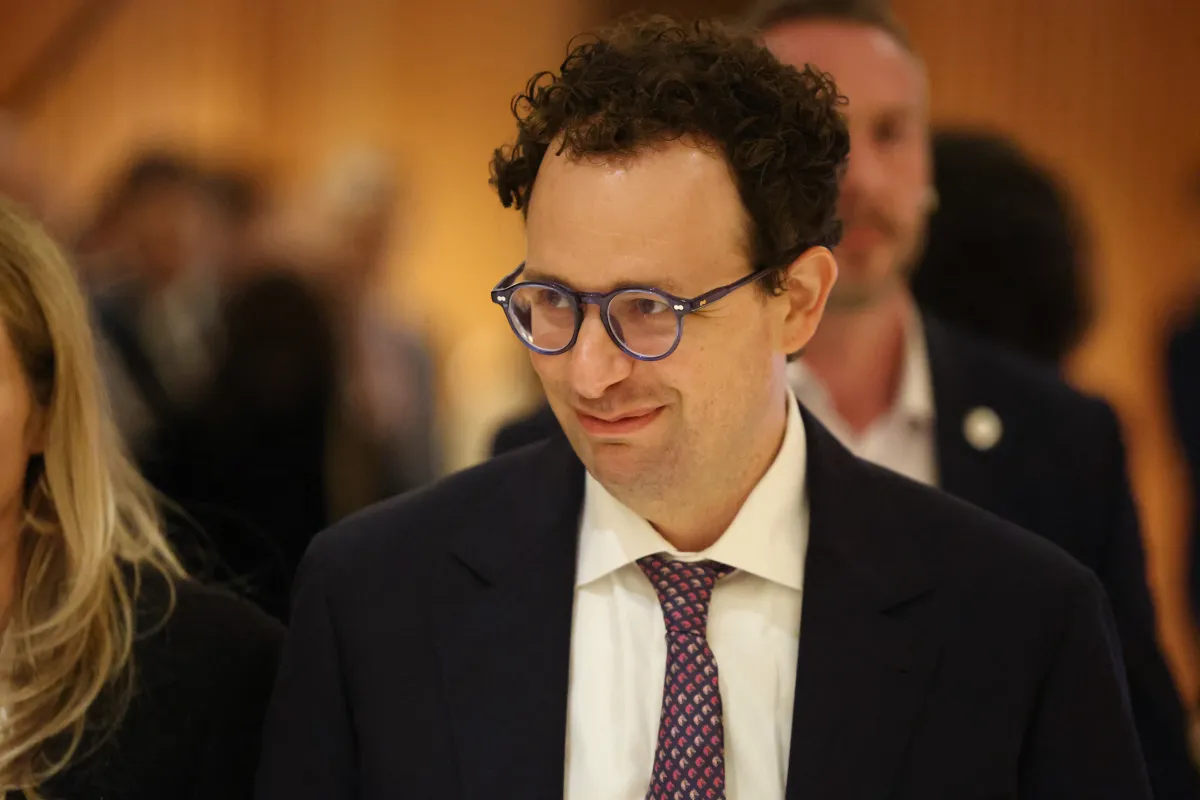
Brad Lightcap, one of OpenAI’s longest-tenured senior leaders, is departing the company to begin a new venture. His exit matters because it comes as OpenAI is preparing for a potential public listing and continues to reshuffle its top leadership team.
Lightcap, who joined OpenAI in 2018 and spent years building the company’s finance, operations, legal, people, partnerships, and go-to-market functions, said in a message to staff that he was moving on to “start something new.”
His departure adds to a growing list of executive changes at the AI company as it scales from a research-driven lab into a global commercial platform with enormous stakes for the wider AI industry.
Who is Brad Lightcap, and why does his departure matter?
Brad Lightcap has been one of the key behind-the-scenes figures in OpenAI’s rise from a startup-like research organization into one of the most influential companies in technology.
He was not a public-facing product chief in the mold of a consumer app executive. Instead, his work centered on the infrastructure that makes large-scale AI businesses run: money, people, partnerships, corporate governance, and the day-to-day machinery of a fast-growing company.
That makes his exit significant for two reasons. First, OpenAI is in a period of intense organizational change. Second, any leadership turnover at a company of this size can influence how it prepares for future fundraising, governance decisions, and potentially an initial public offering.
Lightcap’s move also stands out because of how long he has been embedded in OpenAI’s evolution. Few executives have been present for as much of the company’s transition from an ambitious nonprofit-leaning lab to a commercial AI powerhouse.
How did Lightcap rise through OpenAI?
Lightcap joined OpenAI in 2018 after previously working with CEO Sam Altman at Y Combinator. That earlier relationship likely gave him familiarity with Altman’s operating style and the pace of high-growth technology companies.
At OpenAI, Lightcap initially served as chief financial officer for four years. During that time, he helped shape the company’s early financial and operational scaffolding at a moment when OpenAI was still far smaller than it is today.
He later became chief operating officer, a role he held from 2022 until earlier this year, when OpenAI reorganized some of its executive responsibilities. After that shift, he moved into a special projects role.
In his message to employees, Lightcap said he had helped create the first versions of many of the company’s core business teams.
“I had the privilege of building the first versions of most of our operations and business teams – from Finance to Legal, People, CorpSec, GTM/Gov, Partnerships, and more,” Lightcap wrote, adding that he had enjoyed watching those groups grow under new leaders.
That description underscores how foundational his work has been. The job of building an AI company at OpenAI’s scale is not only about model development; it is also about contracts, compliance, staffing, sales, regulatory relationships, and internal controls.
Why is OpenAI’s leadership changing now?
OpenAI is undergoing a management shakeup at the same time it is preparing for what could become one of the most closely watched public-market debuts in tech.
The company has been broadening from a lab known mainly for ChatGPT into a much larger enterprise with consumer products, developer tools, and business offerings. That expansion requires new layers of management, and it often brings turnover as roles evolve or as long-time executives decide to pursue other opportunities.
Lightcap’s departure follows a series of other executive changes. In July, Fidji Simo, OpenAI’s No. 2 executive who had been leading AGI-related development, announced she would step down. Other leaders have also recently left, including Bill Peebles, who had overseen the company’s now-defunct video generator Sora, and Kevin Weil, vice president of the Science vertical.
These changes do not necessarily indicate instability by themselves, but they do show that OpenAI’s leadership structure is in motion during a period of massive commercial ambition and scrutiny.
What does this mean for OpenAI’s IPO preparations?
It means OpenAI is entering a more delicate phase of maturity, where continuity, governance, and institutional memory become even more important.
A company preparing for public markets usually needs its leadership bench to be both stable and clearly defined. Executive turnover can create short-term uncertainty, especially when the departing leaders have helped establish core functions.
At the same time, some churn is common in pre-IPO technology companies. As they grow, teams are formalized, responsibilities are redistributed, and founders or early executives sometimes step aside to make room for specialists with public-company experience.
Whether Lightcap’s exit is best understood as part of that normal progression or as a sign of deeper change will depend on how OpenAI fills the gap and whether more senior departures follow.
What did Lightcap say about his next move?
Lightcap has not revealed the details of what he plans to do next, but he suggested he has been thinking about a new venture for some time.
In his message, he said the last few months had been spent considering the “next horizon” and the obstacles that could stand in the way of OpenAI’s mission. He also hinted that the world will need to solve “a few important new things” as the AI era develops.
Lightcap said he would have “more to share soon,” while stressing that he believes in OpenAI “more than ever” and expects to keep supporting the mission from a different role.
That wording suggests an amicable split rather than a sudden rupture. It also implies he is not turning away from AI entirely. Instead, he appears to be preparing to build something related to the next wave of needs in the sector.
Because he stopped short of naming the venture or its focus, there is still no clear indication whether he will start another AI company, invest in one, or work on a different kind of product or infrastructure business adjacent to the AI ecosystem.
How did OpenAI’s business side grow under Lightcap?
OpenAI’s commercial expansion has been one of the most important transformations in modern technology, and Lightcap was involved in the internal systems that made that shift possible.
As OpenAI moved from a research organization to a company serving consumers, developers, and enterprises, it needed a much broader operational backbone.
That included:
- Financial planning and capital management
- Legal and corporate structure
- People operations and hiring
- Partnership management
- Government and policy engagement
- Go-to-market coordination
Those functions can be easy to overlook when the public attention is on model launches and product demos. But without them, a company like OpenAI would struggle to sign enterprise customers, manage compliance, coordinate infrastructure, or navigate the increasingly complex politics of AI deployment.
Lightcap’s influence likely mattered most in translating OpenAI’s technical breakthroughs into a company capable of operating at global scale.
OpenAI’s shift from research lab to commercial giant
OpenAI is no longer just an AI research leader. It is now a platform company with consumer products, enterprise relationships, and enormous expectations attached to every move.
That transformation has raised the stakes for every executive role. The larger OpenAI gets, the more it needs leaders who can balance mission, growth, regulation, and public trust.
Lightcap’s departure is therefore more than a personnel update. It is another sign that the company’s original era of improvised startup-style governance is giving way to a more formal corporate structure.
How unusual is this wave of executive departures?
It is not unusual for major technology firms to see leadership turnover during periods of rapid growth, but the concentration of departures at OpenAI is notable.
When multiple senior figures leave in a relatively short period, observers tend to ask whether the company is merely evolving or whether internal priorities are changing more dramatically.
OpenAI is trying to do several difficult things at once:
- Scale its products to millions of users and enterprise customers
- Maintain leadership in a highly competitive AI market
- Navigate regulation and political scrutiny
- Prepare for a possible public listing
- Retain talent in an industry with intense demand for experienced operators
That combination can strain even the best-run companies. It often produces executive churn as different stages of growth call for different kinds of leaders.
What is the broader industry context?
Lightcap’s departure comes at a time when the AI sector is entering a more mature and more competitive phase.
For the past several years, leading AI companies have grown with venture-backed speed, often prioritizing product launches and model releases over traditional corporate formality. But that environment is changing. Investors, regulators, enterprise customers, and the public are increasingly demanding clearer governance and more predictable operations.
OpenAI sits at the center of that shift. It is both a product company and a symbol of the broader AI boom. Any leadership change there gets interpreted not just as an internal personnel matter, but as a possible signal about where the industry is headed.
In that sense, Lightcap’s decision also reflects a broader pattern: experienced operators in AI may now see opportunities to launch new ventures that serve the next layer of infrastructure, compliance, tooling, or application needs.
| Milestone | What happened | Why it matters |
|---|---|---|
| 2018 | Brad Lightcap joins OpenAI | He begins helping build the company’s core business operations |
| 2018–2022 | Serves as CFO | Shapes finance and operational foundations during a major growth phase |
| 2022–early 2026 | Becomes COO | Oversees broader company operations as OpenAI scales |
| Earlier in 2026 | Moves to special projects | Reflects an internal executive reshuffle |
| August 11, 2026 | Announces departure | Signals the start of a new venture and adds to OpenAI’s leadership turnover |
Who else has recently left OpenAI?
Several other senior figures have stepped away recently, suggesting that OpenAI is in the middle of a broader leadership reset.
Fidji Simo, who had been the company’s No. 2 executive and led AGI development, announced in July that she would step down. Bill Peebles, who had overseen Sora, also departed after that product’s decline. Kevin Weil, the vice president of the Science vertical, has likewise left the company.
Taken together, these exits show that the changes are not isolated. They involve different parts of the organization, from core leadership to specific product and research-adjacent functions.
Still, it is important not to overstate what these departures mean. High-growth AI firms often reorganize aggressively as products mature, priorities shift, and teams are consolidated. In that sense, OpenAI may be doing what many fast-scaling companies do: continuously reconfiguring its leadership to match its ambitions.
What should investors, customers, and rivals watch next?
They should watch for three things: who replaces Lightcap, whether OpenAI names a clearer operating structure, and whether more senior departures follow.
The identity of his successor will tell outsiders a great deal about OpenAI’s next phase. A finance-focused operator would suggest a heavier push toward public-company readiness. A product or partnerships veteran could point to a more commercial expansion strategy. An external hire from a mature public company would indicate that OpenAI is seeking institutional experience from outside its own ranks.
Customers and enterprise partners will also be watching for signs that the leadership transition affects dealmaking or support. Rivals, meanwhile, will be looking for any indication that OpenAI’s internal focus is shifting during a crucial market moment.
For now, Lightcap’s message suggests he is leaving on good terms and still believes in the company’s mission. But the timing of his departure ensures that it will be read as part of a larger story about OpenAI’s transformation.
Bottom line
Brad Lightcap is leaving OpenAI after seven years in senior leadership roles, including CFO and COO, to start a new venture. His exit is important not only because he helped build the company’s operational backbone, but also because it comes during a period of executive turnover and IPO preparation that could shape OpenAI’s future.
OpenAI has not yet disclosed who will take over his responsibilities, and Lightcap has not announced what he plans to build next. That leaves one of the company’s most important behind-the-scenes figures in transition, just as the AI industry enters its next major phase.
| Key fact | Detail |
|---|---|
| Executive leaving | Brad Lightcap |
| Company | OpenAI |
| Joined | 2018 |
| Roles held | CFO, COO, special projects lead |
| Departure reason | To start something new |
| Context | OpenAI is undergoing broader executive changes ahead of an anticipated IPO |
As OpenAI continues to professionalize its operations and pursue a public-market future, the loss of a long-serving executive like Lightcap highlights how quickly the company is entering a new era — one defined not just by AI breakthroughs, but by the challenge of building a lasting institution around them.
Frequently asked questions
Why is Brad Lightcap leaving OpenAI?
Brad Lightcap is leaving OpenAI to start something new. In a message to staff, he said he has been thinking about the next phase of his career and hinted that he sees new opportunities in the AI era, though he has not yet disclosed specifics.
What roles did Brad Lightcap hold at OpenAI?
Brad Lightcap served as OpenAI’s chief financial officer for four years, then became chief operating officer in 2022. After an executive reorganization earlier this year, he shifted into a special projects role before announcing his departure.
How long has Brad Lightcap been at OpenAI?
Brad Lightcap has been at OpenAI since 2018, making him one of the company’s longest-serving senior executives. Over that time, he helped build core business and operational teams as OpenAI expanded rapidly.
Is Brad Lightcap’s departure connected to OpenAI’s IPO plans?
It may be related to OpenAI’s broader transition, but the company has not said so directly. His exit comes as OpenAI prepares for a possible public listing and is already experiencing several senior leadership changes.
Who else has recently left OpenAI?
Several other executives have recently departed or announced plans to leave, including Fidji Simo, Bill Peebles, and Kevin Weil. Their exits, along with Lightcap’s, show that OpenAI is in the middle of a broader leadership reshuffle.