In short
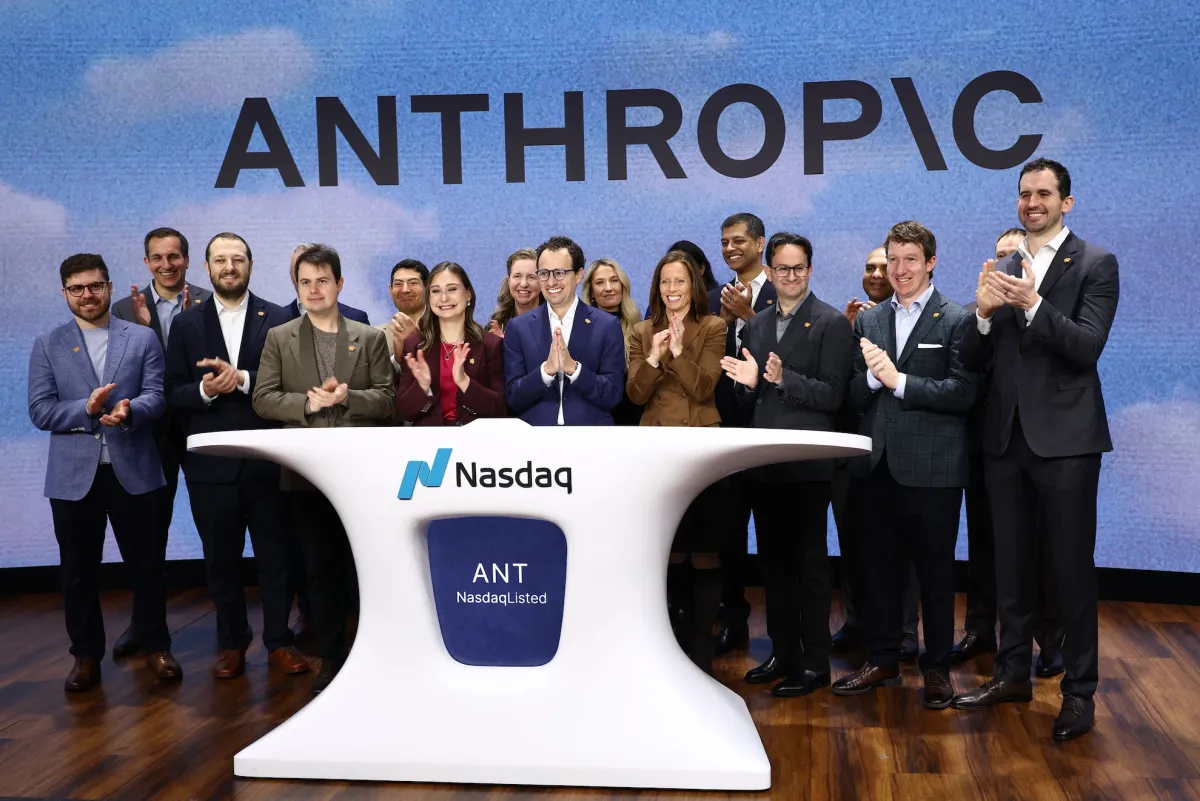
Anthropic’s pre-IPO fundraising and listing created enormous gains for early backers who bet on developer adoption of Claude. TechCrunch reports the company raised $81.3 billion in what it called the largest IPO in history.
- TechCrunch said Anthropic raised $81.3 billion in its IPO.
- The company’s pre-trading valuation was about $1.5 trillion.
- Notable Capital, GIC and Baillie Gifford all backed Anthropic before the public listing.
- GIC invested more than $4.5 billion across three rounds.
- Baillie Gifford invested $1.5 billion across three rounds.
Anthropic’s giant pre-IPO financing has turned early conviction into extraordinary paper gains, with Notable Capital, GIC and Baillie Gifford backing the company through successive rounds as developer adoption accelerated, according to TechCrunch. The rush of capital helped push Anthropic to a reported $1.5 trillion valuation before trading and set up one of the largest public-market debuts on record.
What happened
TechCrunch reported that Anthropic completed a huge pre-IPO fundraising event and that the investors most closely associated with the deal were Notable Capital, GIC and Baillie Gifford. Their betting pattern was not accidental. Each firm spent time studying the company before writing larger checks, and each pointed to the same basic thesis: developers were adopting Claude quickly, and that usage looked durable enough to justify higher and higher valuations.
That thesis has now been rewarded. TechCrunch said Anthropic raised $81.3 billion in what it described as the largest IPO in history. The company’s pre-trading valuation was about $1.5 trillion, a level that would have seemed implausible only a few years ago for a private AI model developer.
Why this deal matters
This is about more than one company’s market debut. Anthropic’s listing shows how the most aggressive private-market valuations in AI can still make sense to investors if they believe a product has become deeply embedded with technical users and enterprise buyers.
It also highlights a broader split in AI investing. Notable Capital, GIC and Baillie Gifford did not simply chase hype; they built positions after researching Anthropic’s product traction, revenue profile and gross margins, and after deciding that closed-source U.S. models could become essential infrastructure for mission-critical work. That matters because the firms were effectively buying into a future in which developer loyalty, rather than consumer buzz alone, determines who wins.
The result is an unusually clean example of how late-stage private investors can still produce outsized returns when a company keeps compounding inside the bubble of private markets before the public listing brings the price into view.
How did the investors get comfortable?
They did it by spending time on the business, then doubling down as the data improved. Notable Capital’s Hans Tung said the firm was focused on developers from the beginning because they were the first meaningful users of AI tools.
“We just knew that for AI, the developer is at the center because they’re the early adopters.”
According to TechCrunch, Notable committed about 10% of its U.S. fund to Anthropic’s Series E, a large concentration for a venture firm with more than $1 billion under management in that fund. The choice was controversial at the time, TechCrunch reported, and some limited partners were skeptical of the size of the bet. But the firm kept leaning into the company as Claude became more deeply used by developers.
Notable Capital’s early conviction
Notable’s view was not simply that AI was important. It believed the most valuable early users would be developers, and that U.S.-based closed-source models would matter for mission-critical work. That view appears to have paid off as developers were reportedly using Claude 70% of the time, reversing the prior year’s pattern, according to TechCrunch.
Notable also saw Anthropic’s expansion beyond the core model itself. TechCrunch said the company broadened into legal services, life sciences, Cowork and cybersecurity, suggesting that the product had moved beyond experimentation and into business workflows with clear monetization potential.
GIC’s research-first approach
GIC’s path into Anthropic was slower but just as deliberate. TechCrunch said the sovereign wealth fund studied the company throughout 2024 before investing. Its first direct investment came after a 2025 meeting in San Francisco between GIC’s Chris Emanuel and Anthropic CFO Krishna Rao.
That meeting mattered because it came around the time Claude Code was just being released and was already proving popular with developers, according to Emanuel. TechCrunch quoted him saying, “Claude Code was just released then” and “it was really popular with developers.”
From there, GIC moved from first investment to repetition. TechCrunch reported that the fund entered in Anthropic’s Series F, announced in September 2025, later co-led Series G with Coatue, and then co-led Anthropic’s pre-IPO round as well. Across those three rounds, GIC put more than $4.5 billion into the company, with a person familiar with its finances estimating that the stake amounted to about 1% post-IPO.
Baillie Gifford’s long study of the company
Baillie Gifford followed a similar but even longer timeline. TechCrunch said the firm studied Anthropic for nearly two years before making its first investment. The conclusion it reached was that the company was “executing consistently” and generating strong revenue and gross margins, according to Lilian Li, the firm’s head of U.S. growth investments.
Baillie Gifford ultimately invested $1.5 billion across three rounds. That is a sizable position even by growth-investing standards, and it suggests the firm saw Anthropic not as a speculative moonshot but as a business that could scale while keeping economics intact.
By the numbers
The scale of the gains, and the capital behind them, is easiest to see in a simple table.
| Investor | How it got in | Reported commitment | What it suggests |
|---|---|---|---|
| Notable Capital | Series E | About 10% of its U.S. fund | High-conviction early bet on developers |
| GIC | Series F, Series G and pre-IPO round | More than $4.5 billion | Repeated escalation as usage strengthened |
| Baillie Gifford | Three private rounds | $1.5 billion | Long research period before scaling in |
What the valuation says about AI
Anthropic’s price tag is striking even in a market that has repeatedly rewarded AI leaders with eye-watering numbers. TechCrunch said the company’s pre-trading valuation was about $1.5 trillion. It also said the pre-trading gain implied roughly 15x paper returns for some early investors, a reminder that private-market winners can look almost absurd by the time they reach the public market.
That kind of return is not just a windfall story. It tells you something about what late-stage capital has been rewarding in AI: usage, retention, and the prospect of real business spend. If developers are spending most of their time with Claude, and if enterprise demand follows, the market is willing to assign a value that once would have been reserved for industrial-scale incumbents.
It also shows why AI capital cycles can become self-reinforcing. As top funds mark up their positions, they can keep supplying capital to companies that appear to be winning, which helps those companies expand faster, which can then justify the next higher valuation. Anthropic is now one of the clearest examples of that loop.
Background: how Anthropic got here
Anthropic is best known for Claude, its AI model line, and for competing in a market where technical performance and developer trust matter as much as branding. The company’s private fundraising path moved through the familiar late-stage sequence of Series E, Series F and Series G rounds before the IPO. What made this route exceptional was the pace and scale of valuation growth.
Closed-source models, as described in the fact sheet, are proprietary systems that are not released as open source. Investors backing Anthropic appear to have viewed that model as an advantage rather than a limitation, particularly for organizations that want a controlled, mission-critical system instead of a community-built one.
TechCrunch’s reporting also points to a critical shift in where AI value is being created. Early in a platform cycle, the loudest demand may come from general consumers. But in Anthropic’s case, the decisive signal appears to have come from developers. They are the users who test the model constantly, integrate it into workflows and often set the standard for broader adoption inside companies.
Why developers became the key audience
The developer-first argument is central to understanding why these investors were willing to commit so much capital. If developers are the early adopters, then usage data among that group becomes a leading indicator for future enterprise revenue. Notable Capital explicitly framed the thesis that way, and GIC’s and Baillie Gifford’s due diligence appears to have arrived at a similar conclusion from different angles.
That focus also helps explain why Anthropic could sustain soaring valuations before going public. Investors were not just valuing the present product; they were pricing the chance that Claude would become a default layer inside professional software development and other technical fields.
Who won the most from the IPO?
The biggest winners were the early investors who entered when Anthropic was much smaller and much cheaper on a relative basis. Notable Capital’s Series E stake, GIC’s three rounds and Baillie Gifford’s multi-round commitment all look far more valuable now than when they were made.
TechCrunch said the IPO created roughly 15x paper returns for some early investors, though the story did not provide exact final allocations or pricing details for each firm. The broad takeaway is clear enough: timing, conviction and patience mattered more than trying to chase the last increment of upside.
- Notable Capital concentrated about 10% of its U.S. fund in Anthropic.
- GIC put more than $4.5 billion across three rounds.
- Baillie Gifford invested $1.5 billion across three rounds.
- Anthropic’s pre-trading valuation reached about $1.5 trillion.
What happens next
The immediate next step is trading performance, but the fact sheet does not say how Anthropic’s shares performed after listing. That leaves open a question that matters to both public shareholders and private-market observers: whether the company’s public price will hold near the level implied before trading, or whether the market will pull it back.
Another open question is how comparable the reported valuations are from one round to the next. Successive late-stage rounds often differ in structure, rights and other terms that make clean comparison difficult. The fact sheet does not explain the exact IPO mechanics behind the reported $81.3 billion figure either, so readers should treat the headline number as TechCrunch’s reported amount rather than a full breakdown of the deal structure.
What is already clear is that Anthropic’s IPO has turned a years-long private conviction trade into a public benchmark. It will now be watched not only as a company story, but as a signal for how much of today’s AI boom can survive the transition from private enthusiasm to public-market scrutiny.
Timeline of the climb
The sequence below shows how the deal moved from research to repeated investment to public listing.
| Date | Event | Why it mattered |
|---|---|---|
| 2024 | GIC studied Anthropic throughout the year | Research phase before first capital commitment |
| Early 2025 | Chris Emanuel met CFO Krishna Rao in San Francisco | Opened the path to GIC’s first investment |
| September 2025 | Anthropic’s Series F was announced at a $183 billion valuation | Marked a major step up in private-market pricing |
| Wednesday | Anthropic raised $81.3 billion in its IPO | Set the stage for a public-market debut at unprecedented scale |
| Next day | Anthropic shares began trading | Moved the company from private pricing to public scrutiny |
For investors, the lesson is straightforward: the biggest gains in AI may still belong to those willing to study the product deeply, sit through years of private-market uncertainty and keep backing the companies that show genuine developer pull. Anthropic’s IPO made that lesson visible in dollar terms.
Frequently asked questions
Why was Anthropic's IPO such a big deal?
It was a big deal because TechCrunch reported that Anthropic raised $81.3 billion and reached a pre-trading valuation of about $1.5 trillion. That put the company among the most valuable public-market debuts ever and rewarded early investors with outsized paper gains.
Which investors made the biggest early bets on Anthropic?
Notable Capital, GIC and Baillie Gifford were the major named backers in the fact sheet. Notable concentrated about 10% of its U.S. fund in the company’s Series E, GIC put more than $4.5 billion across three rounds, and Baillie Gifford invested $1.5 billion across three rounds.
Why did investors keep adding money at higher valuations?
They kept adding money because they saw strong developer adoption, growing revenue and durable margins. TechCrunch reported that investors believed Claude was becoming deeply embedded with developers and that closed-source U.S. models could be essential for mission-critical work.
How much did early investors make on paper?
TechCrunch said the pre-trading gain implied roughly 15x paper returns for some early investors. The exact returns for each backer were not provided, but the reported valuation jump suggests very large unrealized gains across the earliest rounds.
What should investors watch next?
Investors should watch how Anthropic trades after its listing, whether the reported valuation holds in public markets, and how the company’s developer traction translates into continued revenue growth. The fact sheet does not provide the post-listing trading outcome.