In short
Nvidia reported strong earnings, but it also said it will stop selling H200 chips in China as scrutiny over workarounds grows. Separately, public pressure for Jensen Huang to return as CEO is intensifying, even though the company says it has no plans for him to come back.
- Nvidia beat expectations and posted strong revenue on the back of AI demand.
- The company said it will stop selling H200 chips in China.
- Reporting says China restrictions also target remote-access routes through nearby countries.
- Public pressure for Jensen Huang to return as CEO is growing, but Nvidia says there are no plans for that.
- Investors appear uneasy, with stock weakness signaling concern about China and leadership issues.
Nvidia reported strong earnings and beat expectations, then moved to stop selling H200 chips in China even as a growing public push to bring Jensen Huang back as chief executive keeps swirling around the company. The result is a rare double story: a chipmaker still riding the AI boom, and a boardroom saga complicated by U.S.-China trade pressure and leadership intrigue.
What Nvidia said this week
According to TechCrunch’s reporting and its Equity podcast discussion, Nvidia delivered another quarter of powerful financial results, reinforcing its position as one of the clearest winners of the AI hardware surge. But the company also signaled a tougher stance on China, with interim chief financial officer Colette Kress saying Nvidia will no longer sell H200 chips there.
The company’s China decision does not sit in isolation. The restrictions also cover remote-access routes that can be used to send chips through nearby countries, an important detail because companies in Malaysia and other East and Southeast Asian hubs were reportedly remote-accessing chips for use in China. That makes the policy shift about more than direct shipments; it is also about closing off workarounds.
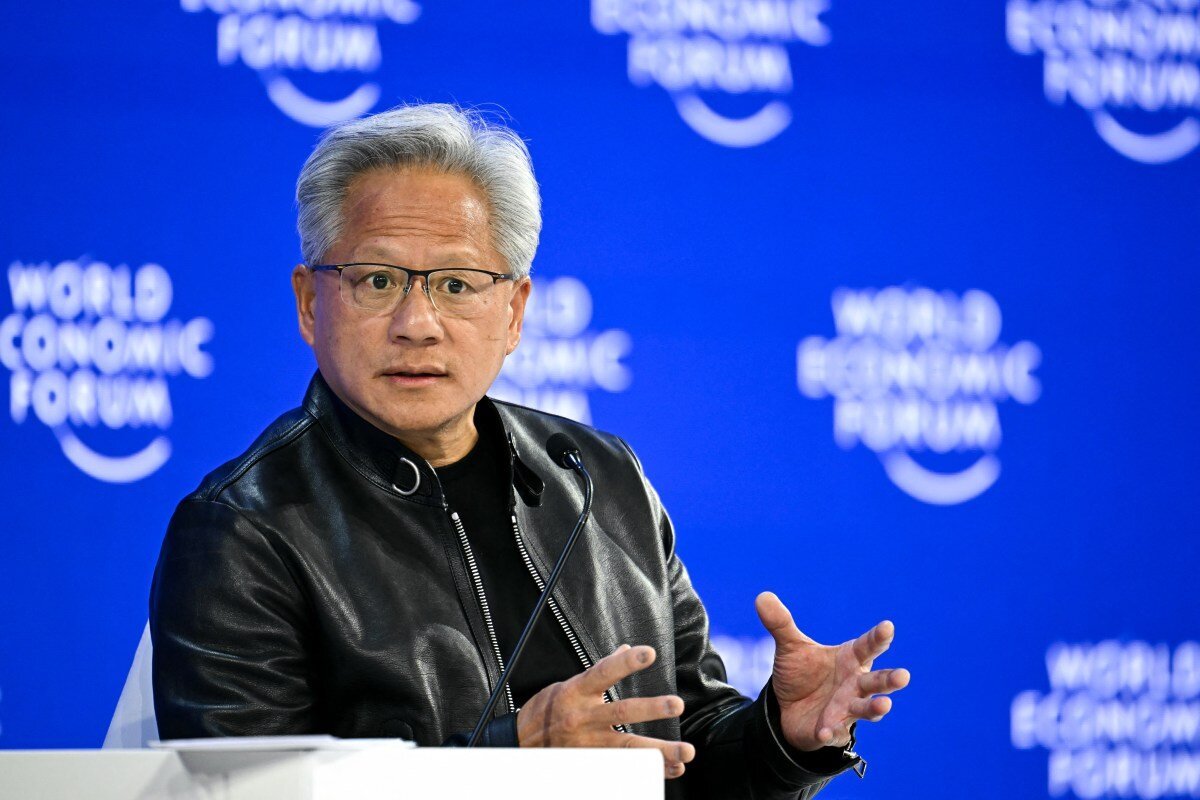
At the same time, a separate conversation about Jensen Huang has intensified. Tech figures including Elon Musk are circulating a petition urging Huang’s return, and on the podcast discussion Huang said he is prepared to come back, according to TechCrunch. Yet the company has said it has no plans for him to return, underscoring the gap between online pressure and the board’s public position.
Why it matters
This matters because Nvidia is not just any chip company. It sits at the center of the AI buildout, supplying the processors that underpin much of the current boom in model training and deployment. When Nvidia tightens China sales, the change can ripple across customers, distributors and rivals in a market where even small shifts matter.
The stakes are especially high because critics estimate that about 20% of Nvidia’s business comes from China. If that figure is directionally accurate, even partial restrictions could matter to revenue, supply-chain planning and investor expectations. TechCrunch also noted that Wall Street appears unconvinced, with stock weakness cited as a sign that investors are worried about the company’s next move.
There is another layer of significance here: governance. Nvidia’s board is now facing public pressure around its leadership structure just as it is trying to manage one of the world’s most delicate technology trade disputes. The podcast hosts said Nvidia’s board is trying to keep control and avoid outside pressure on leadership decisions, which suggests the company wants to separate operational strategy from public lobbying.
Why investors are watching both stories at once
For investors, the challenge is that these are not separate risks. Earnings strength can mask strategic pressure for only so long. A company can post soaring revenue and still face questions about how much of that growth is exposed to regulation, geopolitics and boardroom instability.
That is why TechCrunch’s framing of a “tale of two Nvidias this week” resonated: one Nvidia is flush with demand and still beating expectations, while the other is dealing with a narrowing China path and a loud campaign over its chief executive.
“tale of two Nvidias this week”
How China became the pressure point
Nvidia’s China problem did not appear overnight. U.S. export controls have long limited advanced chip sales to China, and those controls have pushed suppliers and buyers to look for alternative routes. The fact sheet notes that remote access and third-country routing can be used to work around direct sales restrictions, which explains why regulators and companies alike pay close attention to the logistics of where chips physically go and how they are used.
In this case, the reporting says the issue extends beyond direct sale channels. TechCrunch reported that companies in Malaysia and other East and Southeast Asian hubs had been remote-accessing chips for use in China. That matters because it suggests the policy challenge is not just stopping a box from crossing a border; it is also about preventing chips from being used indirectly in a way that undermines the intent of the restrictions.
Colette Kress’s statement that Nvidia will no longer sell H200 chips in China is therefore more than a product-level decision. It is a signal that the company is adapting to a more restrictive compliance environment and perhaps trying to reduce the chance of future regulatory friction.
What the H200 decision signals
The H200 is the specific chip line Nvidia said it will stop selling in China. The immediate impact of that decision is not fully clear from the reporting, but the broader signal is straightforward: Nvidia appears to be drawing firmer lines around one of the world’s most important chip markets.
TechCrunch said the China restrictions are still not fully settled, and the hosts flagged the chips issue as an unresolved investigation with the full facts not yet known. That caveat matters. It means observers are still piecing together exactly how the routing scheme worked, what portion of business it affected and what enforcement response may follow.
There is also a forward-looking wrinkle. In podcast discussion, the first half of 2027 was mentioned as a possible timing for another change in Nvidia-China policy. That is not a firm forecast, but it does suggest that some watchers think policy could evolve again if enforcement, politics or commercial conditions shift.
What is driving the Jensen Huang return push?
The campaign to bring Jensen Huang back as CEO has gathered momentum among tech figures, including Elon Musk, according to TechCrunch. Huang is Nvidia’s co-founder and former CEO, and the fact sheet says he stated on the podcast discussion that he is prepared to come back. Still, Nvidia itself says there are no plans for his return.
That tension is important because it highlights two separate forces: outside enthusiasm for a founder comeback and a board that appears unwilling to be pushed into a leadership change. The podcast hosts interpreted the board’s position as an effort to preserve control and resist external pressure on executive decisions.
TechCrunch also noted that Nvidia’s stance on Huang has shifted in recent weeks, moving from support to denial of a return. That kind of messaging change can matter in markets where leadership stability is closely watched, especially when a company is already under scrutiny for geopolitical exposure.
How should the board pressure be read?
The board pressure should be read as a sign of how central Huang remains to Nvidia’s identity. Even after stepping away from the CEO role, he still carries unusual symbolic weight because of his role in building the company into an AI powerhouse.
But a petition does not automatically translate into governance change. The company’s denial suggests that, for now, Nvidia wants to keep its leadership structure intact while it manages the more immediate concerns around export controls, earnings expectations and investor sentiment.
“Hey, we’ve got this.”
By the numbers
The sheet provides only a few hard numbers, but they help frame the scale of the issue.
| Metric | What it refers to | Why it matters |
|---|---|---|
| 20% | Estimated share of Nvidia business critics say comes from China | Shows why the market is focused on any China policy shift |
| H200 | Nvidia chip line the company said it will stop selling in China | Marks a concrete product restriction, not just a broad policy statement |
| First half of 2027 | Possible timing for another China-policy change, per podcast discussion | Signals that the issue may remain fluid well into the next cycle |
Background and context
Nvidia’s current position is rooted in a larger public story that has been building for years. The company has become a dominant supplier of AI chips and one of the biggest beneficiaries of the artificial intelligence boom. Its products are essential to the computing demand created by large models, data centers and related infrastructure.
That strength has made Nvidia one of the most closely watched companies in the market. Strong earnings now carry outsized importance because they are read not just as a measure of one company’s business, but as a proxy for how fast the AI buildout is still expanding.
At the same time, U.S.-China technology tension has made advanced chips a policy issue, not just a commercial one. Export controls have already changed the shape of global semiconductor trade. Nvidia’s China restrictions show how even the strongest companies can be forced to adjust product availability based on geopolitical limits and enforcement realities.
Jensen Huang’s name belongs in this context because he is both a founder and a public face of the company. The fact sheet identifies him as Nvidia’s co-founder and former CEO, and that background helps explain why a comeback petition could attract attention even if the board is publicly rejecting the idea.
How the market is reacting
TechCrunch said Wall Street appears unconvinced, with stock weakness described as a sign of investor concern. That reaction suggests markets are not treating the earnings beat as the whole story. Investors seem to be weighing China exposure, possible enforcement developments and leadership uncertainty together.
This is a familiar pattern in large-cap technology stocks: even when numbers are strong, guidance, regulation and governance can determine how far the shares move. For Nvidia, a company whose valuation has become so intertwined with AI optimism, even small signs of stress can trigger bigger questions about durability.
The market reaction also reinforces the idea that investors are looking beyond a single quarter. They want to know whether the company can keep expanding while facing stricter China controls and whether the board will keep the current leadership line firm.
What happens next
The next phase will likely depend on three things: what Nvidia’s investigation ultimately finds, whether the China restrictions remain in place or tighten further, and whether the Huang comeback push gains any real traction beyond social and industry chatter.
TechCrunch’s reporting suggests the internal and external questions are still unresolved. The hosts flagged the China chips issue as an open investigation, which means more facts could emerge later. They also pointed to coming weeks as a period when board watchers may see whether the Huang-return push gains traction.
Here are the key watch points:
- Whether Nvidia’s China restrictions materially affect revenue.
- Whether further details emerge about remote-access routing through Southeast Asia.
- Whether the petition for Jensen Huang changes board thinking.
- Whether U.S. policy or enforcement grows stricter on chip access to China.
- Whether Nvidia’s stance on Huang remains unchanged or shifts again.
For now, Nvidia is trying to do two difficult things at once: keep its AI momentum intact and close off exposure to a politically sensitive market. The next few weeks may show whether those goals can coexist, or whether one begins to crowd out the other.
Timeline
A short timeline helps show how the story developed, according to the fact sheet and TechCrunch’s recap.
| When | What happened |
|---|---|
| Latest earnings report | Nvidia reported strong revenue and upbeat guidance |
| This week | Public pressure intensified for Jensen Huang to return |
| November 21, 2026 | TechCrunch published its podcast recap on Nvidia earnings and the Huang-return push |
| Coming weeks | Board watchers expect more signs on whether the comeback campaign gains traction |
| First half of 2027 | A possible point when Nvidia-China policy could shift again |
The bigger picture
The Nvidia story this week is not just about a single earnings print or a single product line. It is about a company sitting at the intersection of three powerful forces: booming AI demand, heightened U.S.-China tech friction and a founder whose name still carries enough weight to fuel a public return campaign.
That combination helps explain why the report has attracted attention beyond the semiconductor sector. Nvidia’s financial results still look strong, but the company is being pulled in opposite directions. The business is thriving while the policy backdrop hardens, and the leadership conversation grows louder just as the board tries to hold the line.
If the next few weeks bring more clarity, it will likely come from two places: disclosure around the China investigation and the company’s own handling of the Huang question. Until then, Nvidia remains a case study in how fast success can collide with geopolitics and governance pressure.
Frequently asked questions
Why is Nvidia stopping H200 sales in China?
Nvidia is stopping H200 sales in China because the company is tightening its response to U.S.-China chip restrictions and related routing concerns. TechCrunch reported that the policy also covers remote-access routes used to move chips through nearby countries.
How much of Nvidia’s business comes from China?
Critics estimate about 20% of Nvidia’s business comes from China. That figure is one reason investors are paying close attention to any change in the company’s China policy, even as the full revenue impact remains uncertain.
Is Jensen Huang returning as Nvidia CEO?
Not at the moment. Nvidia says it has no plans for Jensen Huang to return as CEO, even though a petition backed by tech figures including Elon Musk is circulating and Huang said he is prepared to come back, according to the podcast discussion.
Why are investors worried despite strong earnings?
Investors are worried because strong earnings do not erase the risks from China restrictions, unresolved investigation questions and leadership uncertainty. TechCrunch said stock weakness suggests Wall Street remains unconvinced about the company’s next steps.
What should readers watch next?
Readers should watch for updates on Nvidia’s China investigation, any shift in enforcement or policy, and whether the Huang-return campaign gains traction. TechCrunch also pointed to the coming weeks as a key period for board-watchers.