In short
Nvidia’s leadership upheaval is prompting concern in Israel, where the company has a major R&D and hiring footprint. Local investors also see a possible opening for AI-chip and inference-software rivals if decision-making at Nvidia slows.
- TechCrunch reports Israeli investors are worried about Nvidia’s commitment after Jensen Huang’s exit.
- Nvidia employs about 6,000 people in Israel and built its largest non-U.S. R&D base there through Mellanox.
- Some venture capitalists think slower Nvidia decisions could give competitors room to gain ground.
- Others warn uncertainty could reduce overall AI spending rather than simply shift it to rivals.
Nvidia’s leadership turmoil, including Jensen Huang’s exit, is stirring concern inside Israel’s tech scene and at the same time encouraging investors to look for openings in AI chips and inference software. The question is not whether Nvidia remains powerful, but whether a change at the top could slow the company enough to let rivals move in.
Why it matters
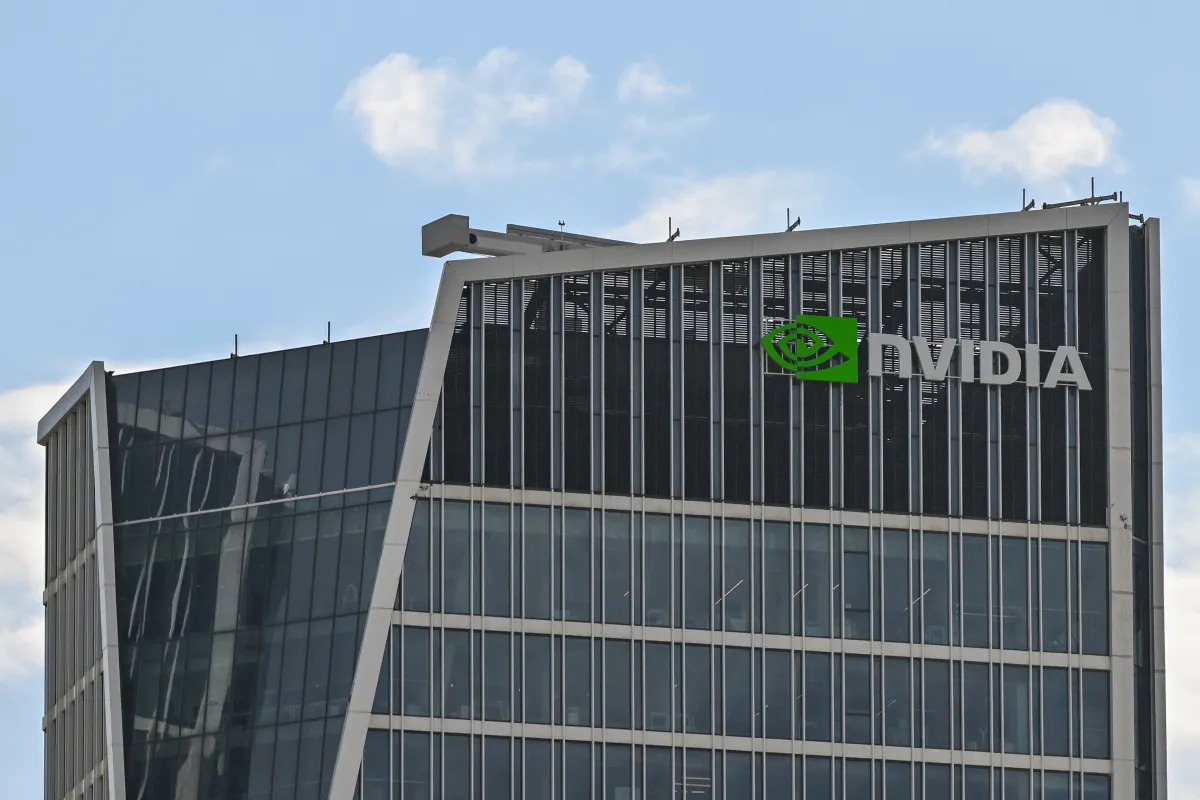
For Israel, this is more than a corporate succession story. Nvidia is one of the most important foreign technology employers in the country, with roughly 6,000 people on the payroll and a large research footprint built around Mellanox, the Israeli chip company it bought in 2019 for $6.9 billion.
That footprint has made Nvidia a pillar of the local AI and semiconductor ecosystem. If leadership instability changes the pace of decision-making in Santa Clara, Israeli investors and executives say the ripple effects could show up in hiring, research priorities and venture capital flows.
The other side of the story is opportunity. Local venture capitalists are already seeing the possibility that a slower Nvidia could create room for competitors, especially in AI-chip infrastructure and the software needed to run models efficiently. But some investors also warn that uncertainty at Nvidia could cool the broader AI spending environment, shrinking the pie rather than redistributing it.
What Israeli investors see in Nvidia’s upheaval
TechCrunch reports that the Israeli tech community is watching the leadership change closely, in part because Nvidia has long been treated as a special case in the country’s startup scene. Jensen Huang described Israel in 2023 as Nvidia’s “second home,” and that description carried weight because of how deeply the company is embedded there.
The concern, according to people in the local ecosystem, is not that Nvidia will disappear from Israel. It is that a new leadership team may not place the same emphasis on the country, or may move more cautiously on major decisions. In a market where timing matters, even modest delays can shift supplier relationships, funding priorities and hiring plans.
At the same time, Israeli executives are not reading Huang’s departure as a sign that Nvidia’s technology has suddenly weakened. The stronger fear is strategic: if Nvidia slows down, rivals may get the chance to sell into customers that have become accustomed to the company’s dominance in AI hardware and the surrounding software stack.
Who could benefit?
TechCrunch says AI-chip startups and inference-software companies are drawing more attention as potential alternative plays to Nvidia. That makes sense in a market where buyers are not only seeking raw compute, but also ways to reduce costs and squeeze more performance from existing systems.
For venture capital investors, that means the leadership change at Nvidia could reshape the competitive map in two different ways:
- by making customers more open to testing alternatives;
- by making startups in chip design and inference software more attractive;
- by encouraging investors to look beyond one dominant platform;
- or by pushing some buyers to wait, if they think the overall AI market is less certain.
That last point matters. A leadership change at a giant like Nvidia does not automatically send business to rivals. If customers delay purchases because the market feels less predictable, everyone in the AI supply chain can feel the effect.
Background: how Nvidia became so central in Israel
Nvidia’s Israeli presence did not happen by accident. The company bought Mellanox in 2019 and turned it into the base for what has become its biggest research and development site outside the United States, according to TechCrunch. Mellanox was already a significant Israeli chip company, and the acquisition gave Nvidia a much deeper local foundation.
The deal also explains why the company’s future matters so much to local executives. Nvidia is not simply a distant customer; it is a major employer, a research investor and a symbol of how Israeli semiconductor talent can feed global hardware development.
Israel’s broader technology economy also helps explain the intensity of the reaction. The country is already a major global hub for semiconductor and cybersecurity research, so a flagship company like Nvidia carries outsize symbolic and economic weight. Its decisions can influence where engineers want to work, where VCs place bets and which startups believe they can break through.
By the numbers
| Metric | Figure | What it refers to |
|---|---|---|
| Mellanox acquisition price | $6.9 billion | Nvidia’s purchase of Mellanox in 2019 |
| Employees in Israel | 6,000 | Nvidia’s local workforce |
| Key inflection point | 2023 | Huang described Israel as Nvidia’s “second home” |
| Reporting date | 2026-11-13 | TechCrunch’s report on local investor reaction |
What the local venture scene is saying
Several Israeli investors quoted by TechCrunch see the same basic dynamic: a leadership shake-up at Nvidia could weaken the company’s grip without necessarily undermining its technology. That distinction matters because the moat around a dominant AI supplier is not only about products; it is also about relationships, speed and the confidence customers have in future support.
Pavel Gurvich, a repeat cybersecurity entrepreneur, summed up the origin story of Nvidia’s local presence this way:
“Jensen brought Nvidia to Israel with the acquisition of Mellanox”
Yanai Oron, general partner at Vertex Ventures Israel, pointed to the competitive opening that could emerge if decision-making slows.
“slower decisions at Nvidia could give competitors an opening”
Adi Levanon, founder and managing partner at Selah Ventures, sounded a similar note, but with more caution. He said the change could create room for others to shape the market, while stressing that a new face alone would not be enough to win customers over. The underlying message is that enterprise buyers care about execution, not just headlines.
How much of a shift is this, really?
At one level, Nvidia’s deep Israel ties suggest continuity. The company still has a major local workforce, a large R&D presence and a history of investing in the country. Colette Kress, Nvidia’s chief financial officer, even said she used to begin her day with Israel meetings before California, a small but revealing sign of how central the region has been to the company’s internal rhythm.
At another level, leadership matters. The departure of a founder-figure or highly visible chief executive can change how quickly big strategic calls are made and how much internal attention a particular region receives. For Israel, where Nvidia has been treated as both customer and anchor tenant, that may be enough to alter expectations even before any formal policy changes appear.
There is also a reputational layer. TechCrunch’s reporting suggests that local executives still feel strong positive sentiment toward Huang in the Israeli tech scene. That goodwill may cushion the transition, but it also raises the stakes: if the new leadership does not preserve the same level of engagement, the contrast will be hard to miss.
Why rivals are paying attention
The real opening may not be in Nvidia’s core technology, which remains highly influential in training and running large AI models. Instead, the opportunity is in the edges of the market: alternative chips, system optimization and inference software that helps companies run models more efficiently.
Those are areas where startups can gain traction if buyers become more willing to test alternatives. A slower-moving Nvidia could mean more requests for pilots, more negotiation leverage for customers and more willingness among cloud and enterprise buyers to split spending across suppliers.
Still, the upside for competitors is not automatic. Nvidia’s ecosystem is broad, its brand is strong and its existing customer relationships are deeply entrenched. As several Israeli investors told TechCrunch, a leadership change can create room in the market without knocking out the incumbent.
Background context: why AI spending is so sensitive
Nvidia sits near the center of the AI buildout because its GPUs are central to training and running large models. That means any uncertainty about the company can affect not just chip buyers, but also the broader AI investment cycle.
When buyers are unsure about supply, pricing or strategic direction, they may hesitate. When venture investors see hesitation among customers, they may slow funding or redirect it toward more defensible niches. In a market as capital-intensive as AI infrastructure, that feedback loop can move quickly.
This is why some Israeli investors are reading the situation two ways at once. A company-specific transition at Nvidia could help challengers, but it could also make the entire spending environment more cautious. That dual effect is a reminder that concentration cuts both ways: a market led by one giant can create enormous opportunity, but it can also make everyone vulnerable to that giant’s internal politics.
What happens next
The most immediate question is succession. TechCrunch said possible successors mentioned in discussions include Apple’s Johny Srouji and Nvidia’s Michael Kagan, but no final outcome has been set out in the fact sheet. Who ultimately replaces Huang, if anyone, will shape how much continuity or disruption follows.
Investors in Israel will also watch for signs that Nvidia’s local strategy changes. The company has already planned a multibillion-dollar campus in northern Israel, and any shift in commitment to that project would be read as a signal about the company’s long-term view of the country.
There are broader market questions too:
- Will AI-chip and inference-software startups see a real funding lift?
- Will Nvidia’s decision-making slow enough to matter for customers?
- Will AI buyers move toward competitors or simply delay purchases?
- Will the uncertainty stay local to Israel, or affect the wider AI market?
For now, the clearest answer is that Nvidia’s departure from its founder’s direct control is being read in Israel as both a risk and a chance. The risk is to a major employer and strategic partner. The chance is for rivals that have spent years waiting for even a small crack in Nvidia’s armor.
The bottom line
Nvidia’s leadership change is being felt in Israel because the company is woven into the country’s AI and semiconductor economy. Local investors do not expect the company’s technology to vanish from the market, but they do think a slower or less Israel-focused Nvidia could open space for competitors — and perhaps change the tempo of AI investment more broadly.
Frequently asked questions
Why are Israeli investors worried about Nvidia’s leadership change?
They are worried because Nvidia has a major research and hiring footprint in Israel, and leadership changes can affect how quickly the company makes decisions. TechCrunch reports that some local executives fear a less Israel-focused strategy could slow the company’s engagement.
How important is Nvidia to Israel’s tech sector?
Nvidia is highly important to Israel’s tech sector because it employs about 6,000 people there and used the Mellanox acquisition to build its largest non-U.S. R&D site. That makes it a major employer and a key part of the local semiconductor ecosystem.
Could Nvidia’s leadership change help competitors?
Yes. Some Israeli venture capitalists told TechCrunch that slower decision-making at Nvidia could create an opening for rivals, especially in AI-chip and inference-software startups. But they also cautioned that uncertainty could reduce overall AI spending.
What happens next for Nvidia in Israel?
The next things to watch are succession at the top, any changes to Nvidia’s Israel strategy, and whether the company continues to push ahead with its planned multibillion-dollar campus in northern Israel. Investors will also watch for signs of slower deal-making.