In short
WIRED says the AI safety debate is moving away from extinction talk and toward specific near-term threats such as cyberattacks, biological misuse and nuclear decision-support failures. The experts it interviewed want more transparency, liability and political pressure before those risks become real.
- WIRED’s expert roundup says the biggest AI risks are cyber, bio and nuclear, not extinction.
- Several experts told WIRED that AI labs may be redefining safety around hypothetical doom scenarios.
- The reporting says a pause or slowdown would be hard to sustain because frontier AI is tied to market incentives.
- Experts called for more transparency, liability and whistleblower protections inside AI companies.
WIRED says the more immediate danger from artificial intelligence is not human extinction, but cyberattacks, biological threats and nuclear-operations failures that could arrive long before any sci-fi endgame. In interviews with 10 experts, the magazine found a panel that mostly rejects extinction framing and instead sees specific, catastrophic risks as the more plausible near-term problem.
What WIRED found
The magazine’s reporting, published on 2026-11-10, argues that the public debate around AI has drifted toward dramatic talk about extinction and agentic systems, while leaving more concrete safety questions underweighted. Those questions include whether AI can help attackers automate cyber intrusions, shorten pathogen-design timelines, or create dangerous decision support inside nuclear workflows.
That shift matters because the experts WIRED spoke to are not dismissing danger. They are arguing that the most urgent threat profile is narrower, more operational and more plausible in the near term than a broad extinction scenario. In other words, the argument is not that AI is safe; it is that the risks most likely to land first are the ones governments and companies may be least prepared to manage.
Why it matters
The policy stakes are substantial. If lawmakers, regulators and the public focus almost exclusively on hypothetical extinction scenarios, they may miss the kinds of harms that can unfold sooner and with less warning. WIRED’s expert roundup suggests the debate should be centered on concrete governance questions: who is accountable when AI systems are deployed in sensitive settings, what transparency is owed to the public, and how liability should work when things go wrong.
The story also points to a gap between safety rhetoric and commercial reality. Several experts told WIRED that a true pause or slowdown in frontier AI development would be difficult to sustain because the biggest firms are locked into market incentives. That means safety rules may need to be built around the industry as it exists, not the industry as reformers might wish it were.
For readers, the practical implication is that AI risk is not one problem but several. Cybersecurity, biosecurity and nuclear stability each require different safeguards, different regulators and different timelines. A single headline-grabbing theory of doom may be too blunt to address the actual failure modes the experts flagged.
How the risk conversation is changing
WIRED’s piece frames the present moment as a narrow but important transition. Less than four years after ChatGPT’s launch accelerated mainstream attention on generative AI, the debate has moved from “what can this do?” to “what can this break?” The experts interviewed by WIRED largely see that as overdue.
That is especially true for people working near national security. AI safety has long covered misalignment, misuse, accidents and governance failures, but the reported concern now is whether those categories are becoming more concrete as models get integrated into real-world workflows. In the safety debate, a tool that can assist an attacker or confuse a decision-maker may be more urgent than a model that merely sounds ominous in theory.
What the experts are worried about
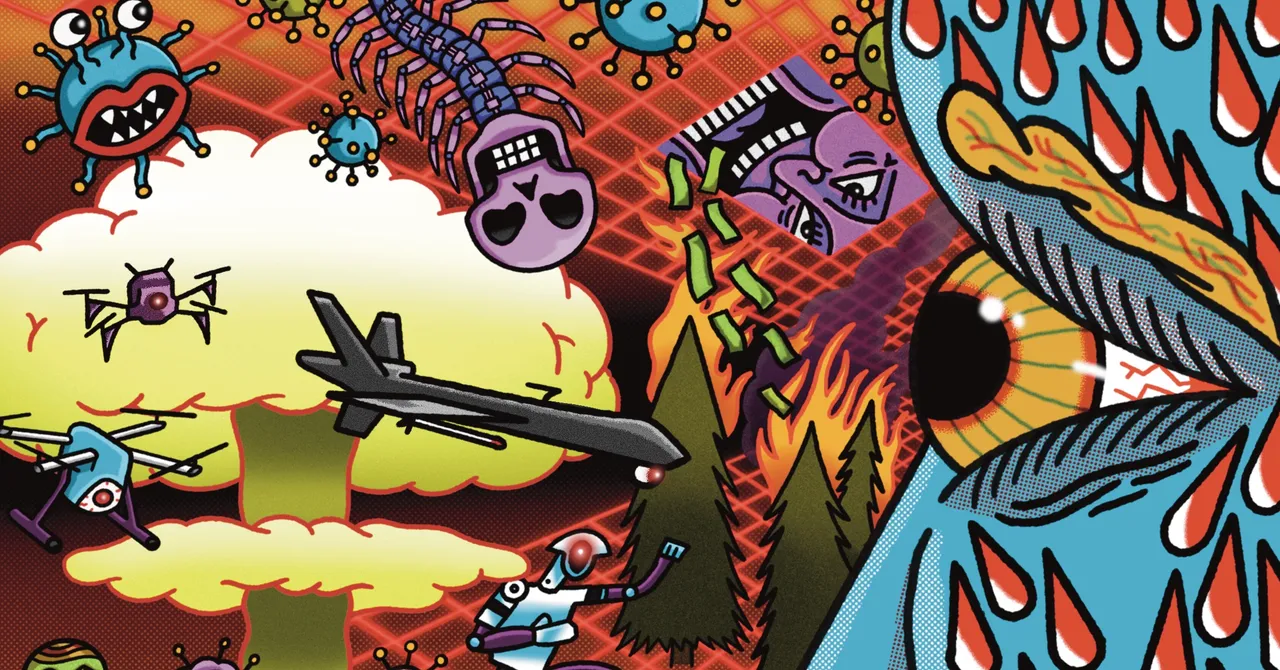
Across the interviews, three risks came up repeatedly: cyberattacks, biological attacks and nuclear operations. WIRED says the panel mostly rejected extinction framing, but many of the experts still described worst-case scenarios that could be catastrophic on their own.
Cybersecurity: AI may help attackers first
The cyber concern is timing. WIRED reports that AI could help attackers move faster than defenders can deploy matching safeguards. If that happens, the advantage would belong to the side that weaponizes the tools first. That asymmetry is what makes the threat unsettling: even a temporary lead for attackers could produce real damage before security teams catch up.
Biological risk: shorter timelines, higher stakes
The biosecurity worry is even more severe. The magazine reports that AI tools could shorten pathogen-design timelines from months to weeks. That is a dramatic compression of the development cycle and one reason some experts treat AI-enabled biological attacks as the clearest route to existential-scale harm.
That view does not mean every concern is apocalyptic. It does mean the margin for error is shrinking. When tools lower the barriers to designing harmful biological agents, the issue becomes less about speculative science fiction and more about how quickly the world can detect, restrict and respond to misuse.
Nuclear operations: bad advice can be catastrophic
WIRED also highlights concern about AI in nuclear settings. One nuclear-risk expert warned that adoption in defense is moving faster than reliability warrants, while another warned that models embedded in operational workflows could create faulty decision support with catastrophic consequences.
The risk here is not that an AI system independently launches a weapon. It is that unreliable guidance, data interpretation or workflow integration could influence human judgment in a domain where mistakes are extraordinarily expensive. The experts quoted by WIRED appear less focused on a cinematic takeover than on routine integration that quietly lowers the threshold for error.
“I’m concerned by the willingness of many people in the sector to integrate these models into their workflows”
Background: how the AI safety debate got here
The current argument has roots in the post-ChatGPT boom. ChatGPT’s 2022 launch accelerated public attention on generative AI, and with that came a broader safety debate that quickly spread from academic circles to labs, governments and the media. Since then, the conversation has often been framed around misalignment, powerful agents and the possibility of systems becoming too capable to control.
WIRED’s reporting suggests that those ideas have not disappeared, but they may be crowding out other concerns. Several sources said AI labs are redefining “safety” around hypothetical extinction scenarios, even as many researchers and policy voices continue to stress more specific harms. That tension has been present for years, but the magazine’s roundtable indicates it is now sharper and more political.
There is also an old fault line underneath the debate: whether to slow development at all. Pause and slowdown proposals have long divided AI researchers, labs and policymakers. WIRED reports that a few panelists are now more open to a pause, slowdown or cap than before, but the broader consensus remains that a hard stop would be difficult to enforce in a market-driven race.
By the numbers
| Metric | What WIRED reported | Why it matters |
|---|---|---|
| 10 experts | Interviewed for the story | Shows the piece is a broad expert roundup, not a single-source argument |
| Less than 4 years | Since ChatGPT launched | Illustrates how quickly the mainstream AI debate has shifted |
| Months to weeks | Possible compression of pathogen-development timelines | Captures why biosecurity is a central concern |
| Next decade | Timeframe some researchers cite for advanced AI to kill humans | Shows that even the more extreme forecasts remain tied to a near-term planning horizon |
What experts want from companies and regulators
One of the clearest themes in WIRED’s reporting is accountability. The experts called for more transparency from AI companies and for liability when harms occur. That is a practical demand, not a philosophical one: if firms build systems that can be used in cyber, bio or nuclear settings, then the public needs to know more about how those systems are tested, governed and deployed.
Another safeguard named in the story is whistleblower protection inside AI companies. That suggestion reflects a simple concern: if employees see dangerous practices or incentives from within, they need a way to speak up without immediately risking their careers. In a sector where speed and secrecy can be rewarded, internal dissent may be one of the few early-warning mechanisms available.
At the political level, the experts described public pressure as necessary because governments may move too slowly. Yoshua Bengio, the computer scientist cited in the piece, urged citizens to pressure politicians on AI risk management. His view, as WIRED reports it, is that formal institutions will not move unless the public pushes them.
“That’s your job too.”
Why concentration of power is part of the story
Some experts told WIRED that concentration of power is being underweighted in the safety debate. That is a distinct critique from the usual misalignment argument. It asks who controls frontier systems, who gets to deploy them, and how much leverage a small number of firms should have over technologies that can affect national security and public life.
That concern makes the policy discussion broader than any one model or vendor. If a few companies are setting the pace, then safety cannot be treated only as a technical benchmark. It becomes a governance issue involving market structure, oversight and democratic accountability.
Who is being quoted in the debate?
WIRED’s report draws on a range of names across the AI and safety ecosystem, including Yoshua Bengio, Nick Bostrom, Sam Altman, Dario Amodei, Mark Zuckerberg, OpenAI, Anthropic and Hugging Face. The reporting does not present them all as agreeing; rather, it uses their prominence to show how broad the argument has become.
The significance of that list is that the safety debate now spans labs, theorists, policymakers and public commentators. When those groups disagree on the most serious threat, there is no single framework that can claim the field. That is one reason WIRED’s piece lands as a governance story as much as a technology story.
What happens next
The biggest question is whether any slowdown, pause or cap on frontier development will gain traction. WIRED’s reporting suggests the answer is still unclear, and that commercial incentives remain a major obstacle. If the largest firms keep racing, smaller reforms may be the only tools available in the short term.
Another question is whether governments can set enforceable safety rules quickly enough. One source told WIRED that US courts are not realistic global arbiters of AI safety, which underscores a broader problem: AI is global, but the legal tools available to regulate it remain fragmented and national. That mismatch is likely to shape the next phase of the debate.
Three open questions stand out:
- Will AI companies adopt any meaningful slowdown or cap on frontier model development?
- Can governments write and enforce safety rules fast enough to matter?
- How serious will near-term AI-enabled cyber or bio incidents become?
There is also the nuclear question, which may prove more urgent than it sounds. If AI systems continue to enter sensitive defense workflows, the standard for reliability will have to be exceptionally high. WIRED’s expert panel suggests that current confidence may not justify current adoption.
The bigger picture
WIRED’s contribution is less about proving a single worst-case scenario than about changing the frame. The article argues that the AI safety conversation is too often trapped between two poles: jobs on one side and existential doom on the other. In between sits a wide set of risks involving governance, market power, cyber defense, biosecurity and nuclear stability.
That middle ground may be where the real policy work has to happen. It is also where the public may have the most influence, because the choices are not abstract. They involve how companies test systems, how governments regulate them, and whether society accepts the idea that a few firms should decide how much risk the rest of the world absorbs.
For now, WIRED’s reporting suggests the experts are not asking people to imagine the end of humanity. They are asking them to notice the more immediate ways AI could go wrong, and to act before those failures become normal.
Frequently asked questions
What is the AI safety debate focusing on now?
The AI safety debate is focusing more on near-term cyber, biological and nuclear risks than on extinction scenarios. WIRED’s expert roundup says those concrete harms are more plausible and more immediate than broad apocalyptic framing.
Why are experts worried about AI and cybersecurity?
Experts are worried because AI may help attackers move faster than defenders can build matching protections. WIRED reports that this timing gap could give malicious actors an advantage before security teams are ready.
How could AI increase biosecurity risks?
AI could shorten pathogen-design timelines from months to weeks, according to WIRED’s reporting. That makes harmful biological work easier to accelerate and raises the stakes for detection, oversight and prevention.
What do experts want AI companies to do differently?
Experts want more transparency, liability when harms occur and stronger whistleblower protections inside AI companies. WIRED says those safeguards could help expose dangerous practices before they cause damage.
Will governments be able to regulate AI safety quickly enough?
That remains uncertain. WIRED’s reporting says some experts think governments may move too slowly, and one source said US courts are not realistic global arbiters of AI safety, underscoring the difficulty of enforcing rules across borders.