In short
Nvidia’s board has opened an independent investigation into reports involving CEO Jensen Huang and an alleged foreign intelligence effort tied to Alice Huang. The company says it sees no evidence of compromised secrets and that Huang will cooperate.
- Nvidia opened an independent board probe on Nov. 8, 2026.
- The company says it has no reason to believe secrets or national-security information were compromised.
- Reporting differs on the identity and alleged ties of Alice Huang, but all versions point to intelligence concerns.
- The case lands amid U.S.-China chip tensions and Nvidia’s central role in AI computing.
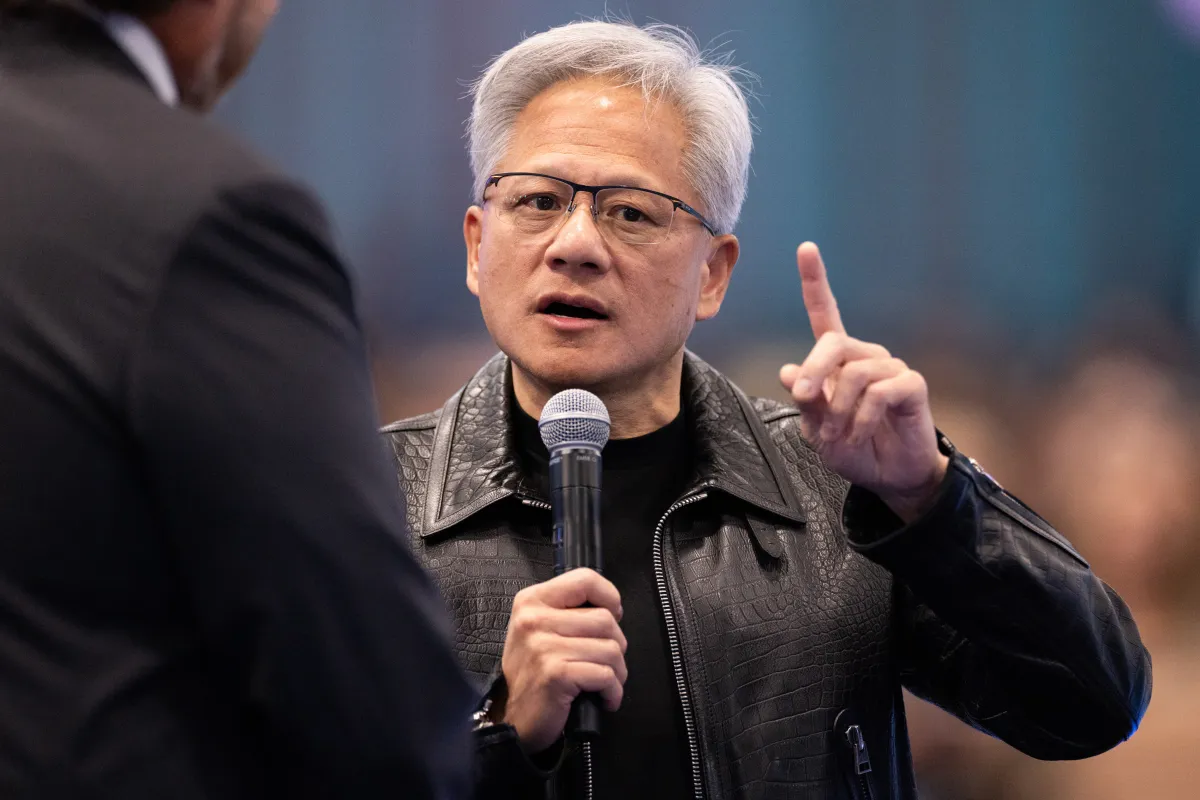
Nvidia’s board has opened an independent investigation into reports that CEO Jensen Huang was targeted by a foreign intelligence effort tied to Alice Huang, a development that places the world’s most important AI chipmaker at the center of a sensitive mix of personal conduct, corporate governance and U.S.-China technology tensions.
The company said on Nov. 8 that independent directors, with outside legal counsel, are overseeing the review. Nvidia also said it has no reason to believe national security information or company secrets were compromised, and that Huang supports the process and will cooperate.
What Nvidia disclosed
The board’s statement is narrow but significant: it confirms an independent probe and attempts to limit speculation about damage to the business. According to TechCrunch, the review was launched after reports that Huang had been targeted by a foreign intelligence effort connected to Alice Huang.
Nvidia’s position, as relayed by TechCrunch, is that the company sees no evidence so far of compromised secrets or national security exposure. The board also said it has confidence in Huang and the leadership team. In other words, the company is treating the matter as serious enough to investigate, but not yet serious enough to suggest a breach.
At the same time, Nvidia posted an apology message from Huang to the company. In that note, according to TechCrunch, he acknowledged the personal dimension of the issue and admitted he was unfaithful to his wife. The company did not frame the message as a resignation or disciplinary step; instead, it presented the note as part of the broader response.
“I owe my family and all of you an apology,”
“I was unfaithful to my wife.”
Who is Alice Huang, and why does she matter?
That answer depends on which outlet you read. TechCrunch described the allegations as involving Alice Huang and a foreign intelligence effort. The Verge said Alice Huang was a Megaspeed executive reportedly recruited by China’s Ministry of State Security. The American Bazaar went further, saying U.S. intelligence officials believed she had been recruited to gather information on Huang and the semiconductor industry.
The reporting converges on one central point: the relationship is being viewed through a national-security lens, not just a personal one. That matters because Nvidia sits at the center of the AI supply chain, making chips that are essential to model training, data centers and large-scale computing infrastructure. When a senior executive of a company like Nvidia is linked to a possible intelligence operation, even indirectly, the stakes rise quickly.
The Verge also reported that The New York Times said Huang had a close relationship with the Megaspeed executive, and that Huang later admitted the relationship was romantic in a memo to the company. The American Bazaar added that the issue could raise questions about access to sensitive leadership information inside a company whose products are closely watched by both governments and competitors.
Why it matters
This is not simply a workplace scandal. It touches on the vulnerability of the AI hardware supply chain, the scrutiny surrounding advanced semiconductor exports, and the way intelligence services may view tech executives as valuable targets. Nvidia’s processors are central to the AI industry, and the company’s global business is shaped by export controls that restrict some of the most advanced chips from reaching China.
The broader concern is that a personal relationship, if it intersected with sensitive information or corporate access, could create risk even without a confirmed leak. That is why the board’s decision to launch an independent investigation matters. It is a formal mechanism meant to establish whether the allegation has any operational or national-security consequence.
For investors, customers and regulators, the immediate question is not only whether anything improper happened, but whether Nvidia’s controls held up. The company says there is no reason to believe they did not. Still, the fact that the board felt the need to investigate signals that the issue cannot be waved away as a tabloid-style distraction.
What the market is watching
There are three overlapping issues that could matter beyond the headlines:
- Whether the probe turns up evidence of improper access to confidential information.
- Whether the allegations affect Nvidia’s relationships with major customers or government stakeholders.
- Whether the episode intensifies scrutiny of AI companies operating near the line between commercial activity and geopolitical competition.
How did this come to light?
The timeline in the reporting shows a rapid escalation over roughly 10 days. On Oct. 29, Huang told Bloomberg that Megaspeed dealings were normal and not unusual. Then, on Nov. 6, Bloomberg cited a New York Times report about the alleged relationship. Two days later, on Nov. 8, Nvidia announced the independent investigation and released Huang’s apology message.
That sequence suggests the company did not move until the story had already circulated widely and become difficult to contain. It also suggests Nvidia wanted to establish a paper trail: a formal board review, outside legal counsel, and a public statement designed to reassure stakeholders while the facts are checked.
The American Bazaar reported that Nvidia had previously described Megaspeed dealings as normal and not unusual. It also said Huang had stated Nvidia checked Megaspeed GPU deployments for diversion to China. Those details matter because they point to a company already sensitive to possible export-control issues and channel risk.
Background: Nvidia, chips and U.S.-China tensions
Nvidia’s position in this story makes it larger than a personal controversy. The company supplies advanced GPUs that are central to AI training and data-center computing, which means its products are both commercially coveted and strategically sensitive. U.S. export controls already limit sales of the most advanced AI chips to China, placing Nvidia at the intersection of market demand and government policy.
That context explains why the allegations are being treated so seriously. Companies in the AI sector have warned about espionage risks, including romantic or sexual approaches to staff. An allegation like this lands in a world where access, influence and information are already heavily contested.
It also explains why the board’s language is carefully chosen. Nvidia said it had no reason to believe national security or company secrets were compromised. It also said Huang supports the review and will cooperate. Those phrases are meant to cool speculation without foreclosing the possibility that the investigation could find something that requires further action.
How the outlets differ
The reporting is largely aligned on the existence of the investigation, but the description of the underlying allegation varies:
- TechCrunch said the board opened an independent probe into reports that Huang was targeted by a foreign intelligence effort tied to Alice Huang.
- The Verge identified Alice Huang as a Megaspeed executive reportedly recruited by China’s Ministry of State Security.
- The American Bazaar said U.S. intelligence officials believed she was recruited to gather information on Huang and the semiconductor industry.
Those are not identical claims. They differ in source, specificity and certainty. What they share is a theme: the relationship is being examined as a possible intelligence concern, not merely as a personal matter.
By the numbers
The facts surrounding the case are easier to track when laid out side by side.
| Item | Detail | Why it matters |
|---|---|---|
| Investigation date | Nov. 8, 2026 | Nvidia formally announced the independent probe. |
| Earlier report date | Nov. 6, 2026 | The New York Times report, cited by Bloomberg, escalated scrutiny. |
| Huang’s age | 63 | Useful context for the leadership profile at the center of the story. |
| Years as CEO | 33 years | Shows how long Huang has led Nvidia. |
| Company founding | 1993 | Marks Huang’s role as co-founder of Nvidia. |
| Birth date | Feb. 17, 1963 | Background detail cited by The American Bazaar. |
| LSI Logic entry | 1985 | Part of Huang’s longer engineering and leadership history. |
What Nvidia says now
Nvidia’s public message has three main parts. First, the board says the investigation is independent and being handled with outside legal counsel. Second, the company says it has no reason to believe national security or company secrets were compromised. Third, it says Huang is cooperating and still has the board’s confidence.
The American Bazaar added another layer, reporting that Nvidia public policy communications chief John Rizzo said operations would not be disrupted and that Huang remained committed to continuing as CEO without interruption. That suggests the company is trying to project business continuity even as it examines a potentially disruptive set of allegations.
These statements are doing two jobs at once: calming investors and defending the company’s internal controls. In a sector where reputation, access and government trust can move in tandem, that is not a small task.
Could this affect Huang’s role?
At this stage, there is no indication that Nvidia has moved to remove Huang or even to sideline him. On the contrary, the board says it has confidence in him, and the American Bazaar reported that Huang remained committed to continuing as CEO without interruption.
Still, that does not close the book. If the investigation uncovers evidence that any confidential information was mishandled, shared or exposed, Nvidia could face pressure from shareholders, regulators or customers to act more decisively. If it does not, the company may still have to spend time restoring trust and clarifying what, if anything, changed inside the organization.
What happens next
The near-term watch items are straightforward, even if the answers are not:
- Whether the independent probe identifies any contact, communication or access issues involving Alice Huang.
- Whether Nvidia provides any additional detail about Megaspeed, its GPU deployments, or its internal safeguards.
- Whether the company confirms that no national-security or trade-control issues arose from the matter.
- Whether any outside reporting produces new evidence that changes the public understanding of the case.
For now, Nvidia is trying to keep the matter contained while signaling that it takes the allegations seriously. The board has set the frame: investigate, cooperate, and maintain confidence in leadership unless facts show otherwise.
That may be the most important signal of all. In a company that sits at the center of the AI race, the line between personal exposure and strategic exposure can be thin. The board’s independent review is an attempt to find out whether this episode crossed it.
Context: why this story resonates beyond Nvidia
One reason the story has drawn such attention is that it sits at the intersection of three sensitive areas: the personal conduct of a high-profile CEO, the vulnerability of a leading AI company, and the geopolitical tension surrounding chips and exports. Those pressures rarely arrive together, but when they do, they amplify one another.
Nvidia is not a normal company with normal exposure. It is a critical supplier in the AI economy, and that makes any allegation involving its leadership subject to scrutiny far beyond Silicon Valley. Even the possibility of foreign intelligence interest becomes consequential when the company in question helps power the most advanced AI systems in the world.
That is why the board’s statement matters as much as the allegation itself. It is Nvidia trying to draw a line: serious enough to investigate, not serious enough, at least so far, to suggest compromise. The next phase will determine whether that line holds.
Note: This story is based on reporting from TechCrunch, The Verge and The American Bazaar, which differ in how they characterize the underlying allegation but agree on the existence of the board review and its broader significance.
Frequently asked questions
What did Nvidia announce about Jensen Huang?
Nvidia announced an independent board investigation on Nov. 8, 2026, into reports that CEO Jensen Huang was targeted by a foreign intelligence effort tied to Alice Huang. The company said outside legal counsel is involved and that Huang will cooperate.
Did Nvidia say company secrets were compromised?
No. Nvidia said it has no reason to believe national security information or company secrets were compromised. That statement is central to the company’s effort to reassure investors, customers and regulators while the review is underway.
Who is Alice Huang in this story?
Alice Huang is described differently across the reporting. TechCrunch linked her to the foreign intelligence allegation, The Verge said she was a Megaspeed executive reportedly recruited by China’s Ministry of State Security, and The American Bazaar said U.S. intelligence officials believed she was recruited to gather information on Huang and the semiconductor industry.
Will Jensen Huang remain CEO?
For now, there is no sign that Nvidia has removed him or changed his role. The board said it has confidence in Huang and the leadership team, and The American Bazaar reported that Huang remained committed to continuing as CEO without interruption.
Why does this matter beyond Nvidia?
This matters because Nvidia is central to AI chips and data-center computing, and U.S.-China export tensions already make its business strategically sensitive. Any allegation of foreign intelligence targeting a top executive could affect trust, compliance scrutiny and customer relationships.