In short
TechCrunch’s Founder Summit opens Nov. 4 at Boston’s SoWa Power Station, with founders, investors and operators gathering around the case for building and scaling outside Silicon Valley. Coverage from TechCrunch, CIO and Yahoo Finance also highlights networking, ticket discounts and Boston’s push to stay a serious startup hub.
- TechCrunch’s Founder Summit is set for Nov. 4 at SoWa Power Station in Boston.
- The event is framed around helping founders build and scale companies from Boston rather than moving to Silicon Valley.
- CIO says the summit targets East Coast founders, investors and IT leaders, while Yahoo Finance centers the agenda on capital, leadership and product-market fit.
- Ticket promotions and deadlines differ by outlet, including CIO’s 50% offer and TechCrunch’s Nov. 4 pricing warning.
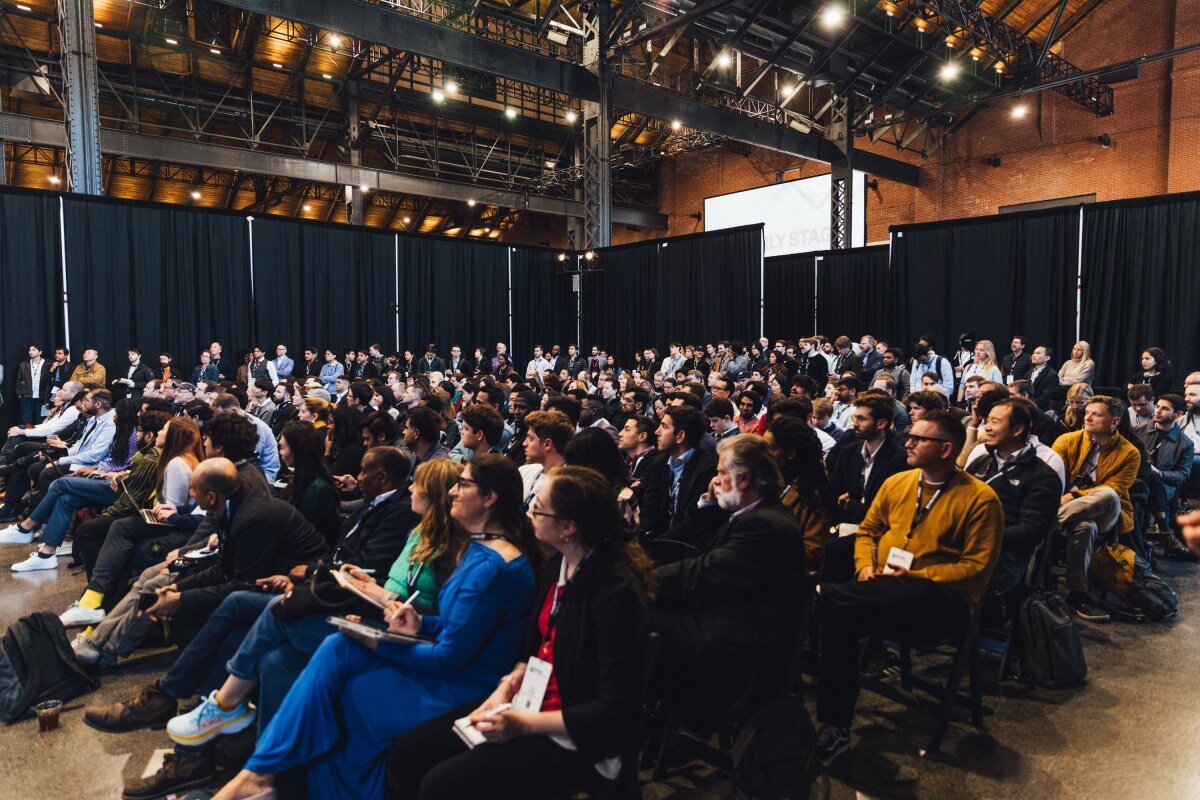
TechCrunch’s Founder Summit is set for Nov. 4 at SoWa Power Station in Boston, where founders, investors and operators will gather around one central argument: companies can be built and scaled from Boston without relocating to Silicon Valley.
The event matters because it is being framed not just as another networking stop, but as a regional pitch for Boston’s ability to keep talent, capital and ambition close to home while still producing nationally competitive startups.
What the summit is trying to prove
At its core, the summit is designed to connect early-stage and scaling companies with the people they need most: investors, operators and peers who can help them navigate growth. TechCrunch says the event will center on startup guidance and networking, while CIO describes the audience as East Coast founders, investors and IT leaders. Yahoo Finance, meanwhile, characterizes the agenda as one focused on the practical questions founders keep running into: capital, leadership and product-market fit.
That mix tells you what kind of conference this is meant to be. It is not being pitched as a general industry trade show. It is a founder-first gathering with a regional identity and a broader message: Boston is not merely a place to start a company; it is a place to build one that can go national or global.
Why Boston is the point
Boston has long been a serious startup hub, but it is often measured against Silicon Valley, where the densest concentration of venture capital and scale-up talent still pulls many founders west. TechCrunch’s framing is explicit: the summit is built around the idea that founders do not have to leave Boston to create companies with reach far beyond New England.
That argument matters for more than civic pride. If Boston can keep more promising companies, the local ecosystem benefits twice: founders stay close to customers, universities and technical talent, and investors have a better chance of backing companies before they migrate elsewhere. The summit is essentially an attempt to make that case in public, in front of the people who decide where to build, hire and raise money.
How the event is being packaged
According to CIO, the summit will include sessions, breakout panels, networking and industry events spread across Boston. TechCrunch says roundtables and Braindate networking are part of the format as well, giving attendees more structured ways to meet founders, venture capitalists and peers instead of relying only on stage programming.
Official side events are also part of the plan, extending the summit beyond the main venue. That matters because startup conferences often do their most important work after the panels end, when founders can compare notes, make introductions and test whether a new contact is actually useful.
Who is speaking and why that matters
The speaker mix is built around founders who have already navigated the hard parts of company building. TechCrunch says Toast co-founder Steve Fredette is slated to discuss scaling and product-market fit, while HqO CEO Chase Garbarino will appear in a session tied to building from Boston and expanding internationally.
Those are useful choices for the summit’s broader thesis. Fredette’s background gives the event a scaling and product lens. Garbarino’s gives it a Boston-to-global lens. Together, they reflect the dual message running through the summit: build locally, scale broadly.
CIO also notes that Garbarino’s company has raised $200 million and expanded into more than 30 countries, figures that underscore why he fits the bill as a speaker on growth from a Boston base. That kind of example is important in a region trying to show that it does not need to imitate Silicon Valley to produce companies with international reach.
By the numbers
| Metric | What it refers to | Source |
|---|---|---|
| Nov. 4 | Founder Summit opening date at SoWa Power Station | TechCrunch |
| Nov. 1-7 | Founder Summit Week timing across Boston | Yahoo Finance |
| 50% off | Ticket discount promoted by CIO | CIO |
| $100 off | Individual ticket discount mentioned by CIO | CIO |
| 30% off | Group-order discount mentioned by CIO | CIO |
| $200 | Ticket savings Yahoo Finance said were available before Oct. 16 | Yahoo Finance |
| 200 million | Capital raised by HqO, cited in coverage | CIO / Yahoo Finance |
| 30+ countries | HqO’s international footprint after scaling | CIO |
| 11 million | Cogent Security round referenced by Yahoo Finance | Yahoo Finance |
Why it matters
The summit is important because it reflects a broader competition among regional ecosystems for startup gravity. Boston does not need to beat Silicon Valley at being Silicon Valley. It needs to convince founders that it can offer enough capital, customer access, technical talent and community support to keep a company growing in place.
For founders, the practical benefit is obvious: events like this can shorten the distance between a problem and a useful contact. For investors, they create a better view into emerging companies outside the West Coast spotlight. For the region, they are a signal that Boston wants to be seen not as a feeder market, but as a place where breakout companies can remain headquartered while still expanding nationally and internationally.
That is especially relevant in a market where product-market fit, fundraising and hiring remain central founder challenges. Yahoo Finance’s framing of the summit around capital, leadership and product-market questions suggests that the event is trying to meet founders where they are, not where conference copy says they should be.
Background: how Boston got here
Boston has long had the ingredients for a startup scene: universities, research institutions, technical talent and a deep bench of entrepreneurs. Yet the city has also lived for years in the shadow of Silicon Valley, where startup culture, venture capital and rapid scaling are often treated as the default model.
That tension is familiar to any East Coast founder. The question is not whether Boston can produce companies; it clearly can. The question is whether those companies can keep enough of their momentum at home to scale without the gravitational pull of the Bay Area. TechCrunch’s summit framing suggests the answer may depend as much on network density as on any single company or investor.
Startup conferences have traditionally served as pressure valves for that problem. They create temporary clusters of the people founders need most: capital providers, customers, mentors, recruits and peers. According to CIO, the Boston summit will lean into that model with sessions, breakout panels and networking across the city. Yahoo Finance’s report adds that the event week extends beyond the main venue, reinforcing the idea that a startup ecosystem is built not in one room, but across a sequence of introductions and conversations.
How the outlets differ
The coverage is broadly aligned, but each outlet emphasizes a different piece of the story. TechCrunch focuses on the founder ecosystem and the “build from Boston” message. CIO highlights the East Coast audience, the practical event format and the ticket promotions. Yahoo Finance places more weight on the summit week timing and the founder problems at the center of the agenda.
Those differences matter because they reveal how the event is being sold to different audiences. For founders, it is a chance to learn and connect. For sponsors and ticket buyers, it is an access point. For Boston itself, it is a branding exercise tied to the city’s startup credibility.
What the networking model is trying to solve
TechCrunch says roundtables and Braindate networking are part of the summit’s design. That is a meaningful detail, because many founders do not need another stage speech; they need a meaningful introduction to a venture investor, a seasoned operator or another founder who has already solved the same problem.
Structured networking can be especially valuable in markets outside the traditional center of venture activity. It reduces the randomness of conference attendance and gives both sides a reason to show up prepared. A founder who walks away with one useful connection may value the event more than a day of general panels.
That is also why side events matter. They stretch the conference from a single venue into a wider set of meetings and conversations. In practical terms, that is often where trust starts to form.
Ticketing and timing: what readers should know
There is also a straightforward consumer angle here for people deciding whether to attend. TechCrunch says Nov. 4 is the last day to secure a pass before ticket prices rise and group discounts end. CIO promotes a 50% discount tied to its CIO50 code, plus an individual ticket discount of $100 and a 30% group-order discount. Yahoo Finance said ticket prices were at their lowest point before an Oct. 16 increase.
Those details do not tell the whole story of the summit, but they do show that pricing has become part of the event’s editorial and promotional ecosystem. Different outlets are emphasizing different deadlines and savings, which may confuse readers slightly, but the directional message is the same: tickets were cheaper earlier, and the window for the best deal is limited.
For would-be attendees, the practical takeaway is simple: check the promotion tied to the outlet you are using, confirm the applicable deadline, and do not assume every offer is identical. The coverage suggests the pricing picture changed over time, with Yahoo Finance pointing to an Oct. 16 increase and TechCrunch later warning that Nov. 4 is the final day before another jump.
What happens next?
The immediate next step is the summit itself on Nov. 4 at SoWa Power Station. Beyond that, the more interesting question is not whether Boston can host a well-attended conference, but whether the event produces the kind of momentum that startup ecosystems rely on: new relationships, new introductions, and eventually new deals.
Several questions remain open:
- Which sessions or speakers will produce the most concrete news?
- How many founders, investors and operators actually show up?
- Whether the networking format leads to measurable follow-up conversations or funding talks?
- Whether Boston’s “build here, scale here” message lands with founders who might otherwise head west?
Yahoo Finance also pointed to Founder Summit Week running from Nov. 1-7 across Boston, which suggests the main event may be just one part of a larger citywide run of startup activity. If that broader programming holds, the more important story may not be one conference date, but how much of Boston’s startup community can be concentrated in one week.
The bigger test for Boston
The real test of the summit is not whether it can produce polished panels. It is whether it can help Boston sharpen its case as a place where founders can stay, hire, raise and expand without treating relocation as a requirement for success.
That is a difficult argument to make in a market where Silicon Valley still sets much of the startup imagination. But it is not an impossible one. Boston has the infrastructure, the institutions and, judging by the summit’s speaker lineup, the case studies to argue that strong companies can grow there and still reach a global audience.
If the summit succeeds, the outcome may be less about a single headline and more about a shift in perception: Boston not as a secondary option, but as a credible first choice for founders who want scale without leaving the East Coast behind.
Frequently asked questions
What is the TechCrunch Founder Summit?
The TechCrunch Founder Summit is an event scheduled for Nov. 4 at SoWa Power Station in Boston, bringing together founders, investors and operators for networking and startup guidance. Coverage says it is focused on helping companies build and scale from Boston and beyond.
Why is Boston central to this summit?
Boston is central because the summit is making a case that founders can build national and global companies there without moving to Silicon Valley. The event is positioned as a regional startup showcase and a practical argument for Boston as a serious place to scale.
Who is speaking at the summit?
TechCrunch says Toast co-founder Steve Fredette will discuss scaling and product-market fit, while HqO CEO Chase Garbarino will speak about building from Boston and expanding internationally. Those speakers fit the summit’s focus on growth, funding and founder strategy.
Are there ticket discounts available?
Yes. CIO promoted a 50% discount tied to the CIO50 code, along with a $100 individual ticket discount and a 30% group-order discount. TechCrunch said Nov. 4 is the last day to secure a pass before prices rise and group discounts end.
What happens after Nov. 4?
Yahoo Finance said Founder Summit Week runs from Nov. 1-7 across Boston, so the main event appears to be part of a broader run of startup programming. The key thing to watch is whether the summit produces new connections, deals or announcements after the panels end.