In short
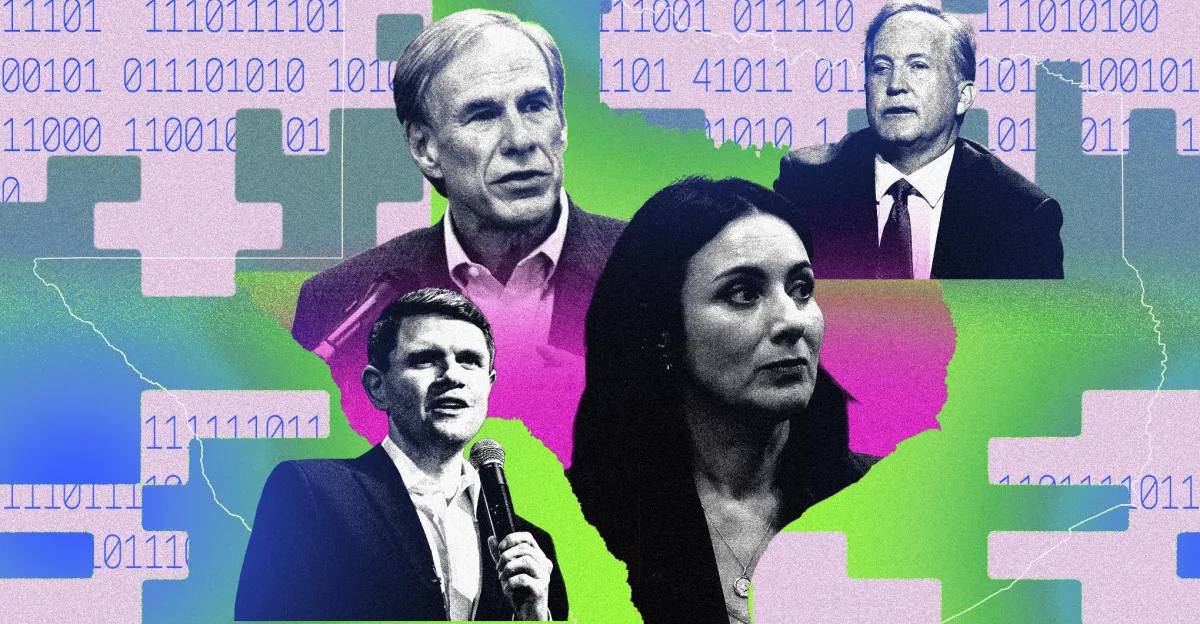
Texas data centers have become a political liability ahead of the 2026 midterms, with voter opposition rising over electricity, water and tax breaks. Gov. Greg Abbott and other Texas leaders are now adjusting policy as campaigns sharpen their anti-data center messages.
- A majority of Texans in an August poll opposed new data center construction.
- The backlash is cross-partisan, with opposition among Republicans, Democrats and independents.
- Abbott has moved to tighten oversight while also defending the industry’s growth.
- Water use, grid strain and tax breaks are driving the political reaction.
Texas voters are turning against new data center construction, and the backlash is now landing squarely in the state’s governor and Senate races heading into the 2026 midterms. The fight over land, power and water has shifted from a policy debate to a political risk for Republicans and Democrats alike, according to reporting from The Verge.
Why data centers suddenly matter in Texas politics
Data centers were once sold as symbols of growth: large, capital-heavy projects that could bring jobs, tax revenue and a bigger place in the digital economy. In Texas, that promise fit neatly with a state identity built around energy abundance, business-friendly rules and rapid expansion. But the same facilities that support cloud computing and AI training are now being recast by many voters as a burden on local utilities, rural land and scarce water.
The shift is significant because it is not confined to one party. An August poll cited by The Verge found 57% of Texans opposed to new data center construction. Opposition reached 43% among Republicans, 75% among Democrats and 54% among independents, suggesting the issue cuts across the coalitions that usually divide Texas politics.
That matters for 2026 because the backlash is broad enough to shape campaign messaging in races where rural counties, suburban growth corridors and energy policy all overlap. In a state where industrial expansion is often pitched as an economic good, candidates are now being pushed to explain why they support a sector increasingly viewed as extracting more than it gives back.
How did Texas get here?
Texas spent more than a decade building a welcome mat for data center development. The state enacted a sales and use tax exemption for data centers in 2013, and Gov. Greg Abbott expanded it in 2015 to cover hyperscale projects. Under that policy structure, qualifying developers can avoid state taxes on equipment and electricity for as long as 20 years.
That tax treatment helped make Texas attractive to a sector that depends on cheap land, reliable power and room to grow. The state also offered a political climate that favored large-scale development and limited local interference. But those advantages came with a tradeoff: when the projects multiplied, so did the costs of serving them.
The Verge reports that Abbott once described Texas as the “epicenter of AI development,” a framing that reflected how central data infrastructure had become to the state’s economic pitch. But the political mood has changed quickly as residents and local activists connect the boom to higher electricity demand, water consumption and grid strain.
Texas’s rise as a data center hub is clear in the numbers. The state has 26 gigawatts of existing and under-construction capacity, compared with Virginia’s 13 gigawatts, even though Virginia still leads Texas in planned projects. In April, Virginia had 287 planned projects versus 170 in Texas, but the Texas pipeline already includes a massive base of built and half-built capacity.
What is driving the backlash?
Three pressures dominate the public response: electricity, water and tax policy. Together, they make the data center boom feel less like abstract digital infrastructure and more like a visible drain on household resources.
Electricity costs and grid stress
Texas grid operator estimates suggest data center electricity demand could rise nearly tenfold by 2030. That projection is feeding concern that new projects will force ratepayers to cover more grid expansion and put additional pressure on an already strained power system.
The timing is awkward for state leaders because electricity bills are already top of mind. The Verge cites a 35.4% average rise in Texas electricity bills over the past five years, a figure that gives the data center fight immediate political resonance. Even if industrial users do not directly drive every bill increase, voters are likely to see new giant facilities as part of the same affordability problem.
Abbott has begun moving to tighten oversight. In June, he ordered the Public Utility Commission of Texas to require operators to cover infrastructure costs, and he has also backed efforts to repeal the state’s data center tax break. The administration is trying to show that it still supports economic growth while reducing the impression that ordinary Texans are subsidizing the load.
Eduardo Leal, a press secretary for Abbott’s campaign, said:
“Under [Abbott’s] standards, data centers must pay for their own electric infrastructure”
Water use is becoming a rural issue
Water has turned the issue from an energy story into a land-and-community fight. HARC estimates Texas data centers used about 25 billion gallons of water last year, equal to 0.4% of statewide water use. The same analysis projects that figure could reach 2.7% by 2030.
A separate University of Texas at Austin study goes further, suggesting statewide data center water use could reach 9% by 2040. Those estimates are especially potent in a state where drought, population growth and industrial competition are all already straining supplies.
The opposition is not just theoretical. The Verge reports that a NAACP-led coalition called We the People Texas was formed to stall or stop data center construction. The group says it represents up to 1 million voters statewide, a claim that helps explain why politicians are treating the backlash as more than a niche environmental concern.
Jet Parker, cofounder of Save Rural Texas, put the political warning bluntly:
“You just pissed off a lot of people in rural Texas who are supposed to carry you across the [finish] line”
Tax breaks are under scrutiny
The state’s tax policy has become a separate flashpoint. According to The Verge, Texas estimated the 2025 cost of the data center tax break at $3.2 billion in lost sales tax revenue over two years. That number is a gift to opponents, who can argue that the public is being asked to absorb both infrastructure costs and foregone tax income.
For years, the exemption looked like a classic Texas growth policy: low friction, high ambition and friendly to outside capital. Now it is being reevaluated in the context of angry voters, ratepayer concerns and a broader skepticism about whether large technology companies are receiving special treatment.
Ken Paxton’s shift illustrates how quickly the politics have moved. He now backs stronger limits after previously supporting data center tax breaks, a reversal that suggests even Republican officials have recognized the issue’s electoral danger.
Why it matters
This fight is bigger than one industry. If data centers become a durable political liability, Texas could become a test case for whether states can keep chasing AI investment without triggering a voter revolt over the costs.
For residents, the stakes are practical. A facility can bring jobs and tax base, but it may also require new transmission lines, more water and a larger share of local land use decisions. For voters, the question is whether the state is protecting household bills and rural communities or simply subsidizing the next phase of Big Tech expansion.
For the market, the implications are equally serious. Texas remains one of the most attractive data center destinations in the country, but political pushback can still slow permitting, change tax treatment and complicate financing assumptions. Investors care not only about power availability but also about whether the state’s welcome mat stays out.
For the region, the issue may reshape voting behavior. The Verge’s reporting suggests rural backlash could matter enough to move margins in statewide races, especially if candidates are forced to choose between growth-friendly rhetoric and a growing bloc of skeptical voters.
What both parties are doing now
Republicans and Democrats are both recalibrating, though from different starting points. Abbott is trying to keep Texas attractive to industry while reassuring voters that companies will pay their share. Paxton has moved from promotion to restriction. On the Democratic side, Gina Hinojosa has sharpened an anti-data center message and is polling better in some surveys, which suggests there is real room for opposition politics to organize around the issue.
James Talarico is also among the figures being watched as the race hardens into a broader argument over growth, utilities and state power. The core question for candidates is no longer whether data centers are useful; it is whether they are worth the local costs and who should pay for them.
That is why the issue has become especially potent in Texas. The state’s economic identity has long depended on expansion. But when expansion starts to look like a bill arriving at the wrong address, voters tend to notice.
By the numbers
| Metric | Figure | What it shows |
|---|---|---|
| Texans opposed to new data centers | 57% | Statewide opposition is already a majority position |
| Republicans opposed | 43% | The backlash reaches well beyond Democrats |
| Democrats opposed | 75% | Strong partisan resistance on the left |
| Independents opposed | 54% | Swing voters are leaning against construction |
| Estimated tax break cost | $3.2 billion | A major target for critics of the incentive structure |
| Potential exemption period | 20 years | Long enough to shape the economics of big projects |
| Texas data center capacity | 26GW | Existing plus under-construction footprint |
| Virginia data center capacity | 13GW | Texas already leads on operating scale |
| Texas data center water use last year | 25 billion gallons | Water is becoming a central political issue |
Background and context
Data centers are large facilities that store and process digital workloads. The AI boom has intensified demand for them, but the buildings themselves are only part of the story. They need power, cooling and transmission capacity, and those requirements can spill into public policy fast.
Hyperscale projects are especially demanding because they are built for massive computing loads. In practice, that means more electricity, more infrastructure and, in many cases, more water for cooling. Texas’s abundance of land and its long-standing pro-business environment made it a natural destination, but those same conditions also made it easier for large developments to spread before the political costs were fully visible.
Local governments in Texas have limited authority to regulate in ways that conflict with state law. That helps explain why the issue has migrated upward into statewide politics. If cities and counties cannot easily slow projects on their own, then voters are left to pressure the governor, the attorney general and the legislature.
Abbott’s recent moves show how much the politics have changed. In addition to the utility commission order in June, the state has also seen broader reassessment of transmission cost allocation. Paxton opened water-use and Taylor parkland investigations in September, and advocacy groups such as Public Citizen and FracTracker later reported permit processing continuing despite Abbott’s pause. The result is a policy environment where the state is signaling caution even as the development pipeline keeps moving.
What happens next?
The next phase will be less about whether the backlash exists and more about how much it changes actual policy and campaign outcomes. Several questions will determine whether the issue remains a headline or becomes a lasting political force.
- Whether Abbott’s permit pause also applies to non-grid-connected private power projects.
- How many pending Texas data center projects move forward before Election Day.
- Whether the tax exemption is repealed, narrowed or left in place with new conditions.
- How much the issue affects governor and Senate races as candidates court rural and suburban voters.
- Whether campaign donations from data center interests become a larger point of contention.
If the opposition keeps building, candidates in both parties may need to talk about data centers the way they talk about property taxes or power prices: as a pocketbook issue, not just an economic development story. That would mark a meaningful change in how Texas sells itself to investors and how voters judge the costs of growth.
Timeline: how the fight escalated
| Year / date | Event | Why it matters |
|---|---|---|
| 2013 | Texas enacted a data center sales and use tax exemption | Laid the groundwork for expansion |
| 2015 | Abbott expanded the exemption to hyperscale data centers | Made the state more attractive to large projects |
| 2023 | Abbott signed the “Death Star” law | Restricted local regulation that conflicts with state law |
| Last year | Abbott signed a bill to reassess transmission cost allocation | Signaled rising concern about who pays for power infrastructure |
| June 2026 | Abbott ordered the utility commission to require operators to cover infrastructure costs | Marked a policy response to backlash |
| September 2026 | Paxton opened water-use and Taylor parkland investigations | Showed the issue had become a legal and political fight |
| October 2026 | Public Citizen and FracTracker reported permit processing despite Abbott’s pause | Raised questions about how effective the restrictions really are |
As the 2026 midterms approach, data centers have become one of the few issues capable of uniting otherwise divided voters around a shared complaint: that the price of AI infrastructure is being pushed onto everyone else. In Texas, that complaint is no longer hypothetical. It is now part of the campaign trail.
Frequently asked questions
Why are Texas voters turning against data centers?
Texas voters are turning against data centers because many now see them as a source of higher electricity demand, heavy water use and generous tax breaks. An August poll cited by The Verge found 57% of Texans opposed new construction, with opposition stretching across party lines.
How much water do Texas data centers use?
Texas data centers used about 25 billion gallons of water last year, according to HARC. The group projects that share could rise to 2.7% of statewide annual water use by 2030, while a UT Austin study put possible statewide use at 9% by 2040.
What is Greg Abbott doing about data centers?
Greg Abbott has moved to tighten oversight by directing the Public Utility Commission of Texas to require operators to cover infrastructure costs. He has also backed efforts to repeal the tax break that helped attract many projects, while still defending data centers as part of Texas growth.
Why are data centers an election issue in Texas?
Data centers have become an election issue because the backlash crosses party lines and can affect rural voters, independents and suburban households worried about bills and water. That makes the issue relevant in both governor and Senate races ahead of the 2026 midterms.
Will Texas repeal its data center tax break?
It is not yet clear whether Texas will repeal the tax break. The state is reviewing the policy, Abbott has supported repeal efforts, and critics are pressuring lawmakers, but the fact sheet does not indicate that repeal has already passed.